-
 Contact Us
-
 Re order
-
 Log in
-
 Cart 0
You have no items in your shopping cart.
Can a Check Be Converted to ACH? What Payers Should Know
You mailed a check to a utility, and then your bank statement shows an electronic debit with the check number on it. The paper check never came back. It is fair to ask whether someone copied your account number.
In most cases the payee did something that the rules allow: it turned your check into an electronic payment. This guide explains how that works, what notice you are owed, what to do if the amount looks wrong, and how business accounts differ. For a wider comparison of the two payment types, see our guide to check versus ACH payment.
Quick Summary
Yes. A check can be converted to an ACH debit. The payee uses the routing, account and check numbers on your check to create a one-time electronic payment. For a personal account, federal rules require the payee to give you notice first, and you agree by going ahead with the payment.
Key points
- Conversion is a recognized process. The ACH rules (Nacha) have four codes for it: ARC, BOC, POP and RCK.
- Notice is required. Under Regulation E, the person starting the transfer must tell a consumer that the payment will or may be processed electronically.
- You often do not get the check back. The Office of the Comptroller of the Currency (OCC) says the paper check is typically destroyed and the company keeps an electronic image.
- The dispute rules change. For a converted check on a personal account, you generally have 60 days from the statement to notify your bank.
- Business accounts are treated differently. Regulation E covers accounts used mainly for personal, family or household purposes, so business accounts fall outside it.
- You can ask not to be converted. The OCC suggests asking regular billers not to convert your checks, though you usually cannot choose how a payee processes them.
| Code | Name | When it happens | What you get back |
|---|---|---|---|
| ARC | Accounts receivable conversion | You pay a bill by mail, lockbox, drop box or at a staffed bill-payment counter | Usually nothing. The check is typically destroyed |
| BOC | Back office conversion | You hand over a check at a purchase or a staffed bill-payment location | Usually nothing. Conversion happens later in the back office |
| POP | Point of purchase | The check is read at the register | The voided check, handed back at once |
| RCK | Re-presented check | A check was returned unpaid for insufficient or uncollected funds and is presented again | Not applicable |
Table 1. The four ACH codes that apply to checks, described from the Nacha developer guide and the 2021 Nacha supplement.
Printing your own checks from accounting software? Ask the Checkomatic team about MICR-ready check stock.
What is in this guide
- What is electronic check conversion?
- Why did my check show up as an electronic payment?
- Do you get the paper check back?
- What rights do you have on a converted check?
- Can business checks be converted to ACH?
- How do you stop a check from being converted?
- What if the converted amount is wrong?
- How is conversion different from a substitute check?
- Frequently asked questions
- Extra questions on converted checks
What Is Electronic Check Conversion?
It is the use of your paper check as a source of bank details for a one-time electronic payment. The payee reads the routing number, account number and check number, then sends an ACH debit instead of sending the paper check through the check system. ACH stands for automated clearing house, the network that moves most direct debits.
What do ARC, BOC, POP and RCK mean?
They are the four Nacha codes for check-based ACH debits. Nacha, which writes the ACH rules, describes ARC as a bill payment check turned into a single debit, and BOC as the same idea done later in the back office. POP happens at the register, and RCK re-presents a returned check. Table 1 shows what each one means for you.
Is it legal for a company to convert my check without asking?
Not without notice, at least for a personal account. Regulation E, section 1005.3(b)(2), says the payee must tell the consumer that the payment will or may be processed electronically and must get authorization for each transfer. You give that authorization by receiving the notice and going ahead with the payment. At a store, the notice must be posted and you must receive a copy or a similar notice.
Does one notice cover every check I send?
For billing accounts, often yes. The official Regulation E commentary says a notice on an invoice or statement covers all checks paid for that billing cycle, whoever sends them. It stays in effect until the next statement or invoice gives a new notice. That is why the sentence in small print on your bill matters.
Why Did My Check Show Up as an Electronic Payment?
Because the payee chose to process it electronically after giving notice. This is most common with bills paid by mail or at a payment counter. Your statement may look different from a paper-check entry. The CFPB suggests contacting your bank if you are unsure how a check was processed.
| What you did | Likely code | What usually follows |
|---|---|---|
| Mailed a check to a biller or lockbox | ARC | An electronic debit, and the paper check is not returned |
| Handed a check to a cashier and it was read at the register | POP | The check is voided and handed back to you |
| Handed a check to a cashier or counter and it was kept | BOC | The merchant converts it later in the back office |
| A check bounced and the payee tried again | RCK | The same check is presented again electronically |
Table 2. A quick guide to which kind of conversion probably happened. Ask your bank to confirm.
Do You Get the Paper Check Back?
Usually not, except with POP. The OCC says the original paper check is typically destroyed and the company keeps only an electronic image. Nacha does not explicitly require destruction, but it encourages destroying the paper as soon as reasonable and requires it to be stored securely until then. For a POP transaction, the check is voided and returned to you at the register.
Can you get a copy of a converted check?
Often, yes, through your bank. Under the 2021 Nacha guidelines update, a payee that converts a check by ARC or BOC must keep a readable copy of the front for two years from the settlement date. If your bank asks in writing within that time, the payee's bank must supply a copy of the front within ten banking days. Tell your bank you want to see the image.
What Rights Do You Have on a Converted Check?
On a personal account, you have the rights that Regulation E gives for electronic transfers, not the rules for paper checks. The Federal Reserve explains the split: a check processed as a check follows check law, and a check used to create an electronic transfer follows electronic transfer law, with different consumer rights.
| Question | Check processed as a check | Check converted to ACH (personal account) |
|---|---|---|
| Which rules apply | Check law, including the UCC | Regulation E and the Electronic Fund Transfer Act |
| How long to report a problem | Promptly, under your account agreement. A substitute check has a 40-day claim window | Generally 60 days from the statement showing the error |
| Bank investigation | Depends on the claim | Within 10 days of notice, then provisional credit if unresolved, and up to 45 days more |
| Do you get the paper back | Your bank may send an image or the check | Typically not, except for POP |
Table 3. How the rules change when a check becomes an electronic payment. Based on OCC and Federal Reserve guidance. Ask your bank about its own terms.
These are summaries of consumer guidance, so confirm the details with your bank, especially for large amounts.
Can Business Checks Be Converted to ACH?
It can happen, but the consumer protections do not work the same way. Regulation E defines an account as one used mainly for personal, family or household purposes, and a consumer as an individual, so business accounts fall outside it. Your bank agreement and the ACH rules matter more. Ask your bank how it treats converted items and what window applies to your account.
How can a business protect its account from unwanted debits?
- Review the account daily. Catching a wrong debit early gives you the most options.
- Ask about an ACH debit filter or block. Many banks offer tools that allow only approved debits. Ask yours what it provides.
- Consider positive pay. It matches the checks you issue against what is presented. See what positive pay is.
- Print checks with a clean MICR line. The numbers at the bottom are what billers read, so alignment matters. See our check validity guide.
A worked example: a supplier check mailed to a lockbox
Say your company mails a 4,200 dollar check to a supplier's lockbox. The supplier's invoice carries a notice that checks may be processed electronically. The supplier converts it into one ACH debit, and you do not get the paper check back. Your statement shows the debit with the check number.
If the amount is right, nothing more is needed. If it is wrong, tell your bank at once and ask for the image of the check front. The example uses made-up numbers for illustration.
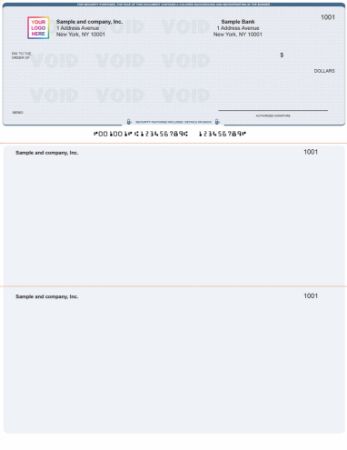
How Do You Stop a Check From Being Converted?
You usually cannot control it, but you can lower the chance. The OCC says you usually cannot choose the processing method, and it suggests asking regular payees not to convert your checks. The Regulation E commentary also says a payee may state situations in which a check will not be converted, so what is posted or printed by the payee counts.
| Option | How well it works | Notes |
|---|---|---|
| Pay another way, such as a card or bank bill pay | Most reliable | You choose the method |
| Ask regular billers in writing not to convert your checks | Good for billers that honor it | Suggested by the OCC. Keep a copy of your request |
| Use a bank tool such as an ACH debit filter | Depends on the bank | Ask what your bank offers. It matters most for business accounts |
| Write a note such as "do not convert" on the check | Not guaranteed | Treat it as a request. Payees decide their own process |
Table 4. Options to avoid conversion, from most to least reliable.
What if the Converted Amount Is Wrong?
Act quickly and put it in writing. On a personal account, the 60-day window starts with the statement showing the error. Your bank must investigate within 10 days of your notice, and if the matter is unresolved it must provisionally credit at least part of the amount and keep investigating for up to 45 more days, according to the OCC.
- Compare the debit with your records. Use your register. Our check register guide shows an easy layout.
- Call your bank and follow up in writing. Note the statement date and amount.
- Ask for the check image. The front shows the amount the payee captured.
- Contact the payee. A simple keying error is often fixed quickly.
- Keep records. Save the notice, your letter and the bank's reply.
What if the check bounced and a fee was taken electronically?
Two different rules apply. Regulation E does not cover re-presenting a returned check electronically, because the transaction began as a paper check. If a payee debits a returned-item fee electronically, though, Regulation E applies and the payee must first get your authorization for that fee. Our guide to the bounced check process explains what normally follows.
How Is Conversion Different From a Substitute Check?
A substitute check is still a check, while a converted check becomes an electronic transfer. The Federal Reserve describes a substitute check as a paper copy of an original check, slightly larger than a normal check, that meets printing standards. It follows check rules.
Conversion ends the check and starts an ACH debit. Our guide to the Check 21 Act covers substitute checks in detail.
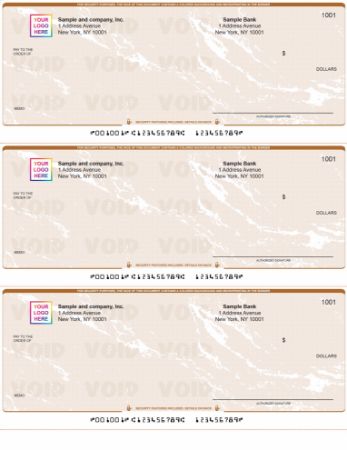
Checks that read cleanly, every time
MICR-ready numbers. Routing, account and check numbers are printed where banks and billers read them. Learn more about business checks.
Software friendly. QuickBooks-compatible formats print straight from your accounting program, which keeps check numbers in order.
See it first. A digital proof comes before printing, so a wrong digit is caught before it reaches a biller.
Fraud-aware stock. ABA compliant paper with security features supports the controls your bank already runs.
About the Author
Our content team wrote this guide for people who pay bills and suppliers by check. It relies on Regulation E (12 CFR 1005.2 and 1005.3) and its official commentary, OCC consumer guidance, the Federal Reserve Check 21 FAQ, the Nacha developer guide and Nacha's 2021 guidelines supplement.
General information only, not legal advice. Rules and bank terms differ, and business accounts are treated differently from personal accounts. Confirm details with your bank.
Frequently Asked Questions
Can a check be converted to ACH?
What do ARC, BOC and POP mean on a check?
Why was my check not returned to me?
Is it legal for a company to convert my check?
How long do I have to dispute a converted check?
Can business checks be converted to ACH?
Does writing do not convert on a check work?
Can I get a copy of a converted check?
What is a re-presented check?
How can I stop a check from being converted to ACH?
Accepted by the world’s leading banks