-
 Contact Us
-
 Re order
-
 Log in
-
 Cart 0
You have no items in your shopping cart.
Check From a Closed Account: Can You Cash It?
A check arrives, and later you learn the account behind it has been closed. A customer may have sent it just before shutting down their bank account, or a client may have handed it over without knowing. Now you wonder whether you can cash it at all.
This guide covers a check written on an account that has since been closed. It is not about a check made out to a business that has shut down, or a deposit sent to a closed account. We cover both sides: what to do if you hold the check, and what to do if you wrote it.
Quick Summary
You can usually present a check from a closed account, but the paying bank will normally return it unpaid. The writer still owes the money, and the debt does not vanish. Act quickly, put requests in writing and ask for a replacement payment from an open account.
Key points
- Presenting is not the same as being paid. Credit from your bank can be reversed when the check comes back.
- The return is quick. Under Regulation CC, a returned check normally reaches your bank within two business days of presentment. See how long a check takes to clear.
- The writer is still liable. The model Uniform Commercial Code (UCC) says the drawer of a dishonored check must pay it.
- The original debt survives. Taking a check only pauses the debt until the check is dishonored, paid or certified.
- Writers should list loose checks before closing. The CFPB advises making sure no checks are outstanding.
- Your state sets the rest. Demand letters, small claims steps and bad-check penalties vary by state.
| Your position | Best first move | Why it helps |
|---|---|---|
| You hold the check | Ask the writer for a new payment in writing | Gives you a record and a clear request |
| You wrote the check | Contact the payee and replace the payment | You remain liable on the check |
| You are closing a business account | List every check not yet cleared | Prevents returns after the account is gone |
| You are unsure the check is genuine | Wait for final funds before acting | Credit can appear before a bad check is found |
Table 1. What to do first, by role. General information only.
Replacing payments from a new account? Message the Checkomatic team about business checks printed with your current account details.
Inside this guide
- Can you cash a check from a closed account?
- What happens after you deposit one?
- Who is responsible for the money?
- What should you do if you hold the check?
- What should you do if you wrote it?
- How can a business close an account cleanly?
- How is this different from other returned checks?
- Is it risky to take or write one?
- Frequently asked questions
Can You Cash a Check From a Closed Account?
You can usually present it, but you should not count on being paid. The paying bank has no open account to charge, so it will normally return the check. Until your own bank says the money is final, treat it as not yours yet.
What if a bank or store hands you cash?
That choice is theirs. If they pay you and the check comes back, the model UCC says an indorser must pay a dishonored check, and a bank can charge back credit it gave. Ask how they handle returns before you sign the back. Our guide to how to endorse a check shows what your signature means.
Is the check itself worthless?
Not as proof of the debt. It shows what the writer promised to pay, and the writer stays liable under UCC 3-414. What it will not normally do is get you paid by that bank.
What Happens After You Deposit a Check From a Closed Account?
Your bank sends the check on for payment. When the paying bank decides not to pay, it returns the check, and your bank usually reverses any credit it gave you. The OCC's consumer help site says the bank can reverse the funds and may charge a fee.
Regulation CC sets the pace. Under 12 CFR 229.31(b)(1), a returned check should normally reach the depositary bank by 2 p.m. its local time on the second business day after the banking day of presentment.
That section has read the same way since 1 July 2018. See how long checks take to clear for the normal path.
| Step | Example day | What happens |
|---|---|---|
| Deposit | Monday | You deposit the check and your bank may show credit |
| Presentment | Tuesday | The check reaches the bank named on its face |
| Decision | Tuesday | The paying bank decides not to pay |
| Return cutoff | Thursday, 2 p.m. | Normal deadline for the return to reach your bank |
| Charge back | On or after the return | Your bank may reverse the credit and tell you |
Table 2. A made-up timeline. Real timing depends on when the check is presented and on bank holidays.
How will you know the check came back?
A returned check must show on its front that it was returned and why, under 12 CFR 229.31(e). For a check of $5,000 or more, the paying bank must also send a notice of nonpayment on the same timeline. We could not verify the exact reason wording, so read what is printed and ask your bank. Our page on what happens when a check bounces walks through the notice.
Can you simply deposit it again?
You can ask, but a second try will very likely come back the same way, because the account stays closed. The OCC also notes that a bank may extend the hold on a redeposited returned check. Read your deposit agreement, and see how to deposit a business check.
Who Is Responsible When the Account Behind a Check Is Closed?
The person who wrote the check is. The model UCC says the drawer of a dishonored ordinary check is obliged to pay it. Your state enacts its own version, so numbering and wording can differ.
| Relationship | What the sources say | Source |
|---|---|---|
| Writer to payee | The writer must pay a dishonored check | UCC 3-414 |
| Paying bank to payee | A bank owes nothing on a check until it accepts the item | UCC 3-408 |
| Payee to own bank | An indorser must pay a dishonored check if notice is given | UCC 3-415 |
| Payee to original debtor | After dishonor, you may enforce the check or the debt | UCC 3-310 |
Table 3. Four money relationships behind one returned check. See what happens if a business check bounces.
Does closing the account cancel the debt?
No. Under UCC 3-310, taking an uncertified check suspends the debt until the check is dishonored, paid or certified. After dishonor you may enforce either the check or the underlying obligation. An unpaid invoice stays an unpaid invoice.
| Common belief | Better view |
|---|---|
| The bank will pay now and sort it out later | A bank may credit you first, then reverse the credit on a return |
| Waiting will fix it | Waiting does not reopen the account, so ask for a new payment |
| Closing the account erases the debt | The payee may still enforce the underlying obligation |
Table 4. Three myths about closed-account checks. Compare check validity basics.
How long can you wait before acting?
Do not wait. The model UCC says notice of dishonor can be oral, written or electronic, and it gives 30 days after dishonor in one simple case. It also allows suit on an unaccepted draft within three years after dishonor in the model text, but states vary. Time limits for cashing a business check cover the check itself.
What Should You Do If You Are Holding a Check From a Closed Account?
Keep records, tell the writer in writing and ask for a safer payment. Follow these steps in order.
- Keep every document. Save the returned check, your bank's notice, the deposit receipt, the invoice and any messages.
- Tell the writer in writing. Say the check was returned and ask for a new payment by a set date.
- Ask for secure funds. A cashier's check or a money order is less likely to come back.
- Pause new work or shipments. Hold them until the money is final in your account.
- Read your state's rules. Demand letters, small claims and bad-check laws are set by each state.
- Update your bank. Ask how it handles returned items.
When does small claims court make sense?
It is a common route for modest amounts when the writer ignores written requests. Filing limits, forms and any demand-letter step differ by state, so use your state's rules and ask a lawyer if the amount is large. For general check handling, our guide to cashing a check covers the basics.
What Should You Do If You Wrote a Check on an Account You Closed?
Contact the payee right away and replace the payment from an open account. The check remains your debt, and speed shows good faith.
- Call, then write. A short message with the amount, date and check number helps.
- Pay by a secure method. A cashier's check or money order is less likely to come back.
- Or send a fresh check. Our guide to writing a business check covers the fields.
- Ask for the old check back. Have the payee return it, or confirm in writing that it is void.
- Record the fix. Note the replacement in your register.
Can a bank close your account without warning?
Yes, in many cases. The CFPB says a bank or credit union can close an account without your permission, and common reasons include writing bad checks. Some states require advance notice. Our bounced check guide lists other reasons checks come back.
Can the old check be stopped before anyone cashes it?
Ask your bank before the account closes. Whether a stop payment still works depends on the bank and the timing. Stopping payment on a check explains the process.
How Can a Business Close an Account Without Leaving Old Checks Behind?
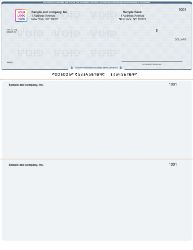
List every check that has not cleared, then give payees a new way to be paid before you close. The CFPB's page on closing an account says to make sure no outstanding or pending checks, fees or automatic payments remain. Bounced ones can bring fees and make it harder to open another checking account.
- Pull your register. Mark every check that has not cleared. A tidy check register makes this easy.
- Let them clear or replace them.
- Move recurring payments. Point payroll, vendors and automatic debits to the new account.
- Tell payees in writing. Give the new details and the date the old account ends.
- Update fraud controls. If you use positive pay, change the issue file.
- Keep proof. File the closing confirmation and final statement. Weigh how many business accounts you need first.
How do you dispose of unused check stock?
Destroy them securely, such as by shredding, so no one can use your old account details. For safe storage habits while you still have stock, see checkbook management, and for marked-up spoiled checks see voided checks.
How Is a Closed Account Different From a Stale, Stopped or Bounced Check?
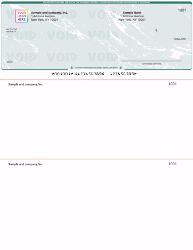
A closed account is not something the writer can fix by adding money. This table shows how it differs.
| Situation | Why it is not paid | Usual fix |
|---|---|---|
| Closed account | No open account at the paying bank | Replacement from an open account |
| Stale-dated check | Presented after the six-month mark | Ask the writer to reissue it |
| Stop payment | The writer told the bank not to pay | Talk to the writer |
| Not enough money | The account is open but the balance is short | Wait for funds or ask for new payment |
Table 5. Four reasons for non-payment. UCC 4-404 gives a bank no duty to pay a check that is six months old or more, though paying in good faith is allowed. See check time limits.
Is It Risky to Take or Write a Check From a Closed Account?
It can be, and the details depend on where you live. Bad-check laws are set by each state, and intent often matters. We did not verify any penalty figures, so we state none.
What if the check looks suspicious?
The FTC warns that funds can show in your account even when a check is bad, and that fake checks can take weeks to be found. The depositor is then stuck paying the bank back. Read check fraud scams and check fraud prevention before you spend the money.
Checks for the account you use now
Current details. Order business checks printed with your open account.
Software layouts. Check-on-top stock suits QuickBooks and Quicken users.
Numbers first. Confirm your routing and account numbers before printing.
Questions. Ask our team which layout fits your setup.
About the Author
Checkomatic's team put this guide together for payees and check writers, drawing on the model UCC (Articles 3 and 4, including 3-118, 3-310, 3-408, 3-414, 3-415 and 4-404), Regulation CC at 12 CFR 229.31, the OCC's consumer help pages, FTC consumer advice and CFPB account-closing guidance.
Nothing here is legal advice. States adopt the UCC in their own form and write their own bad-check and small claims rules, while banks set their own policies. For your own case, speak to your bank or a lawyer.
Frequently Asked Questions
Can the bank take back money after I spend it?
Does the writer still owe me if the account is shut?
Is redepositing the check worth trying?
How soon will my bank learn the check was returned?
What will a returned check show on its front?
Is a closed-account check the same as a stale check?
Can a bank close my account without telling me?
What should I do with unused checks after closing?
Are there safer ways to be paid than a personal check?
Can I be charged for depositing one?
Accepted by the world’s leading banks