-
 Contact Us
-
 Re order
-
 Log in
-
 Cart 0
You have no items in your shopping cart.
Can You Cash a Check With No Date? What Banks Allow
Someone hands you a check and you notice the date line is empty. Or you wrote one yourself, mailed it, and realized afterwards that you skipped the date. Either way, the next question is the same: will the bank take it?
This guide gives a calm, sourced answer. It separates what the law says from what a teller will do, explains what other missing details mean, and shows how to fix a check without starting over. If you also need to write one correctly, our guide on how to fill out a check walks through each line.
Quick Summary
Usually yes. Under the model Uniform Commercial Code (UCC), an undated check is treated as dated the day it was issued, so a missing date alone does not make a check invalid. A bank can still decline it under its own policy, so a valid check is not always an accepted check.
Key points
- A missing date is rarely fatal. UCC 3-113(b) treats an undated instrument as dated on the day it was issued.
- A missing signature is a bigger problem. The CFPB says an unsigned check will usually be declined or returned, and the writer must sign it.
- Words beat numbers. If the amount in words and the amount in numbers differ, the words control (UCC 3-114).
- A blank payee makes a check payable to whoever holds it. That is called bearer paper (UCC 3-109), so a lost check is easy to cash.
- Adding details needs the writer's permission. Under UCC 3-115, adding words or figures to an incomplete check without the signer's authority is treated as an alteration.
- Banks are not required to cash checks. The CFPB says a bank can decline, especially for non-customers.
| What is missing | Valid under the model UCC? | Likely at the bank | Best fix |
|---|---|---|---|
| Date | Yes. Treated as dated on the issue day | Often accepted, sometimes questioned | Add the date with the writer's OK, or reissue |
| Signature | No. The writer is not liable without a signature | Usually declined or returned | Ask the writer to sign or reissue |
| Payee name | Yes, but it becomes payable to the holder | May be questioned | Fill in the right name with the writer's OK |
| Amount in numbers only | Yes, if the words are present | Usually accepted. Words control | Correct the numbers with the writer's OK |
| Amount in words only | Yes. Words control | May be questioned | Add numbers with the writer's OK |
| Memo line | Yes. It is optional | Accepted | None needed |
Table 1. What a missing item means, based on the model UCC and CFPB guidance. A bank's own policy decides what it accepts.
Want checks that make the date, payee and amount lines hard to miss? Talk to the Checkomatic team about a layout that suits you.
What is in this guide
- Can you cash a check with no date?
- Who is allowed to fill in the missing date?
- What if other details are missing?
- What do old, future and wrong dates mean?
- Why would a teller refuse a valid check?
- What can you do if the bank says no?
- How do you fix a check you filled out wrongly?
- How should a business handle incomplete checks?
- Frequently asked questions
- More questions about incomplete checks
Can You Cash a Check With No Date?
Often you can, because the law does not make the date a requirement for a check to be valid. A bank still has its own deposit rules and can ask you to get the date added. Most states follow the uniform text, but your state may differ, so confirm with your bank.
Is an undated check valid?
Yes, under the model UCC. A negotiable instrument is a signed written order to pay a fixed amount of money that is payable on demand or at a definite time. The list in UCC 3-104 does not include a date for a check payable on demand. That is a reading of the list, and a bank is not bound by it, so treat it as the legal baseline.
What date does an undated check carry?
The day it was issued. UCC 3-113(b) says an undated instrument is treated as dated on the day it was issued. If it was never issued, the date is the day a holder first took possession of it.
In practice, many banks look at the day you present it. Do not rely on this alone for a large amount.
Will a bank take a check with no date?
Yes. The CFPB says banks and credit unions do not have to cash checks. If you are not a customer and the writer does not bank there, they often decline. The next sections explain what to do if that happens.
Who Is Allowed to Fill In the Missing Date?
The safest answer is the writer, or someone the writer has clearly allowed to do it. UCC 3-115 covers incomplete instruments: a signed check with something left blank that the signer meant to be filled in. Adding words or figures without the signer's authority counts as an alteration under UCC 3-407, and the person who says an addition was unauthorized must prove it.
That is why a short note helps. If the writer says "please add today's date," write down who said it, when and how. A text message or a quick email is enough to show what was agreed. We do not give a universal rule here, because it depends on the facts and your state.
What if Other Details Are Missing?
Some gaps are harmless and some stop the check. The reasons come from different parts of the UCC, so each item below links back to its source.
Can you cash a check with no signature?
No. The CFPB says an unsigned check will usually be declined or returned, and the writer needs to sign it. Under UCC 3-401, a person is liable on an instrument only if they signed it, or an authorized agent signed for them. Without a signature there is nothing to enforce against the writer.
What if the payee line is blank?
The check becomes payable to whoever holds it. UCC 3-109(a) treats an instrument that names no payee as payable to bearer. That makes a blank-payee check easy to cash by mistake or by theft. Fill in the name before it leaves your hands, or keep it safe until you do.
What if the amount is missing or the words and numbers differ?
Words win. UCC 3-114 says handwritten terms control over typed ones, typed over printed, and words over numbers. The CFPB gives the same answer for a check where the two amounts differ: the written-out amount applies. A check with no amount at all is incomplete, and filling it in without permission is an alteration.
Is the memo line required?
No. The memo line is a note for your records. A check is valid without it, though a short memo helps you and the payee match the payment to an invoice. Our check register guide shows how to track each payment.
What Do Old, Future and Wrong Dates Mean?
A wrong date matters when it changes when the bank may pay. A future date asks the bank to wait, and an old date can make a check stale. Table 2 sums up the three cases.
| Date on the check | What the model UCC says | What to do |
|---|---|---|
| Future date (postdated) | A bank may pay it early unless the writer gave proper notice (UCC 4-401(c)) | Writers who want a hold should tell the bank in time |
| More than six months old (stale) | A bank need not pay an uncertified check presented after six months, but may pay in good faith (UCC 4-404) | Ask the writer to reissue, or ask your bank |
| Wrong year | The stated date still counts, so a typo can trigger the stale rule or the postdated rule | Correct it with the writer's OK, or reissue |
Table 2. How a future, old or mistaken date changes the way a bank may treat a check.
States can set their own rules on stale checks, and the CFPB notes that no federal law forces a bank to accept one. Our guide to how long you have to cash a business check covers the time limits.
Why Would a Teller Refuse a Valid Check?
Because "valid" and "accepted" are two different tests. The law decides whether a check can be enforced. The bank's policy decides what a teller will take over the counter. Many institutions look for several conditions before they cash a check.
- The writer is a customer of that bank or credit union.
- The account has enough money to cover the amount.
- The check is under six months old.
- You are the named payee and can show valid ID.
Those conditions come from CFPB guidance. A blank, changed or unusual check adds risk for the bank, so a teller may ask for the writer's confirmation even when the law is on your side. Read more in our guide to checking a check's validity.
What Can You Do if the Bank Says No?
- Ask why. The teller may only need the date or a signature added.
- Call the writer. Ask them to confirm the details or add the missing item while you are present.
- Try the writer's bank. It can confirm the funds, and may cash it for you.
- Deposit it into your own account. Your bank may accept a deposit when it would not cash the check over the counter.
- Ask for a reissue. A replacement check is cleaner than an arguable one.
How Do You Fix a Check You Filled Out Wrongly?
For anything beyond a small slip, void it and write a new one. Writing a new check is cleaner than cross-outs, because banks may question changes. Our guide on how to correct a mistake on a check covers when a fix is acceptable.
- Write VOID across the front. Use ink and cover the date, payee and amount lines.
- Record it. Keep the voided check number in your register.
- Stop payment if it was mailed. Tell your bank at once if the old check might still be presented.
- Issue the new check. Tell the payee which one to use.
What about a stop payment on the old check?
A written stop payment order lasts six months and can be renewed, while an oral one lapses after 14 calendar days unless it is confirmed in a record (UCC 4-403). Fees and the exact steps depend on your bank. See how to stop payment on a check.
How Should a Business Handle Incomplete Checks?
Set a simple rule: no check leaves the office incomplete. Signed blank checks are the biggest risk, because anyone who finds one can complete it. A short written policy protects staff and customers.
| Rule | Why it helps |
|---|---|
| Never sign a blank check | An incomplete check can be completed by someone else |
| Fill in date, payee and amount before signing | Closes the gaps a teller might question |
| Add a second signer for larger amounts | Another set of eyes before money leaves |
| Log voided checks and keep them | Shows the number was never used |
| Print checks from software where you can | Date and amount in words fill in for you |
Table 3. Simple rules for company check writing. Adapt them to your bank and your controls.
Checks that leave fewer gaps
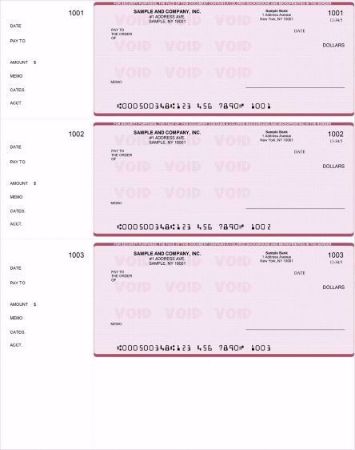
Printed from software. QuickBooks-compatible formats fill in the date and the amount in words from your records. See QuickBooks checks.
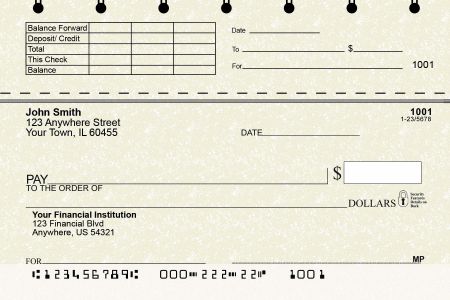
Lines that are easy to see. Top stub and wallet formats give each line room, so a rushed writer is less likely to skip one.
Names printed in advance. Your printed name and account details are already in place, so fewer lines are left to fill in by hand.
Proof first. You can check the digital proof before an order goes to print.
About the Author
Our content team, which answers check-writing questions every day, wrote this guide. The legal points rest on UCC Articles 3 and 4 (sections 3-104, 3-109, 3-113, 3-114, 3-115, 3-401, 3-407, 4-401, 4-403 and 4-404), and the bank practices come from CFPB consumer guidance on cashing and filling out checks.
General information only, not legal advice. States adopt the UCC with changes, and each bank sets its own deposit policy. Check your state's law and your bank's rules for your own situation.
Frequently Asked Questions
Can you cash a check with no date?
Is a check valid without a date?
Who can fill in the date on an undated check?
Can you cash a check with no signature?
What if the amount in words and numbers differ?
What happens if the payee line is blank?
Is a valid check always accepted at the bank?
Is the memo line required?
Can I cash a postdated check early?
When should I start over with a new check?
Accepted by the world’s leading banks