-
 Contact Us
-
 Re order
-
 Log in
-
 Cart 0
You have no items in your shopping cart.
Out of State Check: Can You Cash or Deposit One?
An out of state check can feel like a puzzle. The bank named on it is far away, and you wonder whether it will be refused, held for days, or turn out to be fake.
This guide covers depositing, holds, cashing without an account, spotting fakes and what a small business should do. The surprise is on holds. The Federal Reserve says the state on the check no longer lengthens the wait, as covered in our guide to how long a check takes to clear.
Quick Summary
Yes, you can usually deposit an out of state check into your own account. Cashing it for cash is a different matter, because no federal law forces a bank to cash a check for someone with no account there. The state line does not set the hold: the Federal Reserve says there are no longer any nonlocal checks, so another state is not a reason for a longer schedule.
Key points
- Deposit is the easy route. Your own bank can take the check, and the paying bank's state is not the test.
- The state does not lengthen the hold. The Fed says nonlocal checks ended on 27 February 2010. See how long checks take to clear.
- Other holds can still apply. A new account or a very large deposit are examples.
- Cashing is the bank's call. See how to cash a check.
- Government checks are the exception. Next-day treatment for a state check depends on where you deposit it.
- Available is not cleared. Verify the paying bank yourself and never send money back from a deposited check.
| Topic | Answer | Basis |
|---|---|---|
| Can you deposit it? | Usually, into your own account | Your bank's account terms |
| Does it clear more slowly? | Not because of the state | Federal Reserve guide to Regulation CC |
| Must a bank cash it for someone with no account? | No federal duty to do so | OCC and CFPB |
| Is any check type treated by state? | Yes, state and local government checks | 12 CFR 229.10(c)(1)(iv) |
| Is it safe to send money back? | No | FTC and FDIC fake check advice |
Table 1. Key answers in brief. General information only, not legal advice.
Taking payments from customers in other states? Talk with the Checkomatic team about checks and envelopes that keep payments tidy.
What is in this guide
- Putting one in your own bank account
- Does it take longer to clear?
- Cashing one without an account
- Which checks follow different rules?
- How can you tell if one is real?
- What should a small business do with a customer's check?
- How can you make paying by check easier for faraway customers?
- What if a bank refuses it?
- Frequently asked questions
Can You Put an Out of State Check in Your Own Bank Account?
Usually yes. Depositing is the simplest way to handle an out of state check, because your bank collects the money from the paying bank.
Does your bank care which state the check is from?
Under Regulation CC, the question is which Federal Reserve check-processing region the paying bank sits in, not which state. Since the Fed has one region, the state line is not a test. Our guide to depositing a business check covers the counter, the ATM and the app.
What about app and ATM deposits?
Ask your bank, because app and ATM rules are the bank's own. The one ATM rule we could confirm is that deposits at an ATM your bank does not own must be available by the fifth business day, according to the Fed's guide. Who may sign the back depends on the rules in who can endorse a business check.
Does an Out of State Check Take Longer to Clear?
No, not because of the state. The Federal Reserve's press release of 31 December 2009 said there would "no longer be any checks that are nonlocal," effective 27 February 2010, and its Regulation CC guide, last updated 12 December 2025, still says so. So the old nonlocal wait is not a reason to hold your check.
| Date | What happened | Source |
|---|---|---|
| 31 December 2009 | The Fed announced there would be one check-processing region | Federal Reserve Board press release |
| 5 January 2010 | The rule change was published in the Federal Register | 75 FR 219 |
| 27 February 2010 | The change took effect | Federal Reserve Board |
| 12 December 2025 | The Fed's guide was last updated and says nonlocal checks no longer exist | Guide to Regulation CC Compliance |
Table 2. How the nonlocal check hold ended. See how long for a check to clear for the full schedule.
Is there still a nonlocal check hold?
No. The words "local" and "nonlocal" still appear in 12 CFR 229.2 and 229.12 on the eCFR, which showed updates through 19 and 16 October 2026. The Fed's guide ties this to the single region and says second business day is the outer limit for local checks. Our clearing time guide shows how that schedule works.
Which holds can still apply?
The same ones that apply to any check. Regulation CC lets a bank take extra time for a new account in its first 30 calendar days, a large deposit above $6,725 in a banking day, repeated overdrafts, or reasonable cause to doubt the check can be collected. The bank must say why in its notice, and this guide lists each one.
Can You Cash an Out of State Check Without an Account?
Maybe. Cashing without an account is a bank decision, and another state does not change that. The OCC states that federal law and regulation do not require a bank to cash a non-customer's check.
Must a bank cash it for you?
No. The CFPB, in an answer reviewed December 2024, agrees that a bank or credit union is not obligated to cash your check, and one that agrees may charge a fee. Refusals, fees and ID are covered in our guide to cashing a check.
Should you try the paying bank first?
It is a good first try, but not guaranteed. Under UCC 3-408 the bank a check is drawn on owes nothing on it until it accepts the check, and UCC 3-501(b)(2) allows it to ask for the check and reasonable identification. States adopt the UCC with changes, so confirm your state's version.
What if the paying bank has no branch in your state?
Then cashing it in person is not possible. You can deposit it into your own account, ask the payer for another form of payment, or ask your bank what it offers. A bank-issued check may be easier to place, as explained in what a cashier's check is.
Do stores and check cashers take them?
Each business sets its own policy. We found no regulator source on a retailer's rules, so call ahead and ask about fees, ID and accepted check types.
Which Out of State Checks Follow Different Rules?
One type does: state and local government checks. For most checks the state is irrelevant to the hold, but 12 CFR 229.10(c)(1)(iv) ties next-day treatment of a government check to where it is deposited.
| Check type | Does the other state matter? | Note |
|---|---|---|
| Personal or business check | Not for the hold | Cashing is still up to the bank |
| State or local government check | Yes | Next-day rule needs a bank in the issuing state |
| Payroll check from another state | No state rule in the text we reviewed | Treated like other checks, so ask your bank |
| Cashier's or certified check | No state rule in the text we reviewed | Fakes exist, so verify the issuer |
Table 3. Where the state matters. See check types and terminology for the basics.
Can you cash a government or tax refund check from another state?
You can try, but the next-day rule may not help. That rule covers a state or local government check only when it is deposited at a bank in the state that issued it, with extra conditions on the account and the deposit. Otherwise a different schedule may apply, and we did not confirm what it is, so ask your bank.
Is a cashier's check from another state treated the same?
The bank decides, as with any check, and fake cashier's checks exist, so use the verification steps below. See the certified check guide.
How Can You Tell If an Out of State Check Is Real?
You usually cannot tell by looking. Contact the paying bank using a phone number you look up yourself, because the FDIC warns against using the number printed on the check. These steps follow FTC and FDIC advice.
- Look up the paying bank's official number yourself. Do not call the number on the check (FDIC, 26 August 2019).
- Treat available funds as not cleared. The FTC says a quick deposit "doesn't mean it's a good check."
- Never send money back from a deposited check. The FTC says a fake can take weeks to be discovered.
- Be skeptical of an unknown payer. The FDIC says to proceed cautiously if someone you do not know started the payment.
- Report a fake. The FTC page, dated June 2025, names the FTC, the U.S. Postal Inspection Service and your state attorney general.
Why can funds show as available before a check has cleared?
Banks must release deposits on a schedule, and that is not a verdict on the check. The FTC says fake checks can take weeks to be discovered. The OCC's funds availability page, reviewed June 2025, also lists doubts about collectability among the reasons for a hold.
Is a check from a stranger in another state a scam?
Not always, but be careful. The FTC notes some fake checks are real checks on accounts of identity theft victims, so a real bank name proves little. Our guides on check fraud scams and check validity go deeper.
What Should a Small Business Do With a Customer's Out of State Check?
Treat it like any customer check, with extra care. This section is practical guidance, not law. Whether you take checks at all is your choice, as discussed in whether businesses must accept checks.
Can a business deposit a customer's check from another state?
Yes, in the usual way. Endorse it, deposit it at your bank, and let the normal schedule run. The steps are in how to deposit a business check, and a missing signature is covered in depositing a check without endorsing it.
How do you verify the payer before you ship?
- Match the name. The payer on the check should match the name on the invoice.
- Look up the bank. Find the paying bank's official number yourself, as above.
- Question overpayments. A check for more than you billed is a warning sign.
- Wait on large orders. Ask your bank when funds are final before shipping.
How should you log each customer check?
Log each check on arrival so you can trace it later. Record the invoice, payer, state, check number, amount, bank name and the dates received and deposited in a check register.
How Can You Make Paying by Check Easier for Customers in Other States?
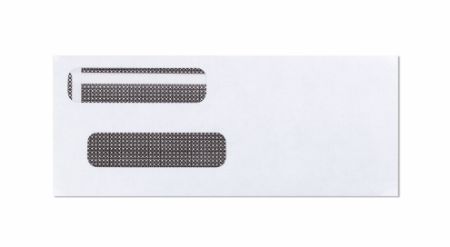
Give them a clear way to pay. Faraway customers mail checks, so a ready envelope and a clear payee line prevent many mistakes.
- Print the exact payee name on each invoice so the check is written correctly.
- Include a return envelope addressed to you.
- Offer another way to pay. Check versus ACH and wire transfer versus check compare the choices.
What If a Bank Refuses an Out of State Check?
First find out whether the bank refused to cash the check or placed a hold on a deposit. A refusal for a non-customer is allowed. A hold comes with a notice, according to the OCC, that gives the reason and the date funds will be available.
| What the bank says | What it may mean | Your next step |
|---|---|---|
| We cannot cash this | A policy for non-customers | Deposit it into your own account instead |
| Funds are on hold | An exception hold or a bank rule | Ask for the notice with the reason and date |
| We cannot accept this check | A doubt about the check or the payer | Verify the payer, then ask for another payment method |
Table 4. Common bank answers and a sensible response.
- Ask which one it is. A refusal and a hold lead to different next steps.
- Ask for the hold notice if the bank placed a hold on your deposit.
- Ask the payer for a safer form of payment, such as a cashier's check or an ACH transfer. See cashier's checks for one option.
- Check the payer's account. Our guide to cashing a check from a closed account explains one reason a check comes back.
Checks that travel well
Clear payee line. Our business checks keep the payee, amount and memo readable.
Return envelopes. Include one with every invoice, so customers know where to send payment.
Record keeping. Pair your checks with a register so every out of state payment is logged.
Questions? Our team can help you match stock and envelopes to how your customers pay.
About the Author
Our editors wrote this page for small businesses that accept checks, using the Federal Reserve's Regulation CC materials, 12 CFR Part 229, OCC and CFPB answers, UCC Article 3, and FTC and FDIC fake check advice.
Treat this page as background reading, not legal advice. States and banks differ, so put your own situation to your bank or an attorney before you act.
Frequently Asked Questions
Can I use my banking app for a check from another state?
What ID will a bank want before it cashes one?
Can a bank charge me to cash a check from another state?
Why was my deposit returned after the funds showed as available?
Do I endorse a check from another state differently?
Should I call the number printed on the check to verify it?
What if a buyer overpays by check and asks for a refund?
Where do I report a fake check?
Is a cashier's check from another state always safe to accept?
Can a customer in another state pay without a paper check?
Accepted by the world’s leading banks