-
 Contact Us
-
 Re order
-
 Log in
-
 Cart 0
You have no items in your shopping cart.
Can You Deposit a Check Without Endorsing It? (2026)
You are at the counter, in the parking lot or at your desk, and the check in your hand has a blank back. You forgot to sign it. Now you wonder whether the bank will take it, reject it or flag your account.
The honest answer has two layers. The law often lets a bank take an unsigned check, but your bank's own rules decide what happens to you. This guide explains both layers, shows when a signature is still needed, and gives you a simple plan if you already forgot.
Quick Summary
You may be able to deposit a check without endorsing it, because the model Uniform Commercial Code (UCC) treats the depositary bank as a holder even when the customer does not sign. That does not force any bank to accept one. Treat a missing signature as a question for your bank, and sign the back when in doubt.
Key points
- The uniform UCC text allows it. Section 4-205(1) says the bank becomes a holder "whether or not the customer indorses the item."
- States differ. New York's older wording lets the bank supply the signature unless the item says "payee's indorsement required."
- We found no federal rule that makes the payee sign. Your account agreement can still require it.
- Some checks always need a signature. That includes checks payable to someone else and checks to two payees joined by "and."
- A forgotten signature is usually fixable. Ask your bank, then sign and redeposit if the check is still in hand.
- The front signature is a different issue. A check the writer never signed is a separate problem.
| Question | Quick answer | Source |
|---|---|---|
| Does the UCC allow an unsigned deposit? | The uniform text does | UCC 4-205(1) |
| Does a federal rule make the payee sign? | None found | Regulation CC covers bank stamps |
| Will your bank take it? | Ask first | Your account agreement |
| Is a signature needed on a third-party check? | Yes | UCC 3-201(b) |
| Can you fix a forgotten signature? | Usually, if you still hold the check | Your bank's advice |
Table 1. The main answers in brief. Nothing here replaces advice from a lawyer.
Depositing business checks every week? Talk to the Checkomatic team about checks and tools that keep the back of each check clear and easy to sign.
In this guide
- Can you deposit a check without endorsing it?
- Why do banks still ask you to sign?
- When is an endorsement still required?
- Is a missing writer signature the same problem?
- What should you do if you forgot to sign?
- How should a business handle its own checks?
- What does writing "for deposit only" do?
- Frequently asked questions
Can You Deposit a Check Without Endorsing It?
Sometimes, yes. The law does not stop a bank from crediting your account when the back is blank, but a bank may still refuse or add conditions. The only reliable answer for your account comes from your deposit agreement and your bank.
What does the UCC say about an unsigned deposit?
The uniform text of UCC 4-205(1) is titled "Depositary bank holder of unindorsed item." It says the bank that takes your check for collection becomes a holder when it receives it, as long as you were a holder when you handed it over. Your signature does not change that, because the bank becomes a holder "whether or not the customer indorses the item." The UCC spells the word "indorse"; this guide uses the common spelling.
Do all states follow that wording?
No. States enact their own versions. New York's text, headed "Supplying Missing Indorsement," lets a bank add the customer's signature unless the item carries the words "payee's indorsement required." We did not check every state, so ask your bank or a lawyer which version applies where you live.
Does any federal rule require the payee to sign?
We found none. Regulation CC, section 229.35, covers the stamps that banks put on a check as it moves through the system. It is about the bank's endorsement, not yours. Our review was not exhaustive, so read this as a careful negative finding, not a promise.
To see how a deposited check travels between banks, read about the Check 21 Act.
Why Do Banks Still Ask You to Sign?
Because the account agreement and the bank's risk rules sit apart from the UCC. A bank can accept a check without your signature, or require one as a condition of the account. Neither choice breaks the law, so answers differ between banks.
What risk does the bank carry on an unsigned item?
Under UCC 4-205(2), the depositary bank warrants to other banks and the writer that the amount was paid to its customer or deposited in the customer's account. Under UCC 4-207 and 4-208, banks that pass a check along also warrant that the person is entitled to enforce it and that signatures are genuine. These warranties cannot be disclaimed for checks. A bank that dislikes those odds can say no.
Which questions get a clear answer from your bank?
Ask before you rely on a blank back. We did not verify any bank's cap, hold length, ID rule or paper-check storage period. Four questions cover it:
- Is a missing signature allowed for my account type?
- Does the answer change at a branch, an ATM or the mobile app?
- Is there a deposit limit, a longer hold or an ID check?
- How long should I keep the paper check?
Hold times are a separate topic, covered in how long a check takes to clear.
When Is an Endorsement Still Required?
It is required whenever someone other than the named payee is depositing the check, and whenever the check or your bank says so. The rule for transferring a check made out to a person is that the holder must sign it. Anything else is a convenience your bank may or may not allow.
| Situation | Signature needed? | Basis |
|---|---|---|
| Check made out to you, deposited to your own account | Often not, but ask your bank | UCC 4-205(1), your agreement |
| Check made out to someone else | Yes, the payee signs first | UCC 3-201(b) |
| Two payees joined by "and" | Generally both sign | CFPB, and the OCC |
| Two payees joined by "or" | Generally either can sign | CFPB |
| Check says "payee's indorsement required" | Yes | Wording in older UCC text |
| Mobile or ATM deposit | Ask your bank | Bank rules, not verified |
Table 2. Common situations and where the answer comes from. Sources: UCC Articles 3 and 4 as published, and Ask CFPB pages reviewed in 2024 and 2026.
What about a check made out to someone else?
Under UCC 3-201(b), an order instrument is negotiated by transferring possession and the holder's signature. If the payee hands the check over for value and forgets to sign, UCC 3-203(c) says the new holder can demand the unqualified signature, but the check is not fully negotiated until it is given. The OCC says each bank sets its own third-party check policy. See our guide to signing a check for someone else.
Does it matter if the named payee has passed away?
Different rules apply, so read cashing a check after the person dies first.
Do two payees both have to sign?
It depends on the word between the names. The CFPB says a check to "Pat and Chris Doe" generally needs both signatures, while "Pat or Chris Doe" can generally be signed by either one. The OCC says a bank generally can require both people to sign.
Is a Missing Writer Signature the Same Problem?
No. A missing endorsement is a blank back, and the payee can fix it. A missing writer signature is a blank front, and only the person who wrote the check can fix that. Mixing them up leads many readers to the wrong answer.
| Which signature | Where | Who fixes it | Next step |
|---|---|---|---|
| Payee endorsement | Back of the check | The payee | Sign, or ask your bank first |
| Writer (drawer) signature | Front, bottom right | The person who wrote it | Return it for signing |
| Bank statement or stamp | Back, bank area | The bank | Nothing for you to do |
Table 3. Three different signatures on one check. Source for the front signature: Ask CFPB, reviewed August 2024.
What does the CFPB say about an unsigned front?
According to the CFPB, a check the writer forgot to sign will likely be refused or returned by the bank or credit union. You must get the person who gave you the check to sign it. If you write checks yourself, the writer's side is explained in how to fill out a check, with the business version in how to write a business check.
What Should You Do If You Forgot to Sign?
A forgotten endorsement is usually fixable. Start with a short call or visit to your bank, because the best fix depends on where the check is and how you deposited it.
What if you still have the check?
Ask your bank how it wants you to handle it. If the bank tells you to, sign the back as the payee and deposit the check again. Make sure the first attempt did not already go through, since one paper check should not be deposited twice. The steps for marking a check are in how to endorse a check, including mobile-deposit wording.
- Stop and check your account. See whether the first deposit shows as pending, posted or returned.
- Call your bank. Describe the check and how you deposited it.
- Sign only if told to. Use the exact wording your bank gives you.
- Keep the check. Hold it until your bank says you are done.
What if you lost the check before signing?
The CFPB suggests asking the writer to stop payment so no one else can cash it, then asking for a second check. Tell the writer quickly. The steps are in stopping payment on a check.
How Should a Business Handle Its Own Checks?
Treat every check payable to the business as something to sign deliberately, and sign it only when you are ready to deposit it. The person who signs must be allowed to. Our guide on who can endorse a business check covers that, including what can go wrong when a business deposits without an endorsement.
What does a simple deposit routine look like?
A routine keeps mistakes small when several people handle the mail. The full process is in how to deposit a business check. This version fits on a sticky note:
- Check the payee name. It should match your business or the account holder.
- Look for legends. Read the front for words such as "payee's indorsement required."
- Endorse when ready. Do not sign a stack in advance and leave it on a desk.
- List it on a slip. Write each check on the deposit slip.
Does the deposit slip change anything?
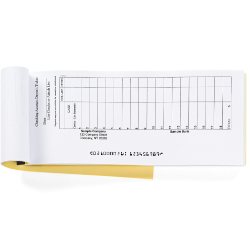
List each check by amount and add the total, as shown in how to fill out a deposit slip. A clear slip lets the teller match the paper to the total.
What Does Writing "For Deposit Only" Do?
It is a restrictive endorsement. Writing "for deposit only" above your signature tells the bank to put the money into your account and nowhere else. The CFPB says the check can then only be deposited in your account, which should keep someone else from cashing it if it is lost.
| Type | What you write | Effect |
|---|---|---|
| Blank | Signature only | Becomes payable to the bearer (UCC 3-205(b)) |
| Restrictive | "For deposit only" plus signature | Deposit to your account only |
| Special | Words naming a new payee plus signature | Payable to that person |
Table 4. Three endorsement styles compared. Sources: UCC 3-205, 3-206 and Ask CFPB, reviewed April 2024.
Does a restrictive endorsement bind the bank?
Mostly it binds the bank that takes the check in. Under UCC 3-206(c), a depositary bank that takes a check marked "for deposit" or "for collection" can be liable for conversion unless the money goes to the signer or is used consistently with the wording. A payor bank may disregard the words. That is why a restrictive line protects you in the one place you control, your own deposit.
Is a stamp worth it for frequent deposits?
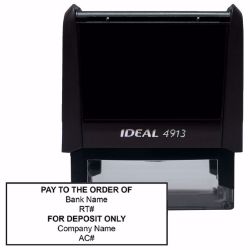
It can be, if you deposit many checks and want the same wording each time. A stamp keeps the back neat. If you use one, ask your bank what wording it prefers and match the text before you order. See our endorsement stamp options and, for signing, the signature stamp for checks page.
Make deposit day easier
A clear back. A consistent stamp or a printed endorsement area helps every person who signs for your business.
A clean front. Well laid out checks reduce questions at the teller line. See business checks.
Paper that matches your routine. Pick slips and tools your team will actually use.
A person to ask. The team can talk through your setup, so reach out through the contact page.
About the Author
The Checkomatic team, who handle business checks every day, prepared this guide from the uniform text of UCC Articles 3 and 4, New York's enacted UCC 4-205, Regulation CC (12 CFR 229.35), and Ask CFPB and OCC consumer pages on endorsements, joint payees and unsigned checks.
General information only, not a substitute for legal advice. States enact the UCC differently and banks set their own deposit rules, so confirm what applies to you with your bank or a lawyer before relying on an unsigned deposit.
Frequently Asked Questions
Is it illegal to deposit a check without a signature on the back?
Will my bank reject an unsigned check?
Can I sign the check after the bank has it?
Does a check from a government agency need my signature?
What should I write on the back if the bank asks me to sign?
Does an ATM take a check with a blank back?
What if the check is made out to my business and a person signs?
Is a signature stamp the same as an endorsement?
Should I sign a check as soon as I receive it?
Why does my phone app ask for extra words on the back?
Accepted by the world’s leading banks