Quick Answer: A certified check is a personal or business check that a bank has officially verified, stamped CERTIFIED, and earmarked funds for. The funds are set aside in your account and cannot be spent on anything else until the check clears or the certification expires. The bank confirms the check will not bounce due to insufficient funds, but you remain the drawer , the payment obligation stays with you, not the bank. Certified checks cost $10 to $20 at most banks and must be obtained in person.
What a Certified Check Is and How It Works
A certified check is a standard personal or business check that has gone through an official bank verification process. When you request a certified check, a bank teller or officer reviews your account, confirms that sufficient funds are available to cover the check amount, and then earmarks those funds , setting them aside so they cannot be withdrawn, spent, or otherwise accessed until the certified check is paid or the certification period expires.
After confirming and earmarking the funds, the bank stamps the front of the check with the word CERTIFIED, often accompanied by a bank officer's signature or initials and the date of certification. This stamp is the payee's confirmation that the bank has verified the funds and that the check will not be returned for insufficient funds.
The Legal Mechanism Behind Certification
Under the Uniform Commercial Code (UCC) Article 3, which governs negotiable instruments in the United States, a certified check carries a specific legal status. When a bank certifies a check, it accepts the check as a primary obligation. The certification itself is the bank's promise that the earmarked funds exist and are available. The bank cannot later claim the check is not payable due to insufficient funds, because the certification represents its official verification that the funds were present and secured at the time of certification.
This legal framework is what makes certified checks acceptable for high-value guaranteed-payment situations where the payee cannot risk a returned check. The bank's stamp is not a cosmetic mark. It is a legally binding verification.
What Happens to Your Account After Certification
After your bank certifies the check, the certified amount is deducted from your available balance even though it has not yet cleared. Your account shows the full balance, but the earmarked amount is restricted. If you try to withdraw the earmarked funds through an ATM or another transaction, your available balance will reflect the restriction. This continues until either the certified check is deposited and clears, or the bank releases the earmark because the check was never presented within the certification period.
Certified Check vs Cashier's Check: Key Differences
Certified checks and cashier's checks are often confused because both guarantee payment and are used in similar high-value situations. The difference lies in whose funds back the check and who bears the payment obligation.
| Factor | Certified Check | Cashier's Check |
|---|---|---|
| Whose funds | Your own account (earmarked) | Bank's own funds |
| Who is the drawer | You (the account holder) | The bank |
| Who signs the check | You | Bank representative |
| Payment obligation | Stays with you (payer) | Transfers to bank |
| Fund availability | Stays in your account (earmarked) | Immediately debited to bank |
| Typical cost | $10 to $20 | $10 to $20 |
| Can be cancelled | With great difficulty , requires affidavit | With difficulty , bank policy varies |
| Payment attributed to | You (useful for audit trail) | The bank (less specific) |
| Availability | Becoming less common at many banks | Widely available at all banks |
Which Is More Accepted?
Cashier's checks are more widely accepted than certified checks for large guaranteed-payment transactions because they place the bank's own credit on the line rather than the payer's earmarked funds. Many real estate title companies, car dealerships, and government agencies specifically request cashier's checks rather than certified checks because the bank's direct obligation removes any residual risk. Some payees treat the two as interchangeable. When in doubt about which the payee requires, ask before visiting the bank, because obtaining one when the payee needs the other means a second trip.
For the complete guide to all check types including certified checks, cashier's checks, voided checks, and business checks, see types of checks: every check type and term explained.
How to Get a Certified Check
Getting a certified check is a simple in-person process at your bank. It cannot be done online, through a mobile app, or at an ATM, because certification requires a bank employee to physically verify your account balance, earmark the funds, and stamp the original check at the teller window.
Step-by-Step Process
- Write the check first. You write the check yourself , fill in the payee name, the dollar amount in numbers and words, the date, and your signature in the signature field. Use your standard business or personal check from a checkbook.
- Visit your bank branch in person. Bring the written check and a government-issued photo ID. Call ahead to confirm the branch can certify checks on the same visit; not all branches have this capability.
- Request certification at the teller window. Tell the teller you need the check certified. Present your ID, the written check, and be prepared to pay the certification fee ($10 to $20 at most banks).
- Bank verifies your account. The teller confirms your account has sufficient funds to cover the check amount. If the funds are not available, they will decline certification.
- Funds are earmarked. The bank restricts the check amount in your account, reducing your available balance by that amount.
- Bank stamps and signs the check. The teller or bank officer stamps CERTIFIED on the face of the check, adds a bank signature or initials, and returns the certified check to you.
- Deliver the certified check to the payee. Hand the certified check to the payee in person or mail it in a secure envelope. Once certified, the check is ready for the payee to deposit immediately.
How Much a Certified Check Costs
Certified checks cost $10 to $20 at most US commercial banks, regardless of the amount written on the check. A $500 certified check costs the same as a $50,000 certified check at the same bank. The fee covers the bank's administrative process of verifying the account and earmarking the funds, not a percentage of the check value.
Fee Variations by Institution
- Large commercial banks: $15 to $20 is the most common range. Some waive the fee for premium account holders or account tiers that include certified check services.
- Credit unions: Often charge less than commercial banks, with many ranging from $5 to $10. Some credit unions offer free certified checks to members.
- Community banks: Fees vary, typically $10 to $15. Some community banks offer certified checks as a standard account service without a separate fee.
- Online-only banks: Most do not offer certified checks at all, because certification requires in-person teller access. If you bank exclusively online, you may need to visit a branch of a different bank or credit union, where non-customer fees apply and policies vary.
Is a Certified Check Worth the Cost?
For the specific situations where guaranteed payment is legally or contractually required, yes. The $10 to $20 fee is immaterial against a real estate closing or a large vehicle purchase. For routine vendor payments, payroll, and monthly invoices, the fee and the in-person bank trip are unnecessary costs. Regular business checks from a properly funded account are faster, cheaper, and sufficient for 95 percent of business payment situations.
Can a Certified Check Bounce?
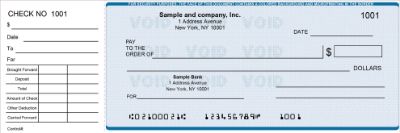
For routine AP vendor payments, a properly funded business check clears reliably without the $10-$20 certified check fee or bank branch trip.
A genuine certified check from a legitimate bank should not bounce due to insufficient funds. The entire point of certification is that the bank has already verified the funds exist and earmarked them. Insufficient funds cannot cause the check to fail after certification, because the earmark prevents those funds from being spent on anything else.
When a Certified Check Can Still Fail
Despite the guarantee, a certified check can fail in specific circumstances:
- Counterfeit certified checks: The most common failure scenario. A fraudster creates a fake check designed to look certified, complete with a fake bank stamp. When presented for payment, the counterfeit fails because the referenced bank account does not have the certification on record. This is the central mechanism behind certified check overpayment scams.
- Altered certified checks: If a legitimate certified check is intercepted and altered after certification , for example, the payee name or amount is changed , the altered check may fail fraud detection or be returned as materially altered under UCC Article 3.
- Expired certification: If the payee waits too long to deposit the check, the bank may have released the earmark. A check presented after the certification has expired may be declined. Prompt deposit is important.
- Bank error: Rare but possible. If the bank's internal systems failed to properly earmark the funds at certification, a subsequent transaction could consume the earmarked amount. Legitimate banks investigate and resolve these situations, but they cause delays.
For businesses that regularly issue large checks and want to add a bank-side verification layer against fraud, positive pay provides the best complement to standard business checks. For the complete guide, see what is positive pay and how does it work.
Does a Certified Check Expire?
Yes. Certified checks are subject to the same staleness rules as standard checks under the UCC. A check is generally treated as stale after 180 days (six months) from the date written on it, and most banks will refuse to honor a stale check regardless of whether it is certified.
The Earmark Release Timeline
The bank's earmark on your funds does not stay in place indefinitely. Banks typically release the earmark after 60 to 90 days if the certified check has not been presented for payment, though specific policies vary by institution. After the earmark is released, the funds return to your available balance. If the payee then attempts to deposit the certified check after the earmark has been released, the check may fail to clear if other transactions have spent those funds in the interim.
What to Do With an Uncashed Certified Check
If you issued a certified check and the payee has not deposited it within 30 to 45 days, contact your bank to confirm whether the earmark is still in place and whether the certification remains valid. If the payee confirms they still intend to deposit it, the bank can advise on whether the existing certification is still honored or whether a new certified check is needed. Waiting too long creates uncertainty on both sides of the transaction.
For the complete guide to check validity periods and what happens to uncashed checks, see check types and terminology: complete glossary guide.
Certified Check Scams: What to Watch For
Certified checks are a common tool in one of the most widespread payment fraud schemes: the overpayment scam. Understanding how this works protects both businesses and individuals who receive certified checks from unknown parties.
How the Overpayment Scam Works
A fraudster contacts you to buy something you are selling , a vehicle, equipment, property, or services. They send you a certified check for significantly more than the agreed price and ask you to deposit the check and wire back or send cash for the difference. The certified check looks completely legitimate, with a real-looking bank stamp and all the correct fields filled in.
Here is the fraud: the certified check is counterfeit. Your bank may provisionally credit the deposited amount to your account within one to two business days before fully clearing the check. The funds appear available. You send the difference via wire transfer or gift cards as requested. Days later, when the check clears all the way through the banking system, the bank discovers it is counterfeit and reverses the deposit. The provisional credit disappears. You are left out of pocket for the full amount you sent to the fraudster
How to Verify a Certified Check Is Genuine
If you receive a certified check from an unknown party and need to verify it:
- Call the issuing bank directly , use the phone number from the bank's official website, not a number printed on the check itself.
- Provide the check number, the account number on the MICR line, and the certified amount and ask the bank to verify the certification is on record.
- Do not rely on the bank logo, stamp appearance, or check format as verification. Counterfeit certified checks are often indistinguishable from genuine ones visually.
- Wait for full clearing confirmation from your own bank before releasing any goods or making any payment in the other direction.
For the complete guide to check fraud types and how to protect your business, see are business checks safe: security features that actually matter.
When to Use a Certified Check
Certified checks are appropriate in specific situations where the payee requires proof of guaranteed funds before completing a transaction. Outside of these situations, a regular business check or wire transfer is typically the faster and more practical option.
Real Estate Transactions
Real estate closings frequently require certified or cashier's checks for down payments, closing costs, or earnest money deposits. Title companies need confirmation that the funds are guaranteed before transferring property. A certified check provides that confirmation for amounts where the payment must be attributed to the payer's own account rather than the bank.
Government and Court Payments
Some government agencies, courts, and regulatory bodies require certified funds for tax payments, court-ordered settlements, fines, and fees. The requirement varies by jurisdiction and amount. Confirm the specific requirement before visiting your bank, because some government entities only accept cashier's checks and do not accept certified checks.
Large Vendor Payments to New Suppliers
When paying a new supplier a large amount for the first time , particularly for high-value inventory or equipment , the supplier may request guaranteed funds before shipping. A certified check provides that guarantee while keeping the payment attributed to your business account rather than the bank.
High-Value Vehicle Purchases
Private party vehicle sales above $10,000 often require certified funds rather than personal checks. A certified check is accepted at most private vehicle transactions as equivalent to cash for the purposes of releasing a title.
When a Business Check Is the Better Choice
QuickBooks-compatible business checks from Checkomatic , the right choice for routine vendor payments, payroll, and recurring invoices.
For the vast majority of business payments, a properly ordered and funded business check is faster, cheaper, and more operationally practical than a certified check. Here is when a regular business check is clearly the right tool.
Routine Vendor Payments and AP Runs
Monthly invoices, recurring supplier payments, and standard AP runs do not require guaranteed funds verification. Your established vendors trust your payment history and will accept regular business checks. The cost difference is significant: a business check costs $0.15 to $0.25 for the check stock vs $10 to $20 in bank fees for a certified check, plus the time required to visit a bank branch in person.
Payroll
Payroll checks are issued on a predictable schedule from a funded payroll account. Employees do not require certified funds; they require a paycheck that clears, which a properly funded payroll account provides through normal check clearing under Regulation CC. For payroll check formats and compliance guidance, see business checks for payroll: the complete employer guide.
Established Vendor Relationships
Suppliers and vendors you have paid reliably for 6 months or more will not require certified funds. Your payment history is your guarantee. Requesting a certified check for a routine payment to an established vendor adds unnecessary cost and delay without any benefit to either party.
When Speed Matters More Than Guaranteed Funds
A business check can be written and mailed in minutes. Obtaining a certified check requires a bank branch visit during business hours. For time-sensitive payments where speed is the priority and the payee accepts standard checks, a business check is faster by a day or more. For the best source for business check stock with full security features, see what is the best place to order checks online.
Certified Check vs Cashier's Check vs Business Check: Decision Table
| Payment Situation | Best Choice | Why |
|---|---|---|
| Real estate closing, down payment | Cashier's check | Title companies prefer bank-backed funds |
| Large payment, attributed to your account | Certified check | Payment stays in your name for audit trail |
| Government or court-ordered payment | Confirm requirement (cashier or certified) | Varies by agency , ask before visiting bank |
| Routine vendor invoices | Business check | Faster, cheaper, sufficient for established vendors |
| Payroll | Payroll check | Employees do not need guaranteed funds, just a clearing check |
| New supplier, first large payment | Certified or cashier check | Supplier has no payment history to rely on |
| Large urgent payment, same-day settlement | Wire transfer | Both check types still take 1-2 days to clear |
| Private vehicle purchase | Certified or cashier check | Sellers require guaranteed funds before releasing title |
What Customers Say About Checkomatic
All reviews below are published on checkomatic.com and reproduced verbatim. Source: checkomatic.com/quickbooks-starter-pack-product, 4.5 stars from 166 verified reviews.
"Been with them for 15 years. Always reliable, always good quality, good service. What more can you ask for?"
ATV Inc. | ★★★★★ 5/5 | April 5, 2024 | Source: checkomatic.com/quickbooks-starter-pack-product
"First time ordering and I am super impressed with the quality of the checks. No issues with delivery. I will be ordering again!"
TClinton | ★★★★★ 5/5 | April 9, 2025 | Source: checkomatic.com/quickbooks-starter-pack-product
"We use CheckoMatic for all of our check needs! They have great prices and we receive our products in a timely manner!"
CG's Tax Service | ★★★★★ 5/5 | September 18, 2024 | Source: checkomatic.com/quickbooks-starter-pack-product
"I got 500 checks for less than half of what the bank wanted for 200!"
VVA Voucher Checks (Vietnam Veterans of America) | ★★★★★ 5/5 | July 6, 2024 | Source: checkomatic.com/quickbooks-starter-pack-product
"ASJ Wilson Construction has been a client of checkomatic for some years now and they've never disappointed this company. Thank you checkomatic for all that you do."
ASJ Wilson Construction | ★★★★★ 5/5 | June 6, 2024 | Source: checkomatic.com/quickbooks-starter-pack-product
"Affordable and efficient. My go-to business check printer."
Doe | ★★★★★ 5/5 | January 24, 2025 | Source: checkomatic.com/quickbooks-starter-pack-product
Why Choose Checkomatic for Business Check Stock
Certified checks are issued by banks and cannot be ordered from a check printer. For the 95 percent of business payments where a certified check is unnecessary, Checkomatic provides the business check formats, security features, and pricing that make routine payment operations efficient.
Security Features That Match What Banks Look For
Checkomatic's standard business checks include chemical-reactive paper, microprint signature line, void pantograph, ANSI-certified MICR encoding, and heat-sensitive ink as standard. These are the features that the Federal Reserve and major bank fraud detection systems identify as meaningful. For the complete security guide and feature comparison, see are business checks safe: security features that actually matter.
Compatible With Every Major Accounting Platform
Checkomatic's business checks are formatted to work with QuickBooks, Quicken, Sage, Microsoft Dynamics, Peachtree, and most other accounting platforms. The voucher format includes pre-printed stub fields for remittance detail , the same information a certified check cannot carry. For QuickBooks-compatible business check formats, see QuickBooks checks.
No Bank Branch Trip, No $15 Fee, Delivered to Your Office
A Checkomatic business check order ships directly to your office with your business name, address, and bank information pre-printed. You print the payee and amount through your accounting software, sign, and mail. No bank visit, no $10 to $20 per-check certification fee, no waiting in line. For the complete ordering guide and quantity recommendations, see what is the best place to order checks online.