-
 Contact Us
-
 Re order
-
 Log in
-
 Cart 0
You have no items in your shopping cart.
Check Run: How to Run Accounts Payable Checks Safely
Every week or two, someone in accounts payable pulls the approved bills, prints a stack of checks, gets them signed and mails them out. That routine is a check run, and when it is done well, vendors get paid on time, the books match the bank and fraudsters find nothing to grab.
This guide explains what a check run is, how often to run one, the step by step process, who should do each part, how to protect checks before and after they leave the office, and how to handle voids, reissues and checks that never get cashed.
Quick Summary
A check run is a scheduled batch in which a business selects approved bills, prints checks to pay them, gets the checks signed and mailed, and records the payments. Most businesses run one weekly, every two weeks or monthly, with a firm cutoff for invoices. The best check runs split duties among different people, use positive pay and reconcile every check printed.
Key points
- It is a batch, not a one-off. Software such as Sage Intacct can process up to 1,000 checks in one run.
- Set a schedule and a cutoff. The Washington State Auditor notes most entities have a weekly, biweekly or monthly schedule.
- Split the duties. GAO's Green Book says key duties should be divided among different people.
- Lock down the vendor master file. The person who runs checks should not add or edit vendors.
- Use positive pay. The Federal Reserve's check fraud toolkit names it as a key safeguard.
- Reconcile the stock. After each run, match checks printed to checks used and look for gaps.
| Stage | What happens | Main risk to control |
|---|---|---|
| 1. Cutoff | Approved invoices are entered by a set day and time | Unapproved or duplicate bills slipping in |
| 2. Selection | Bills due before the next run are picked | Paying early, late or twice |
| 3. Review | A second person approves the payment list | Fake or changed vendors |
| 4. Print | Checks print on numbered stock | Missing or misprinted checks |
| 5. Sign | Authorized signers sign or approve signatures | Signature stamp misuse |
| 6. Mail | Checks are stuffed and mailed securely | Mail theft and check washing |
| 7. Record and reconcile | Payments post, positive pay file goes to the bank | Errors that stay hidden |
Table 1. The seven stages of a check run and what each one needs to guard against. Our check fraud prevention guide covers the fraud side in more depth.
Setting up a new check run? Ask our team which checks and envelopes match your accounting software.
In this guide
- What is a check run?
- How often should you do a check run?
- How do you do a check run step by step?
- Who should do each part of a check run?
- How do you keep checks safe during a check run?
- How do you handle voids, reissues and stale checks?
- What tax paperwork ties into a check run?
- What supplies does a check run need?
- Frequently asked questions
What Is a Check Run?
A check run is the accounts payable process of paying a group of vendor bills by check in one scheduled batch. Instead of writing checks one at a time, the business collects approved invoices, prints all the checks together, and records every payment at once.
Accounting software builds the run for you. In Microsoft Dynamics 365 Business Central, for example, you pay vendors through the payment journal, use Suggest Vendor Payments to find what is due, and must print computer checks before the lines can post. The same idea is sometimes called a payment run or AP run.
Is a check run the same as a payment run?
A payment run can include ACH, wire and card payments as well as checks. A check run is the part of that process paid by paper check. Many businesses run both on the same day so vendors are paid on one predictable cycle. Our guide to check vs ACH payment compares the two.
How Often Should You Do a Check Run?
Most businesses run checks weekly, every two weeks or monthly. The Washington State Auditor's accounts payable guide says you probably have a weekly, biweekly or monthly schedule, and recommends putting it in policy with a clear cutoff date.
Published schedules show how organizations set this up in practice:
| Organization | Check run day | Invoice cutoff |
|---|---|---|
| University of Richmond | Tuesday and Thursday mornings | Checks are normally mailed by noon |
| Washington and Lee University | Wednesday and Friday | Noon on the prior Wednesday or Friday |
| North Carolina Central University | Friday, weekly | Invoices fully processed by Tuesday close of business |
| Minneapolis College of Art and Design | Wednesday | 5:00 pm the Friday before |
Table 2. Examples of published check run schedules from university accounts payable offices.
How do holidays change the schedule?
Move the cutoff earlier and tell vendors and staff in advance. Washington and Lee, for example, publishes holiday changes, with a December 15, 2026 cutoff for its final check run of the year. Year-end runs also matter for tax reporting and closing the books.
Weekly or monthly: which is better?
- Weekly: faster vendor payments and smaller batches, but more printing and signing sessions.
- Every two weeks: a common middle ground, and easy to line up with payroll.
- Monthly: fewer sessions and easy cash planning, but more rush requests between runs.
How Do You Do a Check Run Step by Step?
A check run follows the same steps every time. Writing them down as a checklist makes the run faster and helps anyone covering for vacation.
- Close the cutoff. Stop accepting invoices for this run at the published time.
- Confirm approvals. Each invoice should be approved and, where you use them, matched to a purchase order and receiving record.
- Select bills to pay. Pick invoices due before the next run, and apply any vendor credits.
- Review the payment list. A second person checks vendors, amounts and duplicates before printing.
- Load and test the check stock. Print a test or alignment page, and log the first check number.
- Print the checks. Use stub or voucher checks so vendors see which invoices you paid.
- Sign the checks. Apply signature rules, including a second signer above your threshold.
- Stuff and mail. Match each check to its remittance and envelope, then mail securely.
- Send positive pay. Upload the issued check file to your bank the same day.
- Post and reconcile. Post the payments, reconcile check numbers used, and file the run report.
Voucher checks are popular for check runs because the stub carries invoice details. Our guide to voucher checks vs wallet checks explains the difference, and voucher business checks show the formats.
Who Should Do Each Part of a Check Run?
Different people should prepare, approve, sign and reconcile. GAO's Green Book, the federal internal control standard, says management divides key duties among different people, including authorizing, processing, reviewing and handling related assets.
| Task | Who usually does it | Should not also |
|---|---|---|
| Enter invoices and prepare the run | AP clerk | Add or edit vendors, or approve the run |
| Add or change vendor details | Separate person, after verifying with the vendor | Prepare or sign checks |
| Approve the payment list | Controller or manager | Enter the same invoices |
| Sign checks | Authorized signers | Reconcile the bank account |
| Hold blank check stock | Someone outside AP processing | Print checks alone |
| Reconcile the bank account | Person not involved in issuing or signing | Issue or sign checks |
Table 3. A simple split of check run duties, based on GAO, Washington State Auditor and Federal Reserve guidance.
The Washington State Auditor says AP clerks should not be able to add new vendors or change vendor information, and that change requests should be verified directly with the vendor. The Federal Reserve's toolkit recommends dual controls for issuing and approving checks, and keeping the people who issue or sign checks apart from the person who reconciles.
What if you have a small team?
The Green Book allows alternative controls when staff is limited. A common approach is for the owner to approve the payment list, sign checks and review the bank statement each month, even if one bookkeeper does everything else.
When should a check need two signatures?
Set a dollar threshold in writing. One published university union policy, for example, allows one signature up to $1,999.99 and requires two from $2,000. Our guide on checks with multiple signatures explains how to set this up.

Before using a stamp, read our guide to signature stamps for checks, including how to store and log its use.
How Do You Keep Checks Safe During a Check Run?
Check fraud tied to mail theft is a real risk for check runs. FinCEN reported that banks filed over 680,000 check fraud suspicious activity reports in 2022, up from over 350,000 in 2021. In the six months after its February 2023 alert, it received 15,417 related reports from 841 institutions covering more than $688 million in suspicious activity.
- Use positive pay. Send your bank the list of checks issued, so it can flag any check that does not match. The Washington State Auditor notes payee positive pay can help detect check fraud. Learn more in what is positive pay.
- Verify vendor changes by phone. The FBI's business email compromise guidance gives the example of a fake vendor invoice with an updated mailing address, and says to verify any change in payment details.
- Lock up check stock. Keep blank stock in a locked place and log check number ranges.
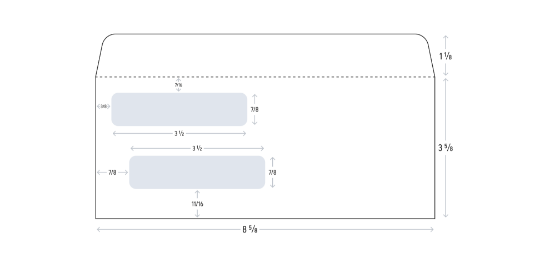
- Use security envelopes. The Federal Reserve toolkit says that if you must mail checks, use security envelopes that hide the check.
- Mail checks inside the post office. Avoid leaving outgoing checks in an unattended mailbox.
- Use high security checks. Built-in security features make a check harder to alter or copy. See what is a high security check.
For a wider view of current scams, see our guide to check fraud scams.
How Do You Handle Voids, Reissues and Stale Checks?
Every check number printed should end up as issued, voided or spoiled, with nothing missing. The Washington State Auditor's guide says to reconcile to the number of checks printed after each run and to watch for gaps in numbering.
How should you void a check from a run?
Write "VOID" across the face, keep the original, and record the void in your software with the correct void date. Mismatched void dates and check dates are a common cause of AP and general ledger reconciliation problems. Our guide on how to void a check walks through it.
What if a vendor never cashes a check?
Track outstanding checks and follow up. Stanford and Lincoln University both treat a check as stale at 180 days. Stanford's void options include void and do not reissue, void and reissue with no change, and void and reissue with change. Uncashed funds may later need to be reported to your state as unclaimed property, which Stanford says typically happens after three years.
Before reissuing a lost check, stop payment on the original. See how to stop payment on a check and how long business checks are good for.
What Tax Paperwork Ties Into a Check Run?
Vendor payments made by check can trigger information returns, so your check run records should feed your year-end reporting.
- Form W-9: the IRS says it is used to get the payee's correct name and taxpayer identification number. Collecting it before the first check is a good practice.
- Backup withholding: the IRS rate is 24% for reportable payments when a payee does not provide a correct TIN.
- Forms 1099-NEC and 1099-MISC: for payments made after December 31, 2025, the IRS reporting threshold for most of these payments rose to $2,000. Some payments, such as gross proceeds paid to attorneys, keep the $600 threshold.
Check with your tax adviser about which vendors need a form, since rules differ by payment type.
What Supplies Does a Check Run Need?
The right supplies make a check run faster and safer. Most businesses need checks that match their software, envelopes that fit those checks, and tools for signing and recording.
- Computer checks: computer checks or accounting software compatible checks sized for your program.
- QuickBooks users: QuickBooks checks made for its print layouts.
- Manual backup: manual business checks for urgent payments between runs.
- Envelopes: check envelopes that fit your check style.
- Records: a check register for manual checks written outside the run.
Our guide to business check printing cost can help you budget for supplies.
Making Every Check Run Smoother
Checks that fit your software. Our business checks come in formats for popular accounting programs.
Envelopes that match. Window envelopes sized for your checks save time at the stuffing stage.
Signing tools. Signature stamps help authorized signers handle large runs.
About the Author
This guide is the Checkomatic team's work, written for bookkeepers and accounts payable teams who pay vendors by check. Sources include GAO's Standards for Internal Control in the Federal Government, the Washington State Auditor's accounts payable guidance, the Federal Reserve's check fraud toolkit, FinCEN releases on check fraud, FBI and IC3 guidance on business email compromise, IRS Form W-9 and Form 1099 instructions, Microsoft and Sage Intacct software documentation and published university accounts payable schedules.
This is general information, not legal, tax or accounting advice. Confirm controls, tax reporting and bank services with your accountant and your bank.
Frequently Asked Questions
What is a check run in accounts payable?
How many checks can be in one check run?
What is a check run cutoff?
Should payroll be part of the check run?
Who should sign checks in a check run?
Can I use a signature stamp for a check run?
What is positive pay?
What should I do with a misprinted check?
What kind of checks work best for a check run?
What happens to checks that are never cashed?
Accepted by the world’s leading banks