How Business Checks and ACH Payments Each Work
How a Business Check Works
A business check is a written payment instrument drawn on your business checking account. You fill in the payee name, payment amount, date, and memo, sign as the authorized account signatory, and deliver the check to the payee by mail or in person. The payee deposits the check at their bank, which presents it to your bank through the check clearing system. Your bank verifies the check against your account, confirms the funds, and releases the payment. Your account is debited when the check clears, not when you write it.
The physical check serves as both the payment instruction and the documentation of the transaction. The voucher stub attached to most business checks in voucher format carries remittance detail , invoice numbers, payment periods, deduction descriptions , that the payee uses for their own reconciliation. For the complete guide to check clearing timelines under the Check 21 Act and Regulation CC, see how long do business checks take to clear.
How an ACH Payment Works
An ACH payment is an electronic bank-to-bank transfer processed through the Automated Clearing House network, administered by NACHA (the National Automated Clearing House Association). Instead of a physical document, the payment is a digital instruction file containing the payee's routing number, account number, and payment amount. Your bank submits this file to the ACH network in a batch, the ACH network routes the instruction to the payee's bank, and the payee's bank credits their account. The Federal Reserve operates the ACH settlement infrastructure for most US banks.
ACH payments are either credits (you push funds to the payee) or debits (you pull funds from the payer's account with authorization). For vendor payments and payroll, businesses almost always use ACH credits, where they initiate the payment and push funds to the payee. ACH debits are used for collecting recurring payments from customers, such as subscription billing or loan repayments.
Full Comparison: Check vs ACH Payment
| Factor | Business Check | ACH Payment |
|---|---|---|
| Per-transaction cost | $1.50 to $4.00 fully loaded | $0.25 to $1.50 ACH fee |
| Settlement speed | 2 to 8 days total (mail + clearing) | 1 to 2 days standard; same day with Same Day ACH |
| Reversible? | ✅ Yes , stop payment before deposit | ⚠️ Limited , NACHA reversal within 5 days, not guaranteed |
| Setup required | None , write and mail immediately | Banking data exchange + authorization required |
| Vendor acceptance | Universal , accepted everywhere | Requires vendor's bank details and authorization |
| Remittance detail | Voucher stub with full detail | Limited , addenda record (max 94 characters) |
| Physical document | ✅ Yes , paper audit trail | Digital record only |
| International payments | US banks only (foreign checks need collection) | US banks only (IAT for international) |
| Bank account required (payee) | No , can be cashed | ✅ Yes , bank account required |
| Positive pay integration | ✅ Full positive pay available | ACH debit block / ACH filter available |
Cost Comparison: What Each Method Actually Costs
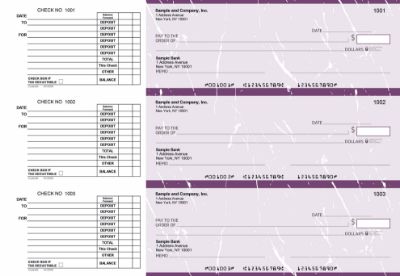
Checkomatic AP business checks , per-check stock cost starts at $0.15 to $0.25, making business checks cost-competitive with ACH for moderate payment volumes.
What a Business Check Costs Per Transaction
A business check payment has three cost components: the check stock itself, any postage if mailed, and the staff time to prepare and reconcile the payment.
- Check stock cost: When ordered directly from a check printer, business check stock costs $0.15 to $0.25 per check at standard quantities. This is the cost of the paper itself with pre-printed bank details and security features.
- Postage: A first-class stamp for a mailed check envelope is $0.73 as of 2025. Checks delivered in person cost nothing in postage.
- Staff time: Writing, signing, and mailing a check takes 2 to 4 minutes per check at most businesses. At a $20 per hour staff rate, this adds $0.67 to $1.33 per check.
- Fully loaded total: $1.55 to $2.31 per check at the low end for businesses ordering check stock directly and handling payments efficiently.
The AFP Payments Cost Benchmarking Survey median for business check issuance is $2.01 to $4.00 per transaction. This higher figure reflects businesses ordering through intermediaries, higher staff wage rates, and manual reconciliation processes. Businesses ordering check stock directly and using accounting software to automate the process consistently achieve costs in the $1.50 to $2.50 range per transaction.
What an ACH Payment Costs Per Transaction
- Standard ACH (next-day or 2-day): $0.25 to $0.75 per transaction at most banks and payroll processors for standard ACH credits.
- Same Day ACH: $0.75 to $1.50 per transaction, with some institutions charging more for the premium settlement speed.
- Payroll processor ACH: Many payroll software subscriptions include ACH at a per-employee-per-period rate, typically $1.50 to $3.00 per deposit when broken down per transaction, depending on the provider and plan.
- Bank origination fees: Some banks charge a monthly ACH origination setup fee in addition to per-transaction fees. This fixed cost amortizes across high volume but increases the effective per-transaction cost for low-volume payers.
Which Is Cheaper: Check vs ACH?
The honest answer depends on your order volume, your check stock source, and how your staff time is valued. For businesses ordering check stock directly from Checkomatic and using QuickBooks or another accounting platform to automate check printing, the fully loaded check cost is $1.50 to $2.50 per transaction. Standard ACH is $0.25 to $0.75. ACH is cheaper per transaction at any volume when both methods are run efficiently.
However, the cost difference narrows significantly at lower volumes and when ACH setup costs are included. Setting up ACH with a vendor requires collecting their banking details, configuring your payment system, and testing a small transaction before production payments. For one-time or infrequent vendor payments, this setup cost can exceed the cost savings ACH provides over several payment cycles. A business check requires no setup. You write it and mail it the same day.
Speed and Settlement: Check vs ACH Timeline
Check Payment Timeline
A business check payment has two phases: delivery and clearing. Delivery depends on how the check reaches the payee. A mailed check takes 1 to 5 business days for USPS first-class delivery. A check delivered in person is instant.
Once deposited, the clearing timeline depends on the payee's bank hold policy under Regulation CC. Standard checks from established business accounts typically clear in 1 to 2 business days under Check 21 electronic processing. New accounts or large checks may be subject to holds of up to 5 to 7 business days under Regulation CC extended hold provisions. Total time from check writing to cleared funds: 2 to 8 business days depending on mail transit and bank holds. For the complete clearing timeline guide, see how long do business checks take to clear.
ACH Payment Timeline
ACH payments move in three tiers of settlement speed governed by NACHA rules:
- Standard ACH (2-day): The most common tier. Submitted before the bank's ACH cutoff (typically 3 to 5 PM local time), the payment settles 2 business days later. This is the default for most ACH payroll and vendor payments.
- Standard ACH (next-day): Submitted before a slightly earlier cutoff, settles the next business day. Most banks support this at no additional fee for standard transactions.
- Same Day ACH: NACHA introduced Same Day ACH in 2016. Payments submitted before 2:45 PM Eastern settle the same day, typically available in the payee's account by 5 PM. Same Day ACH carries a $0.053 per-transaction surcharge charged by the receiving bank, in addition to your bank's origination fee. Limit per transaction is $1 million.
| Payment Method | Time to Payee | Time to Cleared Funds |
|---|---|---|
| Check (mailed) | 1 to 5 business days | 3 to 8 business days total |
| Check (in person) | Immediate | 1 to 3 business days |
| ACH (standard 2-day) | 2 business days | 2 business days (no hold) |
| ACH (next-day) | 1 business day | 1 business day (no hold) |
| Same Day ACH | Same business day | Same business day by 5 PM ET |
Reversibility: Stop Payment vs ACH Reversal
Stopping a Business Check
A stop payment order placed with your bank before the check is deposited definitively cancels the check. The bank records the stop against the check number and amount. When the check is presented for payment, the bank returns it unpaid. Stop payment costs $20 to $35 at most banks and takes effect immediately. Stop payment works reliably because the check cannot be processed without your bank's authorization, and the stop flag is applied to your specific account at your specific bank.
Stop payments expire, typically after 6 months, and must be renewed if the check is still outstanding. A stop payment placed after a check has been deposited may not be effective if the check has already cleared. The key window is before deposit. For the complete stop payment guide, see checkbook management: how to balance and reconcile.
Reversing an ACH Payment
NACHA rules permit ACH reversals in three specific circumstances: the dollar amount was incorrect, the bank account number was incorrect, or the payment was a duplicate. The reversal must be submitted within five business days of the original settlement date and must include a notice to the receiving party explaining the reason for the reversal.
The receiving bank is not legally obligated to return the funds. If the payee has already withdrawn the money, the receiving bank cannot force its return. The initiating party must pursue recovery through other means. In practice, most ACH reversals between legitimate businesses succeed when initiated promptly and properly documented. However, if the original payment was sent to a fraudulent account due to business email compromise, the funds are typically unrecoverable even with a timely reversal request.
Fraud Risk and Protection: Check vs ACH
Check Fraud Risks and Protections
Business check fraud primarily takes three forms: check washing (chemically altering a mailed check to change the payee or amount), counterfeiting (creating a fake check using your account details), and unauthorized check use (someone obtains a blank check or your account details and writes checks without authorization).
The primary protections against check fraud are security features built into the check stock and positive pay at your bank. Chemical-reactive paper, microprinting, void pantograph, and heat-sensitive ink make check washing and counterfeiting visible before the bank processes the check. Positive pay matches every check presented to your bank against a file of checks you actually issued, blocking altered or counterfeit checks automatically. For the complete check security guide, see are business checks safe: security features that actually matter. For positive pay setup, see what is positive pay and how does it work.
ACH Fraud Risks and Protections
ACH fraud primarily takes two forms: business email compromise (BEC), where a fraudster impersonates a vendor or internal finance contact and convinces your AP team to redirect an ACH payment to a fraudulent account, and unauthorized ACH debits, where someone who has obtained your routing and account number initiates debit transactions from your account without authorization.
The primary protections against ACH fraud are ACH debit blocks (which prevent any ACH debit from your account without an authorized filter), callback verification for any banking detail change requests (calling the vendor at a known phone number to confirm a change before updating your records), and regular account monitoring for unexpected ACH activity under Regulation E's 60-day reporting window.
Which Is More Secure?
The AFP 2023 Payments Fraud and Control Survey consistently shows that business checks are the payment method most frequently targeted in fraud attempts by volume. However, ACH fraud losses per incident are often larger because ACH fraud typically involves larger dollar amounts and is harder to reverse. No payment method is fraud-free. The right approach is applying the appropriate protection to each method rather than assuming one is inherently safer.
Vendor Acceptance and Setup Requirements
Business Checks: Zero Setup, Universal Acceptance
A business check requires no setup from the payee. You write the check with the payee's legal name, mail or deliver it, and the payee deposits it at any US bank or credit union. No advance coordination, no banking data exchange, no authorization form. A new vendor you identified this morning can receive a check payment this afternoon. This zero-setup, universal acceptance property makes business checks the default payment method for new vendor relationships, one-time payments, and any situation where ACH has not yet been configured.
ACH: Setup Required Before First Payment
Paying a vendor by ACH requires their ABA routing number, checking account number, and a written authorization confirming their consent to receive ACH credits to that account. Collecting this information securely takes time and coordination. Most businesses use a vendor ACH enrollment form that the vendor completes and returns, after which the AP team configures the vendor's banking details in their payment system. A test transaction is recommended before the first production payment to confirm the banking details are correct. Any subsequent change in the vendor's banking details (new account, different bank) requires the same process and must be verified carefully to avoid BEC fraud.
Which Vendors Accept ACH vs Check?
Virtually all US vendors accept checks. ACH acceptance depends on the vendor's AP infrastructure. Large established vendors and recurring service providers typically have ACH setup processes in place. Small vendors, one-time contractors, and vendors in some industries may not have ACH configured and may prefer checks. For payees without bank accounts, checks remain the only option.
Check vs ACH for Payroll
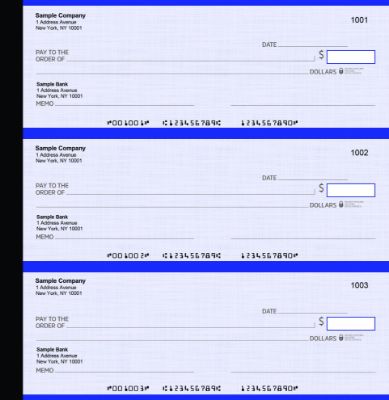
QuickBooks-compatible payroll checks from Checkomatic , the paper payroll alternative when ACH direct deposit is unavailable or not appropriate for a specific employee situation.
ACH for Payroll (Direct Deposit)
Direct deposit payroll is ACH credit. Your payroll processor generates an ACH file for each pay period, and your bank submits it to the ACH network. Employee accounts are credited on pay date. Direct deposit is the preferred payroll method for most employees and most businesses because funds are available at bank opening on pay date without any employee action required. Cost is typically $1.50 to $3.00 per employee per pay period through a payroll processor, though this varies widely by provider and plan.
Paper Checks for Payroll
Paper payroll checks remain necessary for unbanked employees who cannot receive ACH direct deposit. An employee without a bank account cannot receive direct deposit. Most states prohibit mandatory direct deposit, requiring employers to offer a paper check alternative for any employee who does not consent or cannot participate in direct deposit. Paper payroll checks in voucher format include pay stub detail showing gross pay, deductions, and net pay, which satisfies the pay stub disclosure requirements in most states. For the complete payroll check vs direct deposit comparison, see the payroll section at checkbook management: how to balance and reconcile.
Which Is Better for Payroll?
Direct deposit ACH is the lower-cost, operationally simpler choice for employees who have bank accounts and consent. Paper payroll checks are the required alternative for unbanked employees and the legally required fallback in states that prohibit mandatory direct deposit. Most employers run both: ACH direct deposit for consenting employees with bank accounts, paper checks for everyone else. For QuickBooks-compatible payroll checks that work for both formats, see QuickBooks checks.
Check vs ACH for Accounts Payable
ACH for AP: Best for Recurring Established Vendor Payments
ACH is the most cost-efficient AP payment method for established recurring vendor relationships. Monthly rent, utility payments, subscription services, and regular supplier payments where the vendor relationship is stable and the payment amount is predictable are ideal ACH use cases. Once configured, ACH vendor payments run with minimal staff intervention and post to the vendor's account on a predictable schedule. The lower per-transaction fee compounds across many payments over a full year.
Business Checks for AP: Best for New, One-Time, and Exception Payments
Business checks remain the practical AP payment method for new vendor relationships before ACH is set up, one-time contractors and service providers who will not be paid again, exception payments where something went wrong with an ACH batch, and any vendor who does not have ACH configured in your payment system. The zero-setup, universal acceptance nature of a check means it can resolve any payment situation in minutes rather than waiting for ACH enrollment to complete.
Business checks in voucher format also carry more remittance detail than the 94-character ACH addenda field allows. For vendors who need to match your payment against specific invoices or purchase orders, a check stub with full detail is cleaner than a brief ACH reference code that the vendor must interpret and match manually.
When to Use a Check vs ACH: Decision Table
| Payment Situation | Use | Why |
|---|---|---|
| New vendor , first payment | Check | No ACH setup yet , zero setup check |
| Established recurring vendor (monthly) | ACH | Lower cost, predictable settlement |
| One-time contractor payment | Check | ACH setup cost exceeds savings for one payment |
| Payroll , banked employees, consent given | ACH | Lower cost, funds available on pay date |
| Payroll , unbanked employees | Check | ACH not available without bank account |
| Payment error discovered , need to cancel | Check | Stop payment is definitive; ACH reversal is not |
| Detailed remittance needed (multiple invoices) | Check | Voucher stub carries full detail; ACH addenda is 94 chars |
| High-volume AP (50+ payments per month) | ACH primary | Cost savings compound at volume |
| Vendor does not accept ACH | Check | No alternative , check is universal |
| Exception or replacement payment | Check | Fastest resolution for one-off payment needs |
What Customers Say About Checkomatic
All reviews below are published on checkomatic.com and reproduced verbatim. Source: checkomatic.com/quickbooks-starter-pack-product, 4.5 stars from 166 verified reviews.
"Been with them for 15 years. Always reliable, always good quality, good service. What more can you ask for?"
ATV Inc. | ★★★★★ 5/5 | April 5, 2024 | Source: checkomatic.com/quickbooks-starter-pack-product
"First time ordering and I am super impressed with the quality of the checks. No issues with delivery. I will be ordering again!"
TClinton | ★★★★★ 5/5 | April 9, 2025 | Source: checkomatic.com/quickbooks-starter-pack-product
"We use CheckoMatic for all of our check needs! They have great prices and we receive our products in a timely manner!"
CG's Tax Service | ★★★★★ 5/5 | September 18, 2024 | Source: checkomatic.com/quickbooks-starter-pack-product
"I got 500 checks for less than half of what the bank wanted for 200!"
VVA Voucher Checks (Vietnam Veterans of America) | ★★★★★ 5/5 | July 6, 2024 | Source: checkomatic.com/quickbooks-starter-pack-product
"ASJ Wilson Construction has been a client of checkomatic for some years now and they've never disappointed this company. Thank you checkomatic for all that you do."
ASJ Wilson Construction | ★★★★★ 5/5 | June 6, 2024 | Source: checkomatic.com/quickbooks-starter-pack-product
"Affordable and efficient. My go-to business check printer."
Doe | ★★★★★ 5/5 | January 24, 2025 | Source: checkomatic.com/quickbooks-starter-pack-product
Why Choose Checkomatic for Business Check Stock
The Check That Works Alongside ACH , Not Instead of It
Checkomatic does not position business checks as a replacement for ACH. The right payment strategy for most businesses is both. ACH for established recurring vendors, checks for everything else. Checkomatic's role is to make sure the check side of that strategy costs as little and works as reliably as possible. At $0.15 to $0.25 per check ordered directly, with full security features standard and QuickBooks compatibility built in, the per-check cost is close to ACH economics for moderate volumes without any of the setup burden. For all business check formats, see business checks.
Security Features That Match ACH Debit Block Protection
ACH payments are protected by debit blocks and account monitoring. Business checks are protected by security features and positive pay. Checkomatic's standard business checks include chemical-reactive paper, microprinting, void pantograph, heat-sensitive ink, and ANSI E13-B certified MICR encoding on every order. Paired with your bank's positive pay service, this combination provides the check-side equivalent of the ACH debit block. For the complete guide, see are business checks safe: security features that actually matter and what is positive pay and how does it work.
QuickBooks-Compatible for Integrated AP and Payroll
Checkomatic's business checks are pre-formatted to work with QuickBooks, Quicken, Sage, and most other accounting platforms. When your accounting software handles both ACH payroll and paper check printing, using check stock that aligns with your software's format eliminates alignment issues and produces professional, correctly formatted checks on every print run. For the full QuickBooks check range, see QuickBooks checks.