-
 Contact Us
-
 Re order
-
 Log in
-
 Cart 0
You have no items in your shopping cart.
Do Businesses Have to Accept Checks? What the Law Says
A customer reaches the counter, pulls out a checkbook and hears "sorry, we don't take checks." Some people feel embarrassed, some feel accused, and the owner is left wondering whether saying no was even allowed.
This guide gives the plain answer, shows where state and local rules do change it, and explains what the law says once a business does take a check. You will also get a policy checklist and sign wording you can adapt. If you are new to the basics, start with our guide to how to fill out a check.
Quick Summary
No. No federal law requires a private business to accept checks, and a check is not legal tender, so a business can decline checks or accept them under its own posted rules. A few state and local laws require businesses to take cash, and a few protect specific check payments, such as rent in California.
Key points
- Legal tender means coins and currency. 31 U.S.C. 5103 lists United States coins and currency. Checks are not on that list.
- The Federal Reserve says no federal law forces a business to take cash. Its FAQ says businesses set their own policy unless state law says otherwise. Checks are further from legal tender than cash is.
- Cash laws are not check laws. New Jersey requires many in-person stores to accept cash. That rule does not tell a store to accept checks.
- A check settles a debt differently from cash. Under the model Uniform Commercial Code, an ordinary check only suspends the debt until it is paid or bounces.
- Certified and cashier's checks are safer to accept. Taking one discharges the debt as if you had been paid in cash, unless you agree otherwise.
- A written policy protects you and your customer. Post it, apply it to everyone and keep a bounce procedure ready.
| Layer of rules | Who it binds | What it says about checks |
|---|---|---|
| Federal law | Everyone in the United States | No federal law requires a private business to accept checks, and checks are not legal tender |
| State and local law | Businesses in that state or city | Mostly silent on checks. A few rules cover cash, and some cover specific payments such as residential rent |
| Contract and the UCC | The buyer and the seller | The seller sets the payment terms. Once a check is taken, the UCC decides what it does to the debt |
Table 1. The three layers of rules that decide whether a business must take a check.
Running a business that both takes and writes checks? Ask the Checkomatic team which check format suits your paperwork.
What is in this guide
- Can a business refuse to accept a check?
- Do state or local laws make businesses accept checks?
- What does the law say once a business accepts a check?
- Why are some businesses refusing checks?
- Should a small business keep accepting checks?
- How do you write a check acceptance policy?
- How can you say no to a check kindly?
- What if a store or landlord will not take your check?
- Frequently asked questions
- More questions on check acceptance rules
Can a Business Refuse to Accept a Check?
Yes. A private business can generally refuse checks, because federal law does not tell it to take them and each sale is an agreement on terms. The seller can offer cash, cards or checks, or any mix, unless a state or local law, a lease or a contract says otherwise. Applying the rule the same way to every customer is good practice.
Is a check legal tender in the United States?
No. Legal tender is a form of money the law accepts for settling debts. Under 31 U.S.C. 5103, that means United States coins and currency, including Federal Reserve notes.
A check is a written order to a bank to pay money, so it is neither a coin nor a note. That last step is a plain reading of the statute, because the text lists what counts and does not mention checks.
What does the Federal Reserve say about refusing payment?
The Federal Reserve says no federal law requires a private business to accept cash, and that businesses can set their own payment policy unless state law says otherwise. Its FAQ was last updated on July 21, 2020, and it is about cash. We can reason from it, though: if a business can refuse cash under federal law, a check, which is not legal tender at all, gets no stronger protection.
Can a business refuse a personal check but accept a cashier's check?
Yes. Many sellers take certified or cashier's checks for large purchases and decline ordinary personal checks, because a bank stands behind the first kind. Our guides to what a cashier's check is and the certified check explain the difference. The next section shows why the law treats them differently.
Do State or Local Laws Make Businesses Accept Checks?
Rarely. Most state rules on payment methods are narrow, and they usually cover cash or specific payments, not checks in general. Rules also change, so check your state's current law before you set a policy. Table 2 shows the examples we confirmed from the law itself or from a state agency.
| Example | What it requires | Does it force a business to take checks? |
|---|---|---|
| Georgia consumer education page (March 6, 2017) | Says retailers are not legally required to accept checks and can set payment terms, including cash only | No |
| New Jersey P.L.2019, c.50 (approved March 18, 2019) | Requires most in-person retail businesses to accept cash | No. It is a cash rule |
| California Civil Code 1947.3 | Landlords must let tenants pay rent by at least one method that is neither cash nor electronic transfer | Only for residential rent |
Table 2. Three real examples of payment-method rules, and what each one means for checks.
What does Georgia say about refusing checks?
Georgia's consumer education page says retailers are not legally required to accept checks. It explains that the store can set the terms of payment as part of the sale, and that stores often ask for identification. A merchant may note a driver's license number, but may not record a credit card number. It is a 2017 page about one state, so treat it as an example and not as a nationwide ruling.
Do cash-acceptance laws apply to checks?
No. New Jersey's law requires in-person retail to accept cash. It has exceptions for some airport sellers that meet a food-seller test, for municipal parking, for parking that accepts only mobile payment, and for vehicle rental companies that accept a cashier's or certified check.
That last exception shows the lawmakers treated checks as an alternative a business can choose, not as something a business must take. Other states and cities have their own cash rules, so look up yours.
Can a landlord refuse a check for rent?
It depends on the state and the lease. In California, Civil Code 1947.3 says a landlord must allow at least one payment method that is neither cash nor an electronic transfer, so a tenant can pay by check or money order.
A landlord may demand cash only for up to three months after a check bounced or was stopped, and only after written notice with a copy of the dishonored item. The code also bars a fee for paying rent by check. Other states differ, so read your lease and your state's landlord-tenant rules.
What Does the Law Say Once a Business Accepts a Check?
Once a business takes a check, state versions of the Uniform Commercial Code (UCC) decide what the check does to the debt. The UCC is a model law that each state adopts in its own form. The sections below use the uniform text, so confirm the wording in your state.
Does a check pay a debt like cash does?
Not always. Under UCC 3-310, a certified, cashier's or teller's check discharges the debt as if cash was paid, unless the parties agree otherwise. An ordinary check only suspends the debt until it is paid or dishonored. If it bounces, the seller can sue on the check or on the original debt.
| What the seller takes | Effect on the debt (UCC 3-310 model text) | What it means in practice |
|---|---|---|
| Cash | Debt is paid | Nothing more to collect |
| Certified, cashier's or teller's check | Debt is discharged as if cash was paid | Safer for large sales, because a bank is the obligor |
| Ordinary personal or business check | Debt is suspended until the check is paid or dishonored | If it bounces, the seller can enforce the check or the original debt |
Table 3. How the type of check changes what happens to the debt. Based on the model UCC 3-310.
How long can you pursue a bounced check?
Under the uniform UCC 3-118(c), a lawsuit against the drawer of a dishonored check must start within the earlier of three years from the dishonor or ten years from the date of the check. States differ, so ask a local attorney before you rely on any deadline. Our guides to the bounced check process and to what happens if a business check bounces cover the practical steps.
When does a check go stale at the bank?
An ordinary check goes stale after six months. The model UCC (section 4-404) does not require a bank to honor an uncertified check that arrives later than six months from its date, though the bank may still pay it in good faith. So deposit checks quickly and do not hold them in a drawer.
Why Are Some Businesses Refusing Checks?
Fraud, cost and low demand are the main reasons. Check volumes have fallen sharply, and check fraud has risen. The numbers below come from the Federal Reserve system, FinCEN and the White House.
| Measure | Figure | Source |
|---|---|---|
| US checks paid, 2015 and 2024 | About 17 billion falling to 9.2 billion | Federal Reserve Payments Study, as cited by the Atlanta Fed (October 8, 2026) |
| Checks written per consumer per month | 1.83 in 2021 and 1.12 in 2025 | Atlanta Fed Survey and Diary of Consumer Payment Choice |
| Consumers who wrote a check in the past 12 months | About 51% | Atlanta Fed, same survey |
| Firms under 1 million dollars in revenue that use checks | Nearly 80% | Atlanta Fed (January 12, 2026), from the 2024 Federal Reserve business payments study |
| Check-fraud suspicious activity reports | More than 350,000 in 2021 and about 680,000 in 2022 | FinCEN alert (February 27, 2023) |
Table 4. Check use and check fraud: who still writes checks and why risk is rising.
What share of small firms rely on checks?
Yes, especially small ones. The Atlanta Fed reports that nearly 80% of firms under one million dollars in revenue use checks, as do 83% of small firms in the same study, and about two-thirds of medium and large firms. Our look at why businesses still use paper checks explains the reasons behind those numbers.
What do consumers still use checks for?
Mostly for large or personal payments. The Atlanta Fed survey shows the share of all payments in each category that were made by personal check: 31.7% of payments to contractors, plumbers and electricians, 23.3% of government tax payments, 21.5% of donations to charities and religious groups, and 12.5% of rent. A business that refuses all checks may turn away customers who pay these bills the old-fashioned way. Our overview of checks versus ACH payments compares the options.
Is check fraud a reason to stop accepting checks?
It is a real reason, not the only one. FinCEN's 2023 alert reported more than 350,000 check-fraud suspicious activity reports in 2021, up 23%, and about 680,000 in 2022, with many schemes built on stolen mail. A clear acceptance process helps you spot problems before you deposit. See check fraud in 2026 and our guide to checking a check's validity.
Is the federal government still paying by paper check?
Mostly not. Executive Order 14247 directed the Treasury to stop issuing paper checks for federal payments from September 30, 2025, with limited exceptions such as people without bank access, emergencies, and law enforcement or national security needs. That shifts some payments away from checks, but it does not change what a private business may decide.
Should a Small Business Keep Accepting Checks?
It depends on who your customers are and how big each sale is. If your buyers are contractors, landlords, other businesses or older customers, checks may be part of how they pay, and refusing them may cost sales. If your sales are small, fast and mostly in person, cards and cash may be enough. The decision is yours, so base it on your own numbers.
| Situation | Reasonable approach | Why |
|---|---|---|
| Small counter sale | Accept with ID, or ask for card or cash | Low value, quick risk check |
| Invoice paid by a business customer | Accept, record the check number and deposit promptly | The relationship is known and the paper trail is clear |
| Large purchase or deposit | Ask for a certified or cashier's check | A bank stands behind it and the debt is discharged |
| New customer, first order | Wait for funds to clear before releasing goods | Limits the cost of a bounced check |
| Rent or recurring service | Follow the lease and local rules | Some places protect payment by check |
Table 5. A practical way to choose which checks to accept, by type of sale.
What are the pros and cons of accepting checks?
- Pro: more customers can pay. People who pay contractors, rent or donations by check are not turned away.
- Pro: a clear paper trail. A signed check shows who paid, how much and when.
- Con: it can bounce. An unpaid check means chasing the customer.
- Con: handling takes time. Someone has to deposit it, record it and watch the funds.
- Con: fraud risk. Forged, altered and stolen checks land on the party who accepted them.
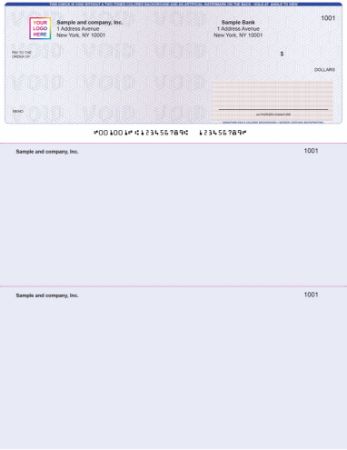
How Do You Write a Check Acceptance Policy?
Write a short, fair rule, post it where customers can see it, and apply it to everyone. A written policy also helps staff say the same thing at every counter. Use the steps below as a checklist.
- Decide who may accept checks. Name the roles that can say yes, so the front desk is not guessing.
- Set what you accept. Choose personal checks, business checks, cashier's checks or none, by type of sale.
- Ask for ID. Check the name and keep what the law lets you keep. Do not record a credit card number on the check.
- Set an amount limit. Above it, ask for a certified or cashier's check.
- Check the check. Look for a date, a legible amount, a signature and a printed bank name. Our check validity guide shows the details.
- Deposit promptly. Do not let checks age toward the six-month stale date.
- Write a bounce procedure. Decide who contacts the customer, when, and what you will ask for. Check your state's rules on fees first.
- Keep records. Log the check number, date, amount and customer, and keep the copy of the ID note.
What should a "no checks" or "checks accepted" sign say?
Keep it short, polite and specific. Customers should know the rule before they reach the counter.
| Policy | Sample sign wording |
|---|---|
| Accept with ID | We accept personal checks with a valid photo ID. |
| Accept up to a limit | We accept checks up to the posted limit. Above it, please bring a cashier's check. |
| Business customers only | Checks are accepted for business accounts. Everyone else, please use a card or cash. |
| No checks | We are not able to accept checks. We take cards, cash and mobile payments. |
Table 6. Sample sign wording to adapt. Have a local professional check the final wording.
How Can You Say No to a Check Kindly?
Say the rule, not a judgment about the person. Most customers who pay by check are not doing anything wrong. They are paying the way they always have. A calm, brief explanation keeps the relationship and spares them embarrassment.
- Lead with the rule. "Our policy is cards, cash and cashier's checks, and it is the same for everyone."
- Offer a next step. "A cashier's check or a card payment works, and I can hold your order until tomorrow."
- Keep your voice private. Do not announce it to the line behind them.
- Do not ask why they use checks. It sounds like a challenge.
What if a Store or Landlord Will Not Take Your Check?
Ask what they accept and pick the closest option. A business that refuses checks is allowed to, so arguing rarely helps. If the payment is rent, a deposit or a bill from a government agency, check the specific rule, because those can differ from a store counter.
- Ask what they take. Cards, cash, a cashier's check or a money order may work.
- Get a cashier's check from your bank. It is accepted more widely, as the section above explains. See what a cashier's check is.
- Use a money order for smaller amounts. Our money order guide explains how.
- Read the contract or lease. It may list the payment methods the seller must accept.
- Keep proof. If you offered a valid payment and it was refused, note the date, the person and what was said.
If you are not sure whether a refusal is allowed in your case, ask your state attorney general's consumer office or a local attorney. This guide is general information, not legal advice.
When your business writes the checks
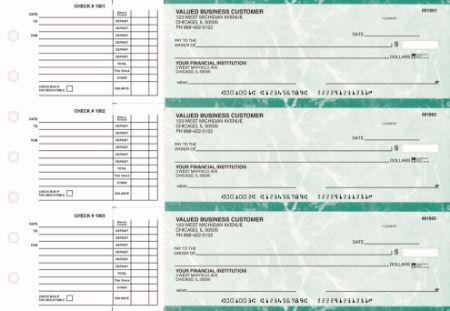
Clear check stock. Many suppliers, landlords and contractors still prefer to be paid by check, so a clean, readable business check helps your payment get accepted. See business checks.
Check the proof. You get a digital proof to approve before anything is printed, so a wrong name or account detail is caught early.
Security on the stock. ABA compliant check stock with security features helps protect the checks you issue.
Stubs for your records. Stub formats give you a record of each invoice paid.
About the Author
The Checkomatic content team prepared this guide from the primary sources it names: 31 U.S.C. 5103, the Federal Reserve FAQ on cash, the model Uniform Commercial Code, the Georgia consumer education page, New Jersey P.L.2019 c.50, California Civil Code 1947.3, a FinCEN alert, Executive Order 14247 and Atlanta Fed research. We deal with check stock and check questions from small businesses every day.
General information only, not legal advice. Payment rules differ by state, city and contract, and the UCC is adopted state by state. Ask a qualified attorney about your own situation.
Frequently Asked Questions
Do businesses have to accept checks?
Is a check legal tender?
Can a store say no to a personal check?
Can a business refuse cash?
Can a landlord refuse a check for rent?
Can a store require ID for a check?
What if a check I accepted comes back unpaid?
How long can I wait before cashing a check?
Is a cashier's check safer to accept than a personal check?
Should my small business stop accepting checks?
Accepted by the world’s leading banks