-
 Contact Us
-
 Re order
-
 Log in
-
 Cart 0
You have no items in your shopping cart.
Duplicate Checks vs Single Checks: Which Should You Order?
When you reorder checks, the order form asks a question that sounds minor: single or duplicate? Pick wrong and you either pay for copies you never look at, or you end up guessing what you wrote on a check three weeks ago when the bank statement does not match your notes.
This guide explains what duplicate checks are, how the copy is made, what the copy can and cannot prove, who benefits from each format, how long to keep the copies, and which check formats offer duplicates at all.
Quick Summary
Single checks are one sheet per check, so nothing stays in the book when you tear a check out. Duplicate checks have a carbonless copy under each check that records the number, date, payee and amount as you write. The copy is your own record, not a payment: only the original can be cashed, and your bank's records remain the proof that a check cleared.
Key points
- Duplicates use carbonless paper, not carbon sheets. Pressure from your pen breaks tiny capsules of dye that form the copy.
- The copy cannot be cashed. It is a record of what you wrote, and only the original is a negotiable check.
- Bank records prove payment. The IRS accepts account statements showing the check number, amount, payee and posting date.
- On our checks, the signature does not copy. That is a deliberate security choice.
- Duplicates suit occasional, handwritten checks. Software users already have a record in their system.
- Computer checks use stubs instead. Laser printers do not press hard enough to make carbonless copies.
| Feature | Single checks | Duplicate checks |
|---|---|---|
| What stays in the book | Nothing, unless you use a register | A carbonless copy of each check |
| What the copy shows | Not applicable | Check number, date, payee and amount |
| Record keeping effort | You log each check by hand | The copy is made as you write |
| Bulk | Thinner checkbook | Thicker checkbook |
| Best for | People who track payments in software or a register | Occasional writers who want an automatic paper trail |
Table 1. Single and duplicate checks at a glance. Ordering steps are in our guide on how to order checks.
Deciding between single and duplicate for your next order? Ask our team which formats your checks come in.
In this guide
What Are Duplicate Checks?
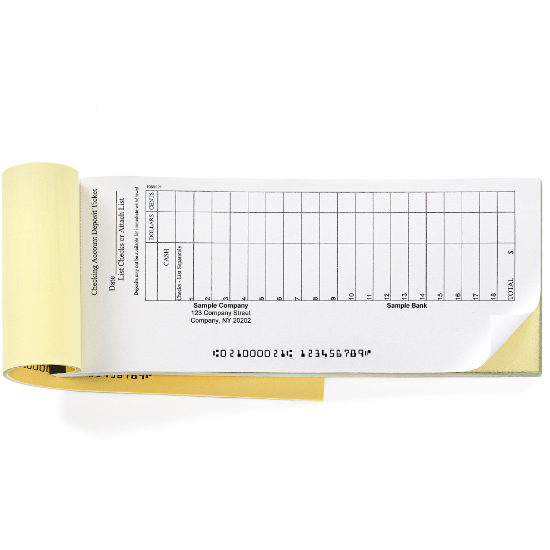
Duplicate checks are paper checks with a thin copy sheet bound under each check. When you fill in the check, the details transfer to the copy, which stays in the checkbook after you tear the original out. Single checks have no copy, so the record lives only in your register or bank statement.
Duplicates are sometimes called carbon copy checks, a name left over from the days of carbon paper. Today's duplicate checks use carbonless paper. For the other parts of a check, see our types of checks guide.
Is a duplicate check a second check?
No. A duplicate is not a second payment and cannot be cashed. Only the original can be negotiated. The copy is simply your own note of what you wrote.
How Does the Carbonless Copy Work?
Carbonless copy paper uses chemistry instead of carbon. The back of the check is coated with microcapsules of colorless dye, and the front of the copy sheet carries a coating that reacts with that dye. Pressure from your pen breaks the capsules and the dye forms the image on the copy.
A NIOSH hazard review describes the layers: a coated-back top sheet, coated-front-and-back middle sheets and a coated-front bottom sheet. The capsules, a few microns across, burst under the pressure of normal handwriting. The name NCR paper comes from "no carbon required".
| Layer | Coating | Role |
|---|---|---|
| Check (top sheet) | Coated back with dye microcapsules | Releases dye when you write |
| Middle sheet (triplicates only) | Coated front and back | Receives an image and passes one on |
| Copy (bottom sheet) | Coated front with a reactive layer | Shows the image |
Table 2. How carbonless copy layers work, based on the NIOSH review of carbonless copy paper.
Does the signature copy onto the duplicate?
Not on our duplicate checks. The copy records the check number, date, payee and amount, but the signature does not transfer, by design. A permanent copy of your signature sitting in a checkbook would be a security risk.
Is a Duplicate Copy Proof of Payment?
A duplicate copy shows that you wrote a check, not that the payee received it or that it cleared. The proof that a check was paid comes from your bank's records: the canceled check image, a substitute check, or a statement line.
IRS Publication 583 says that without a canceled check you may be able to prove payment with an account statement showing the check number, amount, payee name and posting date. The Federal Reserve's Check 21 guidance says a substitute check can be used as proof of payment. The OCC adds that no law requires your bank to return canceled checks.
- Use the copy to fill in your register and spot a check you forgot to record.
- Use bank records when someone disputes whether you paid.
- Keep both for tax-related payments, so you can match them.
Our guide on the Check 21 Act explains substitute checks in more detail.
Who Should Choose Duplicate or Single Checks?
Duplicate checks suit people and businesses who write checks by hand and want a record without extra effort. Single checks suit those who already track every payment in software or keep a disciplined register.
| You are | Better fit | Reason |
|---|---|---|
| Writing a few personal checks a month | Duplicate | The copy records what you forget to log |
| Sharing a checkbook with a spouse or partner | Duplicate | Both can see what the other wrote |
| Writing manual business checks in the field | Duplicate | The copy is ready for your bookkeeper |
| Printing checks from accounting software | Single (computer checks) | The software keeps the record and stubs |
| Keeping a detailed register already | Single | A thinner book and no duplicate record |
Table 3. A quick guide to choosing a format. For keeping a running balance, see our check register guide.
Do you still need duplicates if you bank online?
Not always. Online banking shows cleared checks, but only after they clear. A duplicate copy shows the checks you wrote that have not reached the bank yet, which matters when you track an outstanding balance.
Which Check Formats Come in Duplicates?
Duplicates are made for handwritten checks, because a pen supplies the pressure the copy needs. Laser and computer checks print without pressing on the page, so they use tear-off stubs or vouchers for the record instead.
- Personal checkbooks: our personal checks come in single and duplicate versions.
- Personal top stub, deskset and secretary deskbook checks: available in singles and duplicates; see personal deskset checks.
- Manual business checks: accounts payable, payroll and multi-purpose 3-per-page checks come in singles and duplicates; see manual business checks.
- Pocket business checks and executive deskbooks: also offered in both formats.
- Computer checks: use stubs; see manual vs computer checks.
How Long Should You Keep Duplicate Copies?
Keep copies tied to tax records for at least as long as the IRS could examine that return, which is generally 3 years under IRS Publication 583. The FTC suggests keeping tax-related canceled checks for at least three years, and shredding other cleared checks after a short period once you have matched them to your statement.
- Tax-related payments: keep the copy with your tax records for at least 3 years.
- Everyday payments: keep until the check clears and your statement is reconciled.
- Business records: follow your accountant's retention schedule.
- Disposal: shred copies, because they show payee names and amounts. The FTC advises shredding financial records before you throw them away.
Our guide on how long to keep check registers and records covers retention in depth.
How Do You Get a Clear Copy Every Time?
A clear copy depends on firm, even pressure. These habits help:
- Use a ballpoint pen. Felt tips and gel pens may not press hard enough.
- Write on a hard surface, not on the rest of the checkbook or a soft pad.
- Lift the flap or cover out of the way so only one copy sits under the check.
- Press firmly on the numbers, since the amount matters most on the copy.
- Use indelible ink on the check itself to resist washing; see our check fraud prevention guide.
What if a copy comes out faint or blank?
Fill in the missing details on the copy by hand right away, while you still remember the payee and amount, and note the check number. Then compare that entry with your bank statement when the check clears. If copies keep coming out faint, change pens or writing surface before you assume the checks are faulty, and keep a simple register as a backup.
Choosing the Format That Fits How You Pay
Singles or duplicates. Most of our personal and manual business checks come in both, so you can match the format to your habits.
Signature stays private. On our duplicate checks the signature does not transfer to the copy.
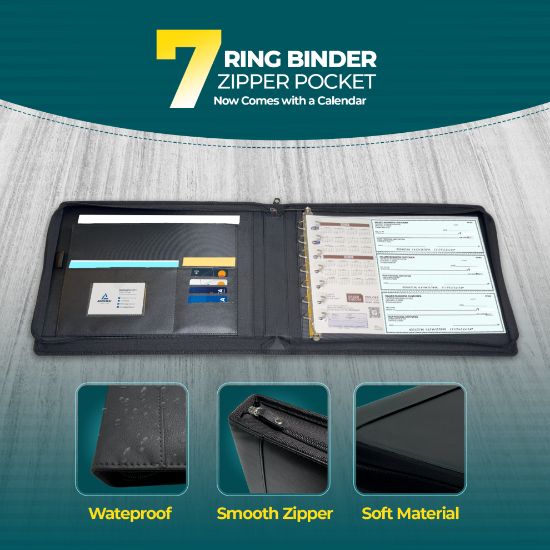
Records in one place. Binders, covers and registers keep copies and stubs organized.
About the Author
This guide is the Checkomatic team's work, written for people and businesses who write checks by hand. Sources include the NIOSH hazard review of carbonless copy paper, IRS Publication 583, Federal Reserve and OCC guidance on substitute checks and canceled checks, FTC guidance on keeping and shredding financial records, and Checkomatic's own product specifications.
This is general information, not tax or legal advice. Ask your accountant how long your business should keep check records.
Frequently Asked Questions
What is a duplicate check?
Are duplicate checks worth it?
Does the signature show on a duplicate copy?
Can a duplicate copy be used as proof of payment?
Do computer checks come in duplicates?
Which personal checks come with duplicates?
Are duplicate checks good for a business?
How long should I keep check copies?
How do I choose duplicates when I order?
Can I store duplicate business checks in a binder?
Accepted by the world’s leading banks