-
 Contact Us
-
 Re order
-
 Log in
-
 Cart 0
You have no items in your shopping cart.
Employee Reimbursement Check: How to Pay Staff Back
An employee buys supplies for a client job, pays for a train ticket, or drives to a site visit in a personal car. A week later they ask when they will get the money back. Many small owners then wonder whether to add it to the next paycheck or simply write a separate check.
An employee reimbursement check is a normal business check that repays money a worker spent on the business. How you handle it decides whether the payment stays tax free or turns into wages. This guide walks through the rules, the timing, and how to fill in the check itself.
Quick Summary
Pay the employee back with a separate business check, but only after they send proof of the expense. If your process follows the IRS accountable plan rules, the check is not wages and carries no payroll tax. If it does not, the full amount is treated as wages.
Key points
- Three tests make a plan accountable. The expense must be business related, the employee must substantiate it, and any excess must be returned (26 CFR 1.62-2).
- Safe harbor timing is 30, 60 and 120 days. Advances come within 30 days of the expense, receipts within 60 days, and any excess comes back within 120 days.
- Failing one test taints all payments. Under the regulation, every amount paid under the arrangement becomes wages.
- Receipts matter at $75. Documentary evidence is required for expenses of $75 or more, and for any lodging. See check registers for filing tips.
- Mileage changed in July 2026. The IRS rate is 72.5 cents a mile through June 30 and 76 cents a mile from July 1.
- Contractors are different. Their reimbursements may be reported on Form 1099-NEC if the total reaches $2,000. See doing payroll yourself.
| How you pay | Treated as | Withholding | Reported on W-2? |
|---|---|---|---|
| Separate check under an accountable plan | Not wages | None | No |
| Same payroll run, shown as a separate line | Not wages if the plan is accountable | None on the reimbursed amount | No |
| Flat monthly "expense" check with no receipts | Wages | Yes | Yes |
| Excess advance never returned | Wages for the excess | Yes, from the first payroll after the period ends | Yes |
Table 1. How common ways of paying employees back are treated. Source: 26 CFR 1.62-2 and IRS Publication 15. Confirm your own case with a CPA.
Paying staff back often? Our team can help you choose a check layout with room for notes. Ask the Checkomatic team for a recommendation.
What is in this guide
- What is an employee reimbursement check?
- What makes a reimbursement tax free?
- How long do employees and employers have?
- How do you fill in a reimbursement check?
- How much do you pay for mileage in 2026?
- Should you pay by check or through payroll?
- What should a written policy include?
- Who else may need a reimbursement?
- Frequently asked questions
- More questions about reimbursements
What Is an Employee Reimbursement Check?
It is a check that repays an employee for a business cost they paid themselves, such as supplies, travel or a client lunch. It is not a salary payment. The money replaces what the worker spent, so it should match the receipts they send.
Is a reimbursement the same as a paycheck?
No. A paycheck pays for work and carries withholding. A reimbursement under an accountable plan pays back a cost, so it is not wages. Our guide on payroll checks and direct deposit covers the wage side.
Do you have to reimburse employees at all?
Federal law does not generally require it, but there is a limit. Under the Fair Labor Standards Act regulations, wages must be paid free and clear, so a required business cost that pushes an employee below minimum wage for the week is a violation. Some states also have their own reimbursement laws, so check yours.
What Makes a Reimbursement Tax Free?
An accountable plan does. The IRS rule has three tests, and every payment under your arrangement must pass all of them. Passing means the payments are excluded from the employee's income and from employment taxes.
- Business connection. The expense must be one the employee incurred while performing services for you.
- Substantiation. The employee must give you proof of the amount, date, place and business purpose within a reasonable time.
- Return of excess. If you advanced more than the proven expenses, the employee must return the difference within a reasonable time.
What happens if one test is missed?
Every amount under the arrangement is treated as paid under a non-accountable plan. The regulation also says an employee cannot fix this later by proving the expenses and returning the excess. Non-accountable payments are wages, reported on Form W-2 and subject to withholding and employment taxes.
Does the plan have to be in writing?
The regulation text does not say it must be written or filed with the IRS. A written policy is still the cleanest way to show your process, which is why a checklist appears later in this guide. Ask your CPA whether anything in your situation needs more.
How Long Do Employees and Employers Have?
The regulation gives two safe harbors that count as a reasonable period. You can use either one, and each has set day counts. If you do not use a safe harbor, the IRS looks at the facts of the case.
| Step | Fixed-date method | Periodic statement method |
|---|---|---|
| Advance given | No more than 30 days before the expense | Reasonably calculated to match expected expenses |
| Proof sent to employer | Within 60 days after the expense | Within 120 days of the statement |
| Excess returned | Within 120 days after the expense | Within 120 days of the statement |
| Employer action | None required beyond collecting proof | Send a statement at least quarterly |
Table 2. The two safe harbors for a reasonable period. Source: 26 CFR 1.62-2(g)(2). Review the full text before relying on either one.
What happens after the period ends?
Unproven or unreturned amounts become wages. Under the regulation, withholding and employment taxes apply no later than the first payroll period after the reasonable period ends. This is the part owners most often miss.
When do you need a receipt?
You need documentary evidence, such as a receipt or paid bill, for any expense of $75 or more, and for any lodging while traveling. Transportation charges are excused if a receipt is not readily available. Even then, records must show the amount, time, place and business purpose, and the guidance is in 26 CFR 1.274-5. See our tips on checkbook management for keeping paperwork together.
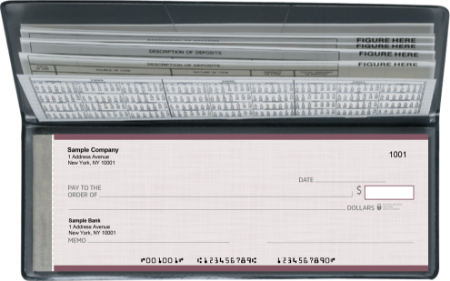
How Do You Fill In a Reimbursement Check?
Treat it like any other business payment, with a few extra habits that help your records. The IRS does not set these habits, so see them as good practice. Use our basics on filling out a check for each line.
- Payee. Use the employee's name as it appears in your payroll records.
- Amount. Match the approved expense report total, in numbers and in words.
- Memo line. Add the report ID or period, such as "Expense report 114". Keep personal details off it.
- Account. Pay from the account your business uses for bills, and keep the choice consistent.
- Record. Log the check number and report ID in your check register.
- Keep the file. Store the receipts and approval with the stub or voucher.
Should one check cover many expenses?
One check per approved report keeps the trail clean. Batching a month of small items is fine if the report lists each one. Avoid rounding up to a convenient number, since that can look like a flat allowance.
Can the owner reimburse themselves?
Owners often pay themselves back, and the same logic applies, but the tax treatment depends on how the business is organized. We did not find a primary IRS page that settles this for every owner type, so ask a CPA before you rely on an accountable plan for yourself. Write a separate check per report either way.
How Much Do You Pay for Mileage in 2026?
You can use the IRS business standard mileage rate, which is 72.5 cents a mile from January 1 through June 30, 2026, and 76 cents a mile from July 1, 2026. The IRS announced the first rate in IR-2025-128 and Announcement 2026-11 raised it for the second half of the year, citing fuel prices. You do not have to use the IRS rate, but amounts at or below it are treated as substantiated.
| Period | Miles | Rate per mile | Reimbursement |
|---|---|---|---|
| June 2026 | 400 | $0.725 | $290.00 |
| July 2026 | 400 | $0.76 | $304.00 |
| Total | 800 | Mixed | $594.00 |
Table 3. Worked example of an employee who drives 400 business miles in June and 400 in July 2026. Rates from the IRS standard mileage rates page. See business checks for printed check options.
What about per diem?
A per diem is a fixed daily allowance for meals and lodging. The employee is treated as having accounted for it if it does not exceed the federal rate, but the dates and business purpose must still be proven. Any amount above the federal rate is wages, and the GSA publishes the current rates.
Should You Pay by Check or Through Payroll?
Both work. A separate check keeps the reimbursement away from wages, which makes the paperwork easy to follow. Paying through payroll is allowed too, as long as the reimbursement is shown as a separate amount from the wages.
| If you want to | Best choice | Why |
|---|---|---|
| Keep records simple | Separate business check | One payment ties to one expense report |
| Pay on payroll day | Separate line in the payroll run | Allowed if identified separately from wages |
| Pay a flat allowance | Review with a CPA first | Flat amounts often fail the substantiation test |
| Pay quickly mid-cycle | Separate check | No need to wait for the next payroll run |
Table 4. Choosing between a separate reimbursement check and payroll. Compare the payment methods in check versus ACH payment.
What Should a Written Policy Include?
A short written policy tells people what you reimburse, how to prove it, and how fast. Tie each line to the tests above. Here is a checklist you can adapt.
- Eligible expenses. List what you cover and what you do not, such as commuting or the personal part of a trip.
- Proof required. Receipts for $75 or more and for lodging, plus date, place and business purpose for everything. Keep them with your check register.
- Submission deadline. Pick a date well inside 60 days of the expense.
- Advances. Say how far ahead you give them and when unspent money comes back.
- Mileage method. State the IRS rate you use and that the rate in effect on the travel date applies.
- Payment timing. State how soon you pay approved reports and from which account.
- Record keeping. Keep the reports and receipts with your payroll records.
- If rules are missed. Explain that late or unproven amounts are treated as wages.
How long should expense reports and receipts be kept?
Keep employment tax records for at least four years, according to the IRS guidance on how long to keep records. Records that support an income tax return are generally kept for three years from filing, and longer in some cases. Follow the longer period for anything tied to payroll, and see payroll business checks for related tips.
Who Else May Need a Reimbursement?
The rules above apply to employees. People who are not employees follow different rules, so do not use one process for everyone.
What about independent contractors?
If a contractor accounts to you for expenses, the reimbursed amount is generally not reported. If they do not, the amount counts with their fees, and the IRS says a Form 1099-NEC is required when the total reaches $2,000 for payments made after December 31, 2025. The current IRS page was reviewed on October 16, 2026. Our guide to staffing agency checks covers other pay setups.
Can unreimbursed employees deduct their costs?
Generally not. IRS guidance says most employees cannot deduct unreimbursed work expenses, because the miscellaneous itemized deduction is suspended, with narrow exceptions. That is a good reason to repay people promptly and correctly.
Checks sized for how often you pay
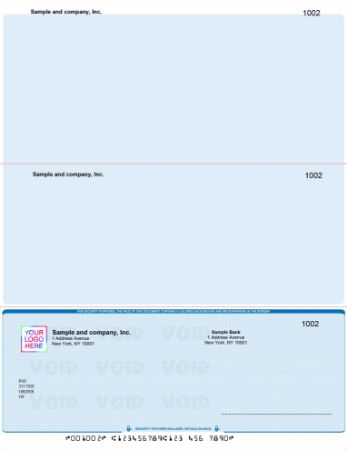
Layouts for light or heavy use. Pocket, deskbook and 3-on-a-page formats suit small and large check volumes. Explore voucher checks if you want a section for notes.
Bank details printed correctly. Your routing and account numbers are placed where your bank expects them.
See it before it prints. A digital proof lets you review the details first.
Security features. ABA compliant check stock supports clean processing at your bank.
About the Author
This guide comes from the Checkomatic content team, who help business owners every day with the practical side of paying by check. The tax points are drawn from Treasury Regulation 1.62-2, Treasury Regulation 1.274-5, IRS Publication 15, the IRS standard mileage rates page, and the IRS page on Form 1099-NEC.
General information only, not tax, legal or accounting advice. Rates and thresholds change, and state laws differ. Confirm the details for your business with a CPA or enrolled agent before you set a policy.
Frequently Asked Questions
What is an employee reimbursement check?
Can you reimburse an employee with a business check?
Are employee reimbursements taxable?
What are the three rules for an accountable plan?
How fast must employees send receipts?
What is the 2026 mileage reimbursement rate?
Do I need receipts for every expense?
What goes on the memo line of a reimbursement check?
Can I add a reimbursement to a paycheck?
How are contractor expenses reported?
Accepted by the world’s leading banks