-
 Contact Us
-
 Re order
-
 Log in
-
 Cart 0
You have no items in your shopping cart.
How Many Paychecks in a Year? Weekly, Biweekly and More
Your pay schedule decides when the rent gets paid and when the bank balance dips. Yet many people cannot say whether they will get 24, 26 or 27 paychecks this year, or why some months bring a third one.
This guide gives the exact count for every pay schedule, shows you how to find your three-paycheck months from your own first payday, and explains what employers should plan for. If you run payroll yourself, our guide to how to do payroll yourself covers the setup side.
Quick Summary
A year has 52 weekly paychecks, 26 biweekly paychecks, 24 semi-monthly paychecks or 12 monthly paychecks. Weekly pay sometimes gives 53 pay dates and biweekly pay sometimes gives 27, because 52 weeks is only 364 days and a calendar year has 365 or 366.
Key points
- Weekly pay means 52 paychecks, and sometimes 53. In some years one weekday has 53 paydays. In 2026 that weekday is Thursday and in 2027 it is Friday.
- Biweekly pay means 26 paychecks, and 27 only when the first payday is January 1. In a leap year, January 2 also works. That happens about once every 11 years for any one pay cycle.
- Semi-monthly pay is always 24 paychecks. The dates are fixed, so the count never changes, but some dates land on weekends.
- Monthly pay is always 12 paychecks. It is the simplest schedule to budget around.
- A third paycheck in a month is a timing effect, not a raise. Your annual pay stays the same, so plan for it instead of spending it.
- Payroll tax tables use the standard counts. IRS Publication 15-T lists 52, 26, 24 and 12 pay periods a year for withholding.
Need payroll checks that suit your pay schedule? Talk to the Checkomatic team and we will point you to a stub format that fits.
What is in this guide
- How many paychecks are in a year for each pay schedule?
- Why does biweekly pay sometimes mean 27 paychecks?
- Which months have three paychecks?
- Is a three-paycheck month extra money?
- How do you turn an annual salary into a paycheck?
- Can a holiday move a paycheck into a different tax year?
- Does the law say how often employers must pay?
- How should a small business choose a pay schedule?
- How do payroll checks fit around pay dates?
- Frequently asked questions
- More questions about paychecks per year
How Many Paychecks Are in a Year for Each Pay Schedule?
The count depends on how often you are paid. A pay schedule is how often an employer pays, and the number of paychecks is how many pay dates land inside one calendar year. Use the schedule your employer or payroll provider has set.
How many paychecks in a year if you are paid weekly?
You get 52 paychecks in most years. A year holds 52 weeks plus one extra day, or two in a leap year, so one weekday appears on 53 dates of the year (two weekdays in a leap year). If your payday is that weekday, you get 53 paychecks. In 2026 the weekday is Thursday, and in 2027 it is Friday.
How many paychecks in a year if you are paid biweekly?
You get 26 paychecks in most years. Biweekly means every second week, so paydays are 14 days apart. Now and then a year holds 27 pay dates, and the next section explains exactly when.
How many paychecks in a year if you are paid twice a month?
You get 24 paychecks. Twice a month, often called semi-monthly, means two fixed dates in each month, such as the 15th and the last day. People often mix it up with biweekly pay, but biweekly gives 26 paychecks and semi-monthly gives 24. The word bimonthly is unclear because it can mean twice a month or every two months, so ask your employer what they mean.
How many paychecks in a year if you are paid monthly?
You get 12 paychecks, one for each month. The count never changes, which makes monthly pay the easiest schedule to plan around.
Why Does Biweekly Pay Sometimes Mean 27 Paychecks?
It happens because 26 biweekly periods cover 364 days, and a calendar year has 365 days, or 366 in a leap year. When the first payday of the year falls on January 1, the 26th payday lands on December 17 and the 27th lands on December 31. That is the only way to fit 27 paydays into a non-leap year.
Here is a worked example. A company that pays every other Thursday and has a payday on Thursday, January 1, 2026, pays again on December 31, 2026. That cycle has 27 paychecks in 2026. Every other biweekly cycle has 26 paychecks in 2026.
How often does a 27-paycheck year happen?
About once every 11 years for any one pay cycle. A fixed cycle moves forward one day each year, or two days after a leap year, and a 27-paycheck year only occurs when that cycle returns to a January 1 start. Different employers sit on different cycles, so in most years some employers have 27 pay dates.
Is 2026 or 2027 a 27-paycheck year?
Only for one cycle each year. In 2026 it is the cycle that pays on Thursday, January 1. In 2027 it is the cycle that pays on Friday, January 1.
If your first payday of the year is any other date, you have 26 paychecks. Tables 2 and 3 below show every weekday.
Which Months Have Three Paychecks?
With biweekly pay, two months a year have three paychecks, and which two depends on your first payday of the year. Find your payday weekday and the date of your first payday in January in the tables below, then read across.
Which months have three biweekly paychecks in 2026?
Use Table 2. Each weekday has two possible cycles, depending on whether your first January payday is in the first or second week of the month.
Which months have three biweekly paychecks in 2027?
Use Table 3 and look for your first payday in January 2027. Your 2027 row may differ from your 2026 row, because your cycle moves forward as the years pass.
Which months have five paydays if you are paid weekly?
Any month in which your payday weekday occurs five times. Most months have four of each weekday, and the extra days of the calendar push one or two weekdays to five in some months.
How many paychecks are left in the year?
Count from today, using your own payday dates. This takes a minute and avoids guessing.
- Write down your next payday. Include it if it has not been paid yet.
- Add your pay gap (7, 14 days, or the next fixed date) and write the next date down.
- Repeat until you pass December 31. Stop at the last date inside the year.
- Count the dates you wrote down. That is how many paychecks you have left.
Is a Three-Paycheck Month Extra Money?
No. A three-paycheck month changes when you are paid, not how much you earn in a year. Over a full year you still receive the same annual pay, so a third paycheck is best treated as a planning gift and not as a bonus.
How should you budget for a three-paycheck month?
Build your monthly budget on two paychecks and treat the third as spare. Common uses are:
- Annual bills. Set money aside for insurance, registration or subscriptions that arrive once a year.
- An emergency fund. A third paycheck is a natural moment to add to savings.
- Debt. Put it toward the balance that costs you the most each month.
- A bill cushion. Keep part of it back for the thinner months ahead.
Do hourly workers get paid more in a 27-paycheck year?
Their pay rate stays the same. Wages are reported for the year they are paid, so a 27-paycheck year shows one more pay period on the Form W-2 than usual, and that extra period was worked partly in the year before. Employers handle salaried staff in different ways, for example by keeping the usual amount per paycheck or by dividing the annual salary by 27, so ask payroll which method applies.
How Do You Turn an Annual Salary Into a Paycheck?
Divide the annual gross pay by the number of paychecks in the year. Gross pay is the amount before tax and other deductions, so your take-home amount is lower. The same salary gives a different paycheck on each schedule.
Why do payroll tax tables still use 26 for biweekly pay?
Withholding worksheets use a standard count for each schedule. IRS Publication 15-T for 2026 lists 52 for weekly, 26 for biweekly, 24 for semi-monthly and 12 for monthly pay, and employers use that number to annualize each paycheck for withholding. Ask your payroll provider how it treats a 27-paycheck year.
Can a Holiday Move a Paycheck Into a Different Tax Year?
Yes, in a few cases. The IRS says wages are reported on Form W-2 for the calendar year they are paid. Its own example is wages earned in late December 2026 and paid on January 1, 2027, which belong on the 2027 form. So the date money is paid matters more than the dates it covers.
This matters at year-end because banks close on certain holidays. The Federal Reserve calendar shows that New Year's Day 2027 falls on a Friday and the Reserve Banks are closed that day. An employer on a Friday biweekly cycle, with a payday on Friday, January 1, 2027, usually has to pay on Thursday, December 31, 2026 instead. That moves one payday into 2026 and gives that cycle 27 paychecks in 2026.
Employers set their own rule for holiday paydays, so check your payroll calendar for any payday that falls on a Reserve Bank holiday. Our guide to payroll checks versus direct deposit explains how the choice of payment method affects the timing.
Does the Law Say How Often Employers Must Pay?
Federal law sets when overtime is due, but the Department of Labor page on state payday rules shows no federal rule on pay frequency. Each state decides, and a few states do not regulate it. Under federal rules, overtime is due on the regular payday for the pay period in which the workweek ends (29 CFR 778.106).
How Should a Small Business Choose a Pay Schedule?
Start with your state's rule, then weigh cash flow and workload. The Bureau of Labor Statistics found in March 2013 that, among private businesses with a single pay frequency, 36.5% paid biweekly, 32.4% weekly, 19.8% semi-monthly and 11.3% monthly. That data is old, but it shows biweekly and weekly are the usual choices for hourly teams. Our guide to payroll checks for every pay schedule shows the check formats that fit each one.
What should an employer plan for in a 27-paycheck year?
- Cash. Reserve money for the extra payroll well ahead of the year.
- Benefits and retirement deductions. Check whether per-paycheck amounts are set to 26 or 27 periods.
- Salaried staff. Decide whether to divide the salary by 26 or 27 and tell staff early.
- Payroll checks. Order enough check stock for the extra run.
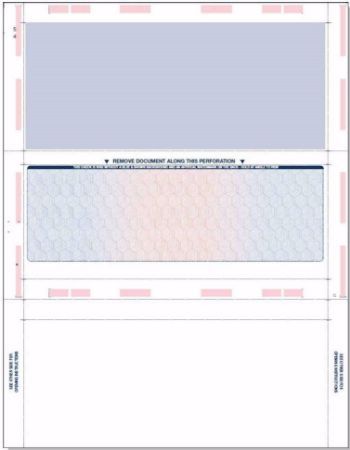
How Do Payroll Checks Fit Around Pay Dates?
Plan the check run backwards from payday. Printed checks need time to be signed, handed out or mailed, and deposited, and banks do not process them on Reserve Bank holidays. A simple calendar avoids last-minute rushes.
- Mark every payday for the year, using the tables above.
- Flag paydays that land on weekends or bank holidays and decide whether to pay the day before.
- Set a cut-off date for hours and changes a few days before each payday.
- Print and sign the checks before the handout or mailing date.
- Keep the check numbers in order and record every payroll check in your register.
To work out how many payroll checks to order, multiply your staff count by the paychecks per year and add spares for corrections. Twelve employees on a biweekly schedule need 312 checks for a year. Our guide to how many checks you need explains how to size an order. For stub formats, see voucher business checks and top stub checks.
Why businesses choose Checkomatic for payroll checks
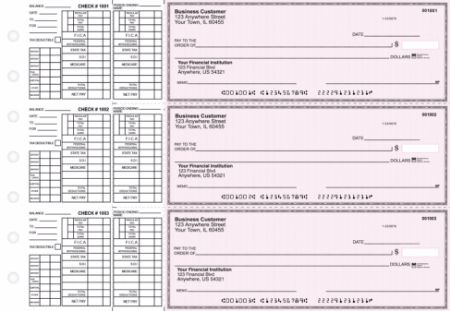
Stubs that show the pay. Voucher and stub layouts give each employee a written record of earnings and deductions with every paycheck. See payroll checks and stub formats.
Proof first, print second. A digital proof of your payroll check reaches you before printing, so a wrong name or bank detail is fixed early.
Protection on the page. ABA compliant check stock with built-in security features helps protect the checks you hand out each pay cycle.
Privacy for pay details. Pressure seal formats keep amounts out of sight until the employee opens them.
About the Author
The Checkomatic content team wrote this guide from our daily work with business and payroll checks. The pay-period counts and withholding figures come from IRS Publication 15-T, the Form W-2 instructions, the Federal Reserve holiday calendar and the Department of Labor state payday page. The calendar tables were calculated from the 2026 and 2027 calendars.
General information only, not legal, tax or payroll advice. State pay-frequency rules change, so confirm the current rule with your state labor department or payroll adviser.
Frequently Asked Questions
How many paychecks are in a year?
Is biweekly pay 26 or 27 paychecks a year?
How many paychecks are there in a year if you are paid twice a month?
Which months have three paychecks?
How many paychecks are in a month?
What is the difference between a pay period and a pay date?
Do hourly employees get a 27th paycheck?
What happens when payday falls on a weekend or bank holiday?
Can an employer change a pay schedule during the year?
Does a 27th paycheck change payroll taxes?
Accepted by the world’s leading banks