What Counts as a Mistake on a Check?
Every field on a check is a potential place for an error. Before deciding what to do, it helps to know which field the mistake is in, because some fields carry significantly more risk than others when corrected.
A check is a negotiable instrument, and each of its fields serves a distinct legal or operational purpose. The bank treats a corrected date very differently from a corrected dollar amount. Understanding that distinction before you pick up the pen determines whether a quick fix solves your problem or creates a larger one.
The Two Things Most People Get Wrong About Check Corrections
Most general guides cover check corrections as if they are a straightforward two-step process: cross it out, initial it, done. That framing skips two realities that affect whether your corrected check actually clears.
Why Does the Field You Corrected Determine Whether the Bank Accepts It?
Bank staff and automated processing systems do not treat all check corrections equally. A correction on the memo line and a correction on the dollar amount line look identical on paper, but they trigger completely different responses.
The memo line carries no legal weight in check processing. A crossed-out memo entry, clearly corrected and initialed, almost never causes a problem. The dollar amount fields, both the numeric box and the written amount line, are the fields banks are trained to scrutinize for fraud. Any correction to those fields raises immediate concern regardless of how clearly it is initialed, because altering the dollar amount is precisely what check fraud looks like.
This happens more often than people expect. A check is written for one amount, but a mistake on the numeric line is corrected with good intentions, and then the teller or the automated deposit system flags it. The correction is honest, but the bank has no reliable way to distinguish an honest correction from a fraudulent alteration after the fact.
When Should You Correct a Check vs. Void It?
The field you made the mistake in should determine your next step. Here is how each field breaks down.
Date line mistakes
A wrong date is one of the more forgiving mistakes on a check. A corrected date, initialed by the check writer, is generally accepted by most banks, especially if the rest of the check is clean and the correction is obvious. That said, a check with a future date (post-dated) or a date more than 180 days in the past (stale-dated) can be refused regardless of corrections. If your date error involves a prior year or a date far in the past, voiding and rewriting is the cleaner option.
Payee name mistakes
A misspelled payee name requires careful judgment. A minor spelling error that is clearly the same person or business may be accepted with an initialed correction. A significantly wrong name, a name crossed out and replaced with a different person, or any change that could suggest the check was altered by someone other than the original writer will almost certainly be questioned or refused. When in doubt, void and rewrite.
Numeric amount box mistakes
The dollar amount in the small box on the right side of the check is highly visible and easy for banks to scan. A crossed-out and corrected number, initialed by the check writer, may be accepted. However, any correction to the amount field raises scrutiny immediately. Banks are trained to treat amount changes as a potential indicator of fraud. Even if the correction is entirely honest, the bank may decline the check simply because the risk is not worth taking on their end.
Written amount line mistakes
The line where you write out the amount in words is the legally controlling field under UCC Article 3-114. If the written amount and the numeric amount disagree, the written amount is what the bank is supposed to honor. This means a correction on the written amount line is even more sensitive than one in the numeric box. A mistake here, especially one that changes the dollar value, is best handled by voiding the check.
Memo line mistakes
The memo line carries no legal weight in check processing. A crossed-out and corrected memo entry is generally accepted without issue. This is the one field where a simple correction almost never causes a problem.
Signature mistakes
A signature cannot be corrected. If you signed with the wrong name, signed in the wrong spot, or the signature is unclear, the check needs to be voided and rewritten. Do not attempt to add a second signature or write over an existing one.
Can You Cross Out a Mistake on a Check and Initial It?
Yes, this is the standard accepted method for making a correction on a check, but it comes with important conditions that determine whether the bank will accept it.
Banks may accept a correction when all of the following are true: the error was crossed out with a single clean line rather than scribbled over or heavily blacked out; the correction is written clearly above or next to the crossed-out text in the same ink color; the check writer's initials appear directly next to the correction; only one correction was made on the entire check; the correction does not involve the signature line; and the check does not look altered for fraudulent purposes.
Even when all of these conditions are met, the bank still has the right to refuse the check. Every institution applies its own internal standards, and many maintain a policy of declining any check that shows signs of alteration. There is no legal requirement that a bank must accept a corrected check.
Can You Use White-Out or Correction Fluid on a Check?
No. Correction fluid, white-out, correction tape, or any product that covers original text on a check renders it invalid. This applies to every field on the check without exception.
The reason is not a bureaucratic formality. A check is a negotiable instrument. Covering original text is classified as a material alteration under UCC Article 3-407, and a fraudulently altered check may discharge the liability of the person who originally signed it. Banks are trained to identify signs of chemical alteration. Most modern business checks and personal checks include security features, VOID pantograph backgrounds, and chemically sensitive paper designed specifically to reveal tampering.
If you used correction fluid on a check, void it and write a new one. There is no other option.
How to Correct a Mistake on a Check: Step-by-Step
Use this process only for minor, non-amount errors on checks that are still in your possession. For any dollar amount correction, voiding and rewriting the check is always the right answer.
What You Need Before You Make the Correction
Before touching the check, confirm the following. The check is still in your hands and has not been given to the payee. The error is in a low-risk field such as the date, payee spelling, or memo line. Only one correction is needed. You have a pen with the same ink color you used to write the check originally.
Draw a single clean line through the error
Use black or blue ink. Draw one straight horizontal line through the incorrect text. Do not scribble, cross-hatch, or black out the original text. The original text should remain readable beneath the line. This openness is what signals to the bank that you are correcting, not concealing.
Write the correction clearly above or beside the error
Write the corrected information directly above the crossed-out text, or immediately beside it if there is not enough space. Use the same ink color you used originally. Write clearly. If the corrected text is difficult to read, the check may be refused regardless of the initials.
Initial next to the correction
Place your initials immediately beside the correction. Some banks prefer initials and the date next to the correction. Your initials confirm that you, as the check writer, authorized the change. Without initials, the bank has no way to know whether the correction was made by you or by someone who obtained the check after it left your hands.
Inform the teller when depositing
If you are depositing a check you received that has a correction, or if the corrected check will be presented at a branch, mention it to the teller before they process it. Do not attempt mobile deposit or ATM deposit with a corrected check. See the section below on why mobile deposit and corrected checks do not mix.
Update your check register
If you voided the check instead of correcting it, record the voided check in your register immediately. Use the original check number, write VOID in the payee field, enter zero in the amount fields, and add a note such as "Voided, replaced by check . See Check Register: How to Set Up and Use a Checkbook Ledger for full recordkeeping guidance.
How to Handle a Check Mistake on a Payroll Check
Payroll check errors require faster action and more documentation than standard checks because wage payment obligations do not pause while you resolve a check issue.
Why Is a Payroll Check Mistake More Complicated to Fix?
Under most state labor laws, an employer is legally required to ensure employees receive wages on the scheduled pay date. A payroll check with a wrong amount handed to an employee and then corrected or replaced puts the employer in a difficult position if any delay occurs in the employee receiving the right payment.
A payroll check with a wrong amount should never be handed to an employee in a corrected state. The stakes are too high on both sides. Void the check, generate a replacement payroll check for the correct amount, and update your payroll records immediately. When correcting a payroll check error, the standard process is: notify the employee in writing that the check has been voided and a replacement is being prepared; reissue the correct payment as quickly as possible, ideally the same business day; confirm the replacement check was received; and keep records of the void, the notification, and the reissuance date. For payroll check formats designed for fast, documented reissuance, see Business Checks Payroll.
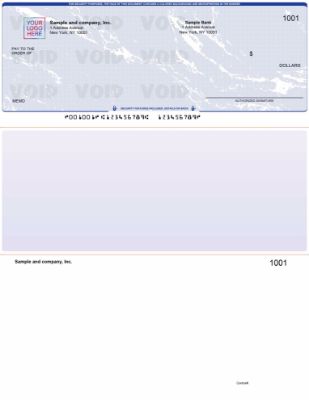
Checkomatic payroll checks with pre-printed earnings stubs support fast, documented reissuance when a check error is discovered, giving you a clean paper trail without relying on corrected instruments.
What Happens If You Already Gave the Check to Someone Else?
Once a check leaves your hands, voiding is no longer an option. The check is a negotiable instrument that is now in someone else's possession, and you cannot physically write VOID across it. At this point, you have two primary tools.
The first is a stop payment order. Contact your bank immediately and request a stop payment on the check. You will need the check number, the exact amount written on the check, the payee name, and the date. Acting quickly matters. A check can clear within one business day of being deposited, and a stop payment request placed after clearing provides no protection. For full guidance, see How to Stop Payment on a Business Check: Full Guide.
The second option is contacting the payee directly. If the error is minor and the payee is someone you work with regularly, reach out, explain the mistake, and arrange for the original check not to be deposited. Issue a corrected replacement check and confirm the original has been destroyed. This works well for vendor payments and recurring payroll situations where you have a documented relationship with the payee.
If the check has already been deposited and cleared, a stop payment is no longer effective. You will need to work with the payee directly to resolve any overpayment or underpayment. See How to Stop Payment on a Check: Step-by-Step Guide for the full process including timeline and bank requirements.
Can a Mobile Deposit Reject a Corrected Check Even If Your Bank Would Accept It in Person?
Yes, and this is one of the most important distinctions in modern check handling that almost no one explains clearly.
Mobile deposit and ATM check deposit use automated image processing and optical character recognition to scan each check. These systems are not operated by a human teller who can apply judgment. They scan for specific patterns, and any visual inconsistency, including a crossed-out amount, an extra line of handwriting, or a corrected word, can cause the system to reject the deposit automatically without explanation.
This is a recurring issue. Customers regularly find that checks with even minor corrections fail the automated scan and are returned with no explanation beyond "deposit rejected." The safest path with a corrected check is to visit a bank branch and deposit it in person with a teller. Explain the correction upfront. The teller can apply judgment and process the deposit manually. Do not attempt mobile or ATM deposit first and then try the branch as a fallback. Once a check is rejected by a mobile deposit scan, it may carry a mark or notation that complicates the in-person transaction.
Does Correcting a Check on Your Own Count as a Material Alteration?
No, with an important distinction. Under Uniform Commercial Code Article 3-407, a material alteration is any unauthorized change to a signed negotiable instrument that modifies the obligation of any party to that instrument. Changing the dollar amount, the payee name, or the date after the check is signed all qualify as material alterations.
The legal outcome depends on whether the alteration was fraudulent. A fraudulent alteration made by someone other than the check writer discharges the check writer from liability. The person who altered it bears responsibility. A non-fraudulent correction made by the check writer, openly initialed and clearly documented, generally keeps the check enforceable under the corrected terms. The bank still has the discretion to refuse the check, but the check writer is not committing fraud by making a legitimate correction. The problem is that banks cannot always tell the difference, which is why many institutions simply decline to accept altered checks.
How Can Printing Checks Through Accounting Software Eliminate Most Correction Scenarios?
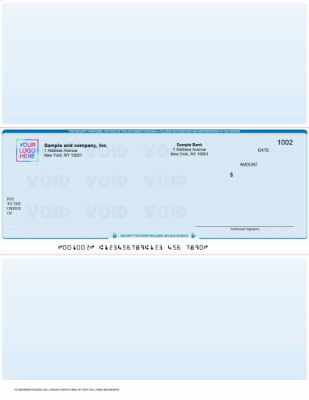
Computer checks, laser checks, and voucher checks generated through accounting software present a unique advantage. The printed fields, including payee name, date, and dollar amount, are filled by the software. Only the authorized signature is added by hand. This eliminates the majority of check writing errors before they happen.
When a computer-generated check does contain an error, the correct fix is always to reprint. Void the original in your accounting software, reverse the transaction, and reprint with the correct information. A handwritten correction over laser-printed text is visually inconsistent and raises significantly more concern during bank review than the same correction on a handwritten check. The software void also ensures your accounting records stay accurate without a gap.
See computer checks compatible with QuickBooks, Sage, and other major accounting platforms available through Checkomatic, as well as manual business checks for handwritten business check needs with clear, well-spaced fields that reduce the likelihood of errors.
Correct, Void, or Stop Payment: How to Choose
| Situation | Best Action | Reason |
|---|---|---|
| Minor date error, check still with you | Correct with single line and initial, or void and rewrite | Date corrections are the lowest-risk field; voiding is still the cleanest option |
| Wrong dollar amount, check still with you | Void and rewrite | Amount corrections trigger bank fraud scrutiny; voiding eliminates the risk entirely |
| Misspelled payee name, minor error, check still with you | Correct if genuinely minor; otherwise void | Any name change that looks ambiguous will be questioned; voiding is safer |
| Correction fluid used anywhere on the check | Void immediately | No bank under any circumstances accepts a check with correction fluid applied |
| Check already given to payee, error discovered | Stop payment order | You no longer control the check; voiding is not possible once it leaves your hands |
| Check mailed, not yet deposited | Stop payment order, then send replacement check | Stop payment prevents the original from clearing before the replacement arrives |
| Check already deposited and cleared | Contact payee directly; arrange correction or refund | Stop payment is no longer effective after clearing; resolution requires payee cooperation |
What Customers Say About Checkomatic
All reviews below are reproduced verbatim from checkomatic.com. Source: checkomatic.com/quickbooks-starter-pack-product, 4.5 stars from 166 verified reviews.
"Been with them for 15 years. Always reliable, always good quality, good service. What more can you ask for?"
ATV Inc. | ★★★★★ 5/5 | April 5, 2024 | Source: checkomatic.com/quickbooks-starter-pack-product
"We use CheckoMatic for all of our check needs! They have great prices and we receive our products in a timely manner!"
CG's Tax Service | ★★★★★ 5/5 | September 18, 2024 | Source: checkomatic.com/quickbooks-starter-pack-product
"ASJ Wilson Construction has been a client of checkomatic for some years now and they've never disappointed this company. Thank you checkomatic for all that you do."
ASJ Wilson Construction | ★★★★★ 5/5 | June 6, 2024 | Source: checkomatic.com/quickbooks-starter-pack-product
"First time ordering and I am super impressed with the quality of the checks. No issues with delivery. I will be ordering again!"
TClinton | ★★★★★ 5/5 | April 9, 2025 | Source: checkomatic.com/quickbooks-starter-pack-product
"Affordable and efficient. My go-to business check printer."
Doe | ★★★★★ 5/5 | January 24, 2025 | Source: checkomatic.com/quickbooks-starter-pack-product
"I got 500 checks for less than half of what the bank wanted for 200!"
VVA Voucher Checks (Vietnam Veterans of America) | ★★★★★ 5/5 | July 6, 2024 | Source: checkomatic.com/quickbooks-starter-pack-product
About Checkomatic
Checkomatic has manufactured business checks, payroll checks, AP checks, and business banking supplies in-house at its Monroe, NY facility since 1997. Every check order is produced on CPSA-certified security paper with ABA-compliant MICR encoding verified against the Federal Reserve E-Payments Routing Directory. Six ABA-compliant security features are standard on every order. Checkomatic is BBB Accredited and TrustedSite Certified, with a 4.5-star rating from 166 verified customer reviews. Checks are accepted by all major US banks.