Quick Answer: How to Fill Out a Check Correctly
To fill out a check correctly, write the date, the payee's full legal name, the numeric dollar amount, the written dollar amount in words, a memo note, and your signature, in that order. The written amount in words is the legally controlling amount if the two fields ever conflict.
- Always use a permanent ink ballpoint pen (blue or black), never pencil
- Write the payee's full legal name exactly as it appears on their bank account
- Fill the written amount line completely, then draw a line through any remaining blank space
- If the numeric box and written words conflict, the written words control legally (UCC Article 3)
- Void the entire check if you make a mistake; never use correction fluid or cross out errors
- Log every business check in your check register or accounting software immediately after writing it
| Check Field | What to Write | Common Mistake to Avoid |
|---|---|---|
| Date | Today's full date (MM/DD/YYYY or written out) | Postdating (banks often cash it early anyway) |
| Pay to the Order Of | Full legal name of payee or business entity | Nicknames or abbreviations that do not match the payee's account |
| Numeric Amount ($) | Exact amount in numbers with cents (e.g., 1,250.00) | Leaving cents blank or omitting the decimal |
| Written Amount | Spelled out in full (e.g., One thousand two hundred fifty and 00/100) | Mismatching the numeric box; leaving blank space at the end |
| Memo | Invoice number, account reference, or pay period | Leaving blank (makes reconciliation and dispute resolution harder) |
| Signature | Authorized signer's signature in permanent ink | Signing before filling out all other fields |
What Are the Parts of a Business Check?
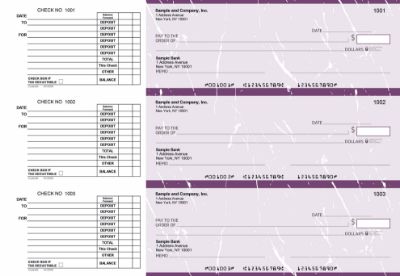
Understanding each part of a check before you write one prevents errors and helps you catch problems before a check leaves your hands. Business checks contain the same core fields as personal checks, but they also include your company name, business address, and sometimes a logo or account branding.
- Business name and address (preprinted): Your legal business name and mailing address appear in the upper left corner. This identifies the account holder to the payee and to the bank that processes the check.
- Check number (preprinted): Located in the upper right corner and repeated in the MICR line at the bottom. Use check numbers to track payments and reconcile your register against bank statements.
- Date line: Where you write the date the check is issued. Located in the upper right area, below the check number.
- Pay to the Order Of line: The full legal name of the person, business, or agency you are paying.
- Numeric amount box ($): The payment amount written in numbers, always including cents (e.g., 1,500.00).
- Written amount line: The payment amount spelled out in words. This is the legally controlling amount under UCC Article 3 if there is ever a discrepancy between the numeric box and the words.
- Memo line: An optional but highly recommended field for identifying the purpose of the payment, such as an invoice number, account reference, or pay period.
- Signature line: Where the authorized account signer signs in permanent ink. Some business accounts require two signatures above a certain dollar threshold.
- Bank name (preprinted): Your bank's name and often its address, appearing in the center or lower portion of the check.
- MICR line (bottom): The row of numbers printed in magnetic ink at the bottom. Contains your bank's routing number, your account number, and the check number, in that order. Do not write over or obscure the MICR line.
If you need high-security checks with fraud-deterrent features built into the check stock itself, Checkomatic offers options with watermarks, void pantographs, and chemically reactive paper that protect payments from alteration.
How Do You Fill Out a Check Step by Step?
Follow these six steps in order. Filling fields out of sequence, particularly signing before completing all other fields, creates unnecessary risk.
Step 1: Write the Date in the Date Field
Write the current date in the date field in the upper right corner of the check. Use the full date including month, day, and year. You can write it numerically (10/13/2026) or in full (October 13, 2026).
- Postdating: Writing a future date on a check does not legally prevent a bank from cashing it early. Most banks are not required to hold a postdated check unless you provide a formal postdating notice to the bank in advance. Do not rely on postdating to manage timing of payments.
- Backdating: Writing a past date can create an inaccurate accounting record and can be considered fraudulent in certain contexts. Use the actual date.
- Stale-dating: Business and personal checks are generally considered stale after 180 days. If a payee has held a check for more than six months, they may have difficulty depositing it.
Step 2: Write the Payee's Full Legal Name
On the "Pay to the Order Of" line, write the full legal name of the person or business you are paying. This should match the name on the payee's bank account exactly.
- Business payee: Use the registered legal business name including the entity suffix. "Johnson Supply Co. LLC" not "Johnson Supply" or "Johnson."
- Individual payee: Use their full legal name as it appears on a government-issued ID.
- Government agencies: Use the exact name shown on the payment instructions. For IRS payments, write "United States Treasury," not "IRS."
- Two payees: Write both names on the payee line. Use "AND" if both must sign before the check can be deposited. Use "OR" if either can deposit it independently. For vendor splits and joint reimbursements, "OR" gives more flexibility. For a shared account or legal settlement, "AND" ensures both parties are involved.
- Checks to "Cash": Never make a business check payable to "Cash." Any person who possesses a check made out to Cash can cash it, including someone who steals or finds it.
Step 3: Write the Dollar Amount in the Numeric Box
In the small box to the right of the payee line (the $ box), write the exact payment amount in numbers. Start writing at the far left edge of the box, leaving no room for anyone to insert additional digits before your number.
- Always include cents, even for round amounts: write 500.00, not 500
- Use a decimal point between dollars and cents: 1,250.75
- Use a comma for thousands: 10,000.00, not 10000.00
- If the box is small, you may abbreviate the thousands with a comma: 25,000.00
Step 4: Write the Dollar Amount in Words on the Written Amount Line
This is the most important field on the check and the most frequently filled out incorrectly. Write the dollar amount in words on the long line below the payee line, beginning at the far left. This written amount is what the bank legally honors in any dispute with the numeric box.
- Write whole dollars as words: "Five hundred" not "500"
- Write cents as a fraction over 100: "75/100" for 75 cents, "00/100" for zero cents
- After writing the amount and fraction, draw a line through all remaining blank space on the line
- The line through the blank space is a fraud-prevention measure that prevents anyone from adding words after your amount
See the full reference table in the next section for exact written-out examples for common business payment amounts from $50 to $25,000.
Step 5: Fill In the Memo Line
The memo line is optional but strongly recommended for all business payments. It creates the paper trail that supports reconciliation, tax reporting, and payment dispute resolution. Without a memo note, tracking down the purpose of a check months later can be difficult and time-consuming.
| Payment Type | What to Write in the Memo |
|---|---|
| Vendor invoice | Invoice number (e.g., INV-2026-0045) |
| Office or commercial rent | Month and property address (e.g., Oct 2026 rent, 123 Main St) |
| IRS tax payment | EIN or SSN, tax year, and form number (e.g., EIN 12-3456789 / 2025 / Form 941) |
| Employee reimbursement | Expense description and period (e.g., Oct 2026 travel reimbursement) |
| Loan or line of credit payment | Last four digits of the account number only |
| Professional services retainer | Retainer reference (e.g., Legal retainer Q4 2026) |
| Passport application fee | Applicant's name and date of birth |
| Payroll | Pay period dates (e.g., Pay period 10/01/2026 to 10/15/2026) |
Step 6: Sign the Check on the Signature Line
Sign the check in the lower right corner using the same signature you provided to the bank when you opened the account. Banks compare signatures against their records during processing, particularly for checks above certain amounts.
- Sign only after all other fields are complete. A signed blank check is the equivalent of signing a blank check to whoever finds or takes it.
- For business accounts with dual-signature requirements, both authorized signers must sign before the check is issued.
- An authorized employee may sign checks only if they are listed on your bank's signature card. Adding an authorized signer requires an in-person visit to the bank with that person's valid government-issued ID.
- Never allow an unauthorized person to sign on behalf of your business, even if you trust them personally.
After signing, record the check in your register or accounting software immediately. Note the check number, date, payee, amount, and memo. Your bank statement will show only checks that have already cleared, not outstanding checks, so this record is your only current view of what is still pending.
How Do You Write Dollar Amounts in Words on a Check?
Writing out dollar amounts in words is the step that generates the most questions and the most errors. The format is consistent: spell out the whole dollar amount, express the cents as a fraction over 100, and fill the remaining blank space with a drawn line.
| Numeric Amount | Correct Written Amount (Words Line) |
|---|---|
| $50.00 | Fifty and 00/100 _______________ |
| $100.00 | One hundred and 00/100 _______________ |
| $100.75 | One hundred and 75/100 _______________ |
| $250.50 | Two hundred fifty and 50/100 _______________ |
| $500.00 | Five hundred and 00/100 _______________ |
| $1,000.00 | One thousand and 00/100 _______________ |
| $1,250.50 | One thousand two hundred fifty and 50/100 _______________ |
| $2,000.00 | Two thousand and 00/100 _______________ |
| $5,000.00 | Five thousand and 00/100 _______________ |
| $10,000.00 | Ten thousand and 00/100 _______________ |
| $25,500.75 | Twenty-five thousand five hundred and 75/100 _______________ |
Rules to follow when writing amounts in words:
- The word "and" appears only once, between the whole dollar amount and the cents fraction
- Cents are always expressed as a fraction over 100 (50 cents = 50/100), not as a word like "fifty cents"
- For zero cents, write 00/100, not "even," "no cents," or leaving it blank
- Hyphenate compound numbers from twenty-one through ninety-nine (forty-five, seventy-two)
- Do not include commas in the words (write "One thousand" not "One,000")
- Do not start with the word "Dollars" (it appears preprinted at the end of the line)
- Draw a line through all remaining blank space after the cents fraction
How to Fill Out a Check for Specific Payments
Most of the variation between check payments comes down to what goes in the payee field and the memo line. Here are the most common business payment types and exactly what to write for each one.
How to Fill Out a Check for the IRS
IRS payments have specific requirements that differ from standard vendor payments.
- Payee line: Write "United States Treasury" exactly. Do not write "IRS," "Internal Revenue Service," or "U.S. Treasury" with abbreviations.
- Memo line: Write your EIN (or SSN for individual filers), the tax year the payment covers, and the tax form number. Example: "EIN 12-3456789 / Tax Year 2025 / Form 941."
- Attaching: Do not staple the check to the tax form. Attach it with a paper clip.
- SSN note: For IRS payments, writing your SSN or EIN in the memo is required by the IRS so they can apply the payment to the correct account. This is one of the rare cases where including a tax ID in the memo is necessary.
How to Fill Out a Check for Rent
- Payee line: Write the landlord's full legal name or the property management company's registered business name, exactly as it appears on your lease.
- Memo line: Include the rental address and the month being paid. Example: "123 Oak Street, Suite 200, October 2026 rent."
- Date note: Write today's actual date, not the rent due date. Postdating a rent check does not prevent the landlord from depositing it immediately.
How to Fill Out a Check for a Passport Application
- Payee line: Write "U.S. Department of State" exactly. Do not abbreviate to "Dept. of State" or "State Dept."
- Memo line: Write the applicant's full name and date of birth. Example: "Jane A. Smith DOB 01/15/1985."
- Two-check rule: In many cases you need two separate checks: one for the U.S. Department of State (the application fee) and one for the acceptance agent (the execution fee). Confirm the current requirements at the passport acceptance facility before submitting.
- Check type accepted: Personal and business checks are both accepted for passport applications. Money orders are also accepted.
How to Fill Out a Payroll Check
- Payee line: Use the employee's full legal name exactly as it appears on their W-4 form.
- Memo line: Note the pay period clearly. Example: "Pay period 10/01/2026 to 10/15/2026."
- Payroll records: Log gross pay, net pay, and all withholdings in your payroll records for every check issued. The check itself shows only the net amount paid.
- Best check type for payroll: Voucher checks are the preferred format for payroll because the detachable stub shows gross wages, tax withholdings, deductions, and net pay, giving the employee a complete payment record alongside the check.
How to Fill Out a Check to Yourself as a Business Owner
- Write your own full legal name on the payee line, not your business name.
- In the memo line, note the purpose: owner draw, reimbursement, or loan repayment.
- If your business is an LLC or corporation, consult with your accountant before writing owner draws, as the tax treatment differs by entity type.
- Never make the check payable to "Cash" even for your own draw. It removes all documentation of the payee and creates reconciliation problems.
What Are the Rules for Filling Out a Business Check?
Business check writing follows the same foundational rules as personal checks, but several rules apply specifically to business accounts and are not covered in most general-purpose guides.
Do Business Checks Require Two Signatures?
Dual-signature requirements are set by the business, not the bank, and are specified on the account's signature card at the time the account is opened (or updated). Many businesses require two authorized signatures on checks above a certain dollar threshold, as an internal financial control against unauthorized disbursements.
A check issued on a dual-signature account with only one signature is technically incomplete. However, banks do not always verify dual-signature requirements before processing checks. This means the internal control depends on your team enforcing the process, not solely on the bank catching violations.
Who Is Allowed to Sign Checks for a Business?
Only individuals listed as authorized signers on the bank's signature card may sign checks against the business account. Adding a new authorized signer requires visiting a bank branch with the individual's valid government-issued ID and completing the bank's signature card update process. The authorization is tied to the bank account, not to the person's role at the company alone.
How Do Accounting Software Users Fill Out Business Checks?
If you use accounting software such as QuickBooks or Quicken, you can print the payee name, date, dollar amount, and memo directly onto the check from within the software, eliminating manual entry errors in those fields. You then sign the printed check manually.
QuickBooks compatible checks from Checkomatic are pre-formatted to align with QuickBooks print templates. Quicken check alignment ensures checks print correctly on Quicken-formatted stock. Using check stock that matches your software eliminates the alignment issues that result in misprinted fields.
What Check Format Works Best for Vendor Payments with Documentation?
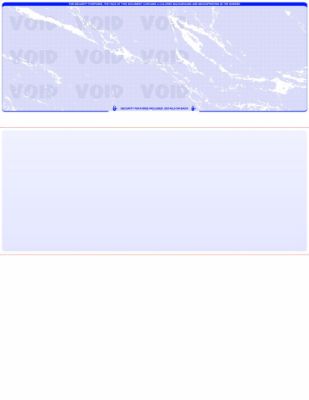
For vendor payments where you want to include remittance detail with the check, voucher checks include a stub that can show invoice numbers, payment period, project references, or itemized line amounts alongside the check itself. The stub detaches when the check is cashed, giving the vendor a clear record of what is being paid and why.
How Do You Prevent Check Fraud When Writing Business Checks?
Business checks are a frequent target for fraud, including check washing (chemically removing ink), check alteration (changing amounts or payee names), and check counterfeiting (creating fake checks using your account information from a legitimate check). Taking targeted precautions at the writing stage reduces exposure significantly.
What Type of Pen Should You Use to Write Business Checks?
Use a permanent-ink ballpoint pen with blue or black ink. Do not use:
- Pencil: Can be erased and amounts or payee names can be changed
- Gel ink pens: Many gel inks can be removed with chemical washing techniques, leaving a blank check that can be rewritten
- Felt-tip or marker pens: Ink can smear during processing and may bleed through the check paper
- Ballpoint pens with washable ink: Avoid any pen labeled "washable"
How Do You Fill Blank Spaces to Prevent Check Alteration?
- Start writing numeric amounts and written amounts at the far left of each field, leaving no room for digits or words to be added before your entry
- Draw a line through all unused space on the written amount line after the cents fraction
- If the numeric box has space remaining after your amount, fill it with a double slash or a period, such as writing $500.00// in a wider box
- Never leave a check partially completed on your desk where it can be accessed by others
- Never pre-sign blank checks, even for employees you trust
What Check Security Features Protect Against Fraud?
Standard check stock offers minimal built-in protection against skilled fraud. High-security business checks include physical security features baked into the check paper and printing that make alteration and counterfeiting significantly more difficult:
- Void pantograph: The word "VOID" appears when the check is photocopied or scanned, making it obvious that a copy is not the original
- Watermarks: Visible when held up to light; missing or incorrect on counterfeits
- Microprinting: Tiny text printed along borders that blurs or disappears when photocopied
- Chemically reactive paper: Shows staining or discoloration if someone attempts to chemically wash the ink
- Security background: Intricate patterns that are difficult to reproduce accurately
How Should You Store and Mail Business Checks?
- Store blank check stock in a locked location with access limited to authorized personnel
- Track check numbers sequentially and investigate any gaps when reconciling your register
- When mailing checks, use security check envelopes with an interior security tint that blocks the check contents from view and prevents scanning through the envelope window
- For high-value payments, use certified mail with a return receipt to have documented proof of delivery date
- Reconcile your bank statement against your check register at least monthly and investigate any check that cleared for an amount different from what you recorded
What Should You Do If a Business Check Is Lost or Stolen?
Contact your bank immediately to place a stop payment order on the check. You will need the check number, amount, payee name, and date. There is typically a fee for a stop payment order, and the order expires after a set period (commonly six months). See our full guide on how to stop payment on a business check for the complete process and timeline.
What Are the Most Common Check-Writing Mistakes?
Most check-writing errors fall into a small number of predictable categories. Being aware of them before writing reduces returned payments and processing delays.
- Mismatched amounts between fields: The numeric box and the words line say different amounts. The written (words) amount controls legally, so even a small discrepancy can mean the wrong amount is paid. Verify both fields match before signing.
- Leaving blank space on the written amount line: Blank space after your written amount can be exploited to alter the check. Always draw a line through unused space.
- Using pencil or gel ink: Both can be altered after the check is written. Permanent-ink ballpoint pen is the only safe choice.
- Signing before all other fields are complete: A signed blank check is essentially cash. Always fill out every field before signing.
- Making a check payable to "Cash": This eliminates payee identity control. Anyone in possession of the check can cash it.
- Omitting the memo: Without a memo, tracking down the purpose of a cleared check weeks or months later is difficult and can cause problems during audits or payment disputes.
- Not recording the check immediately: Outstanding checks that are not logged can cause unexpected overdrafts when they clear days or weeks after being issued.
What Should You Do If You Make a Mistake on a Check?
Do not attempt to fix an error by crossing out, using correction fluid, or erasing. Banks are permitted to refuse altered checks, and an attempt to correct a check can look like an attempt to alter it fraudulently. The correct process:
- Write "VOID" in large letters across the front of the check in permanent ink
- Mark the check number in your register with a note explaining the void
- Retain the voided check in your records (it is part of your financial documentation)
- Write a new check from scratch
For the full process when an error has already been issued and delivered, see our guide on how to correct a mistake on a check.
Which Type of Business Check Should You Use?
The right check format depends on your payment volume, the software you use, and the level of security or documentation the payment requires. Using the correct check type streamlines your workflow and reduces the chance of formatting errors.
| Check Type | Best For | Key Feature |
|---|---|---|
| Manual Business Checks | Low-volume payments, on-the-spot payments, field use | Handwritten, immediate use, portable checkbook format |
| Computer Checks | Businesses using accounting software, moderate to high volume | Prints payee, date, amount, and memo directly from software |
| QuickBooks Compatible Checks | QuickBooks Desktop and Online users | Pre-formatted to align with QuickBooks print templates, eliminates field errors |
| Voucher Checks | Payroll, vendor payments requiring remittance documentation | Attached stub records pay period, deductions, invoice detail, or line items |
| High-Security Checks | Large payments, fraud-sensitive industries, financial and legal firms | Watermarks, microprinting, void pantograph, chemically reactive paper |
If you print checks from accounting software, computer checks eliminate handwriting errors in the payee, date, amount, and memo fields entirely by pulling data directly from your accounting system. This is especially valuable for businesses processing more than a handful of checks per week, where manual entry errors compound across payments.
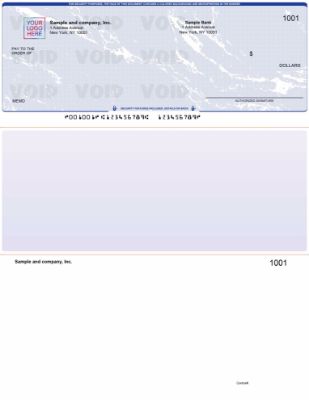
For businesses that handle payroll in-house, voucher checks provide employees with a clear earnings statement attached to every paycheck, satisfying the pay stub requirements that apply in most states without a separate document.
How We Created This Guide
This guide was researched using top-ranking content on how to fill out a check, publicly available UCC Article 3 provisions, IRS payment instructions for business tax filers, and passport acceptance facility requirements from the U.S. Department of State. All claims about legal amounts, bank policies, and fraud prevention methods were reviewed against primary sources before publication. A person fact-checked every claim before this guide was published.
What to Do Next
Filling out a check correctly starts before you pick up the pen. Having the right check stock for your payment type and the right security features for your payment volume prevents errors, speeds up processing, and reduces fraud exposure.
If your business writes a moderate to high volume of checks or handles in-house payroll, printing checks directly from your accounting software with computer checks eliminates the most common manual entry errors. For high-value or sensitive payments, high-security checks provide fraud-deterrent protection built into the check stock itself.
If something has already gone wrong with an issued check, these related guides walk you through the next steps: