What Is a Stop Payment on a Business Check?
A stop payment is a formal request to your bank to prevent a specific check from being honored when it is presented for payment. When you place a stop payment order, your bank flags the check number and amount in its processing system. If that check is later deposited or presented for cash anywhere in the banking system, the bank's automated matching process identifies it as stopped and refuses payment.
Stop payments are governed by UCC 4-403, the Uniform Commercial Code provision that gives account holders the right to instruct their bank to stop payment on any item that has not yet been accepted or paid. This right applies to any authorized signer on the account. The order must reach the bank early enough, and with enough detail, that the bank has a reasonable opportunity to act before the check is processed.
The Two Rules Most Business Owners Do Not Know About Stop Payments
Most general guides describe stop payments in three steps: verify the check is outstanding, gather the check details, and call your bank. What they leave out are two rules that cause business owners real financial losses every year. Understanding these before you make any stop payment request is essential.
Why Does the Amount on Your Stop Payment Request Need to Be Exact?
Bank processing systems match stop payment orders against incoming checks by check number and dollar amount. The match is automated. If your stop payment request states a different amount than what is printed on the check, even by a few cents, the system may not match the correct item and the check will be paid despite your active stop order.
This happens more often than most business owners realize. A check is issued for one amount, but the register was updated with a rounded figure. The stop payment is placed using the rounded figure. The bank's system does not match it precisely, and the check clears.
When Should a Business Stop Payment on a Check?
Lost or Stolen Check in Transit
A check mailed to a vendor that never arrives is the most common business stop payment scenario. Mail theft involving business checks is a documented and growing fraud risk. If a mailed check does not arrive within a reasonable window and the payee confirms non-receipt, place the stop payment immediately. Do not wait for the check to reappear. See check washing guide and check fraud prevention for the fraud context around checks stolen in transit.
Can You Stop Payment on a Range of Checks If Your Checkbook Is Stolen?
If your business checkbook or a block of pre-printed check stock goes missing, stopping one check number is not enough. Most banks offer a range stop payment, which allows you to flag all consecutive check numbers in a single request. Contact your bank immediately and ask specifically about stopping a range. Provide the first and last check number in the sequence. Confirm whether your bank supports this through online business banking or requires a branch visit or a signed request. This is not a feature most business owners know to ask for, but it is available at most institutions that serve business accounts.
Check Issued With Wrong Amount or Wrong Payee
If an AP check was printed with an incorrect amount or addressed to the wrong payee and has already been mailed, place the stop payment first, then notify the intended payee, and reissue with the correct details and a new check number. Do not ask the payee to return the incorrect check before placing the stop payment. Every minute the incorrect check is in circulation is a minute in which it could be cashed.
Vendor or AP Dispute After the Check Was Issued
If a dispute arises after a check was sent to a vendor, such as goods not delivered, services not completed, or a billing error discovered after mailing, a stop payment may be appropriate to freeze the payment while the dispute is resolved. However, read the holder in due course section below before placing a stop payment in a dispute context. The legal risks are significant and not widely understood.
Fraudulent or Unauthorized Checks
If a check is discovered to have been forged or issued without authorization, place a stop payment immediately and contact your bank's fraud department separately. The fraud remediation process goes beyond a standard stop payment order. See are business checks safe and check fraud prevention.
Uncashed Stale Business Checks
If a business check you issued was never cashed and is approaching the six-month validity window under UCC 4-404, you may need to place a stop payment and reissue. The complete workflow for this specific scenario is covered at how long do you have to cash a business check. This guide focuses on the other stop payment scenarios.
What Is a Holder in Due Course and Why Does It Matter for Business Stop Payments?
This is the stop payment risk that almost no general finance guide explains to business owners, yet it can result in paying for the same check twice.
Can a Stop Payment Fail Even After Your Bank Accepts It?
Yes. A stop payment order protects you from your bank processing the check through normal channels. But it does not automatically protect you from a holder in due course.
A holder in due course is a party that accepted a negotiable instrument in good faith, for value, and without notice of any existing claim or defect. Under the Uniform Commercial Code, a holder in due course can enforce payment on a check against the issuer even when a stop payment order is in place.
Here is how this plays out in a business context: You issue a check to a contractor for work you later dispute. You place a stop payment at your bank. Before your stop payment is processed, the contractor endorses the check to a check-cashing company and receives cash. The check-cashing company becomes a holder in due course because it accepted the check in good faith, paid value for it, and had no notice of your dispute. When your bank's stop payment flags the check and refuses to honor it, the check-cashing company has the legal right to pursue you directly for the full check amount. And your defense that the contractor's work was unsatisfactory may not be available against a holder in due course.
Who Is Authorized to Place a Stop Payment on a Business Account?
Under UCC 4-403, any customer who is an authorized signer on the bank account may stop payment on any item drawn on that account. For a business account with two or more authorized signatories, any one of them can stop payment on any check drawn on the account, including a check signed by a different authorized signatory.
This is an important internal control point for multi-signatory businesses. An authorized signer who should not unilaterally be able to void large vendor payments technically has the legal right under UCC to stop any check on the account. Banks may have their own internal policies that add further requirements for large amounts, but the statutory right belongs to any authorized signer. Review your business banking agreement and your internal check approval policy if this represents a control gap.
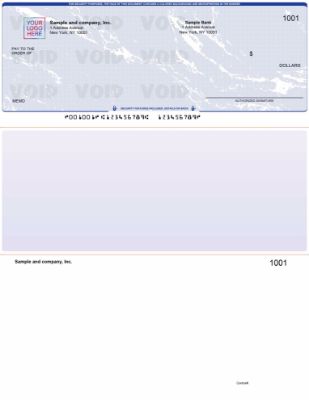
How to Stop Payment on a Business Check: Step-by-Step
What Information Does the Bank Need to Process a Stop Payment Request?
Before contacting your bank, pull the following details. Accuracy on every field is critical, particularly the amount.
- Business account number
- Check number , printed upper right on the check face and encoded in the MICR line
- Exact dollar amount to the cent , a mismatch of even a few cents can cause the system to miss the match
- Payee name as written on the check
- Date on the check
- Reason for the stop payment , some banks require this to process and track the order
Verify the check has not already cleared
Log into your business banking portal or call your bank to confirm the check is still outstanding. Check your recent transaction history for the check number. If it has cleared, a stop payment cannot help. You will need to work with your bank and potentially the payee to resolve the situation through other means.
Pull the exact check details from your records
Retrieve the check number and exact amount from your checkbook register, check stub, or accounting software. Do not estimate. If you use QuickBooks, Sage, or another platform to print checks, the check register will have the exact information. Confirm the amount matches the check face precisely, including cents.
Place the stop payment order through your bank's fastest channel
Contact your bank by the method available to you: online business banking, mobile banking, phone, or branch. Many business banks allow stop payments directly through their online platform without waiting for a branch visit, which is often the fastest channel. Provide all the check details. Ask for a confirmation number and note it immediately.
Confirm in writing before the 14-day oral order lapses
If your initial request was by phone, this step is not optional. An oral stop payment order under UCC 4-403 lapses after 14 calendar days unless confirmed in writing. Complete the written form, submit the online banking request, or obtain written acknowledgment from your bank before the 14-day window closes. Note the written order date, which begins a new six-month protection period.
Record the expiration date and calendar a renewal reminder
A written stop payment order expires after six months. If the stopped check could still be presented after that period, you must renew the order in writing before it lapses. Calendar the expiration date when you receive the written confirmation. If the check is still outstanding as the expiration approaches, renew promptly.
Notify the payee and reissue with a new check number
Contact the payee to confirm the original check has been stopped and a replacement will be issued. Wait for the stop payment to be confirmed by your bank before releasing the replacement. Assign a new check number to the replacement. Never reuse the stopped check number. Document the original check number as VOID in your register.
Update your accounting records
Reverse or void the original check transaction in your accounting software. Record the stop payment fee as a bank service charge. Create a new transaction for the replacement check with its new number. Reconcile against your bank statement to confirm the stopped check does not appear in cleared transactions. See business checkbook guide for checkbook reconciliation practices.
How to Stop Payment on a Payroll Check
Payroll checks require faster action and more documentation than standard AP checks because of wage payment law obligations.
Why Is Stopping a Payroll Check More Complicated Than an AP Check?
Under most state labor laws, an employer is legally required to ensure employees receive wages on the scheduled payday. If a payroll check is lost, contains a calculation error, or was issued to a former employee, the stop payment addresses the banking side of the problem but does not suspend the wage obligation. The employer must still ensure the employee is paid correctly and promptly.
Placing a stop payment on a payroll check is appropriate when the check was lost or stolen before the employee received it, when it contains an error in gross pay, deductions, or net pay, or when it was issued to a terminated employee whose final pay calculation is being reviewed. The critical steps after placing the stop payment:
- Notify the employee in writing that the check has been stopped and a replacement is being prepared
- Reissue the correct payment as quickly as possible, ideally the same business day or the next
- Confirm the replacement check was received by the employee
- Keep records of the stop payment order, the notification to the employee, and the reissuance date
- If your state requires same-day payment in termination situations, consult your payroll advisor before the stop payment causes a delay that creates compliance exposure
For payroll check formats with pre-printed earnings stubs that support fast reissuance, see business checks payroll.
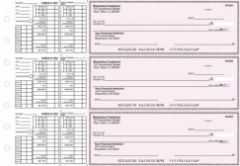
Checkomatic payroll checks with pre-printed earnings stubs support fast, documented reissuance when a payroll check stop payment is required.
What Happens If the Check Clears Before the Stop Payment Takes Effect?
Under UCC 4-303, a bank that has already accepted and paid a check before receiving a timely and valid stop payment order is generally not liable for processing the payment. The check has legally cleared, and the stop payment has no effect.
If this happens, contact your bank immediately. Document when you discovered the problem, when you attempted the stop payment, and the bank's response. If the payment was unauthorized or fraudulent, the bank's fraud department has separate investigation procedures that may offer remedies in some cases. If it was a payment error, your resolution will likely need to be arranged directly with the payee, since the bank's obligation is fulfilled.
This is why acting the moment a problem is identified is not optional. Checks can clear within one to two business days of deposit. The window between discovery and too late is narrow.
How Do You Release or Cancel a Stop Payment Order?
A stop payment can be released if the reason for stopping it no longer applies. For example, a lost check is found and returned by the payee, a dispute is resolved, or a replacement check was refused and the original is being accepted instead.
To release a stop payment, contact your bank through the same channel used to place it (online banking, phone, or branch) and request that the stop payment be removed. Provide the check number and amount. Some banks allow self-service release through online business banking. Others require a signed written release. Get written confirmation that the stop payment has been removed before allowing the check to be re-presented.
Does a Stop Payment Cancel the Legal Obligation to Pay?
No. This is one of the most important things business owners misunderstand about stop payments.
A stop payment prevents the check from clearing your bank account. It does not erase the underlying contract, invoice, or obligation that the check was written to satisfy. If the debt is legitimate, the payee retains all legal remedies to collect the amount owed, including small claims court, collections, or civil suit. Stopping payment on a check does not provide the same protection as disputing a charge or exercising a contractual right to withhold payment.
Stop payments are the right tool when a check cannot or should not be honored due to an error, loss, fraud, or a legitimate legal dispute where the law allows payment to be withheld. They are not a method for avoiding payment of valid debts. Using a stop payment to delay or avoid a legitimate obligation can expose the business to additional liability beyond the original amount owed.
How Can Positive Pay Prevent the Need for Stop Payments?
Positive Pay is a bank fraud-control service that requires your business to submit a list of issued checks including check numbers, amounts, and payees to your bank each time you write a batch. When checks arrive for payment, the bank's system matches them against your issued-check file. Any check that does not match is flagged for your review before the bank pays it.
Positive Pay significantly reduces the scenarios that require stop payments after the fact. A check altered in transit, a duplicate check number, or a check with the wrong amount gets caught at the authorization stage rather than after it clears. For the full explanation, see what is positive pay.
ABA-compliant security features on Checkomatic business checks protect checks from alteration during the window between issuance and stop payment processing.
What Customers Say About Checkomatic
All reviews below are reproduced verbatim from checkomatic.com. Source: checkomatic.com/quickbooks-starter-pack-product, 4.5 stars from 166 verified reviews.
"Been with them for 15 years. Always reliable, always good quality, good service. What more can you ask for?"
"We use CheckoMatic for all of our check needs! They have great prices and we receive our products in a timely manner!"
"ASJ Wilson Construction has been a client of checkomatic for some years now and they've never disappointed this company. Thank you checkomatic for all that you do."
"First time ordering and I am super impressed with the quality of the checks. No issues with delivery. I will be ordering again!"
"Affordable and efficient. My go-to business check printer."
"I got 500 checks for less than half of what the bank wanted for 200!"