-
 Contact Us
-
 Re order
-
 Log in
-
 Cart 0
You have no items in your shopping cart.
Joint Account Checks: Who Can Sign and Who Is Liable
Two names on one account feels simple until a check goes wrong. One owner writes it, the other never saw it, and the bank returns it. Now both want to know who owes what.
The signing question has a short answer, so we give it fast. Most of this guide covers what other pages skip: who is liable, who owns the money, what state law adds, and what to ask your bank before you share a checkbook.
Quick Summary
Your account agreement decides who may sign, and one signature is often enough, but confirm with your bank. Liability follows the signature. In the model Uniform Commercial Code (UCC), the person who signs as drawer must pay a check that is dishonored. Who owns the money is a different question, and state law varies.
Key points
- Your account agreement decides who may sign. We found no federal rule that sets who may sign. See checks with multiple signatures.
- Signing is the starting point for liability on a check. UCC 3-401(a) says a person is not liable unless the person signed or an authorized agent signed for them.
- Two signers may each be liable for the whole amount. UCC 3-116 makes signers with the same liability jointly and severally liable, unless the instrument says otherwise.
- The overdraft rule asks two questions. Did you sign the item, and did you benefit from it? UCC 4-401(b) turns on both.
- Ownership is a state-law question. The states we read use net-contribution rules.
- Ask your bank early. Ask about signers and stop payments before a problem starts.
| Question | Short answer | Rule that decides it |
|---|---|---|
| Can one owner sign alone? | Usually yes | Your account agreement |
| Who owes the money if a check is dishonored? | The person who signed as drawer | UCC 3-414 and 3-401 |
| What if both owners signed? | Both may be liable for the whole amount | UCC 3-116 |
| Is an owner who did not sign or benefit liable for an overdraft? | The model text says no | UCC 4-401(b) |
| Who owns the balance? | It depends on your state | State statutes |
Table 1. The main answers at a glance, drawn from the model UCC. General information only, not legal advice. See what happens when a check bounces.
Setting up a shared checkbook? Message the Checkomatic team for a personal check layout that suits two people.
In this guide
- Can one person sign a check on a joint account?
- Do both owners have to sign, or just the payees?
- Who is liable when a joint account check bounces?
- Can one owner withdraw, close or stop payment alone?
- Who owns the money under state law?
- What changes on a business account with several owners?
- How do you change who can sign?
- What should you ask your bank first?
- Frequently Asked Questions
Can One Person Sign a Check on a Joint Account?
Usually yes. Your account agreement decides, and we found no federal rule that sets who may sign. Often one signature is enough, but your bank can confirm that for your account. Our guide to checks with multiple signatures covers that basic rule, so this page moves on to what comes after it.
Who signs what on a shared account?
The table separates the person who writes the check from the person who receives it.
| Situation | Who signs | What decides it |
|---|---|---|
| Owner writes a check on a joint account | Often one owner, per your agreement | Account agreement and signature card |
| Account set up to need two signatures | Both named signers | Account agreement, so ask your bank |
| Payee line reads "A and B" | Both payees endorse the back | UCC 3-110(d) |
| Payee line reads "A or B" | Either payee endorses | UCC 3-110(d) |
| Business account with named signers | A signer named in bank paperwork | Bank paperwork and company records |
Table 2. Who signs what. The first two rows are about the account, and the next two are about the payee. Our guide to writing a business check shows where each signature sits.
Do Both Owners Have to Sign, or Just the Payees?
Writing a check and endorsing one are separate jobs. The owner who writes the check signs the front. The person who receives it signs the back, and a check made out to two people may need both of them. Our guides to how to endorse a check and depositing a check without endorsing it cover the payee side, so we stop there.
What do the signature card and account agreement control?
These papers say who is authorized and whether one or two signatures are needed. Ask for a copy of yours before you hand out checks.
Can one spouse sign for the other?
An owner signs as themselves. Signing another person's name is a separate question. Read about signing a check for someone else before you try it.
Who Is Liable When a Joint Account Check Bounces?
The model UCC puts the burden on the person who signed. Under UCC 3-414, the drawer must pay a dishonored check. UCC 3-401(a) says a person is not liable on an instrument unless the person signed it, or an authorized agent or representative signed for them.
States enact their own versions, so check yours. Our bounced check guide covers the steps after a return.
What if both owners signed the same check?
Both signers may owe the full amount. UCC 3-116 says parties with the same liability are jointly and severally liable in the capacity in which they sign. In plain terms, the rule can let a payee look to either signer for the whole amount, unless the instrument says otherwise. Read more on what follows a bounced business check.
Is the other owner liable if they never signed?
We found no primary source that says a non-signing owner owes on a check the other owner wrote. UCC 3-401(a) ties liability to signing or to an authorized agent's signature, and your account agreement may add terms, so ask your bank.
What does the overdraft rule say about who benefited?
A different question arises when the account lacks the funds. A bank may charge a properly payable item to the account even if that creates an overdraft, and UCC 4-401(a) calls an item properly payable when the customer authorized it and it matches the terms of the account. UCC 4-401(b) then says a customer is not liable for the overdraft if the customer "neither signed the item nor benefited from the proceeds of the item." Two facts matter, and state versions can differ. See what happens when a check bounces.
| Situation | Likely position under the model UCC | What decides it |
|---|---|---|
| You signed the check | You are the drawer and must pay if it is dishonored | UCC 3-414 and 3-401(a) |
| Both owners signed | Both may be jointly and severally liable | UCC 3-116 |
| Your co-owner signed and you did not | Under UCC 3-401(a) you are generally not liable on the check unless you, or an authorized agent acting for you, signed it; the account agreement may add terms | UCC 3-401(a) and your bank's paperwork |
| Overdraft, and you neither signed nor benefited | The model text says you are not liable for it | UCC 4-401(b) |
Table 3. A liability map for joint account checks under the model UCC. Real outcomes depend on the facts, state law and your account agreement. See our bounced check guide.
How do you find out who signed a returned check?
Ask your bank for an image of the paid or returned item and compare it with your records. Our page on getting a copy of a cancelled check explains what to request.
Can One Joint Owner Withdraw, Close or Stop Payment Alone?
In most cases, yes for withdrawals and closing. The CFPB says that, for most joint checking accounts, each owner can take money out or shut the account down (page last reviewed 18 December 2024). It adds that you should check your account agreement, and that state law may give you some protection. Our checkbook management guide shows how to keep both owners informed.
Can one owner place a stop payment alone?
We found no primary source on who may place a stop payment on a joint account. Ask your bank who is allowed to request one and what it needs from you. The general steps are in how to stop payment on a check.
What if a co-owner empties the account?
The CFPB page on this situation points you to your bank, your account agreement and state law. A lawyer in your state can say whether money can be recovered.
Who Owns the Money in a Joint Account Under State Law?
It depends on your state, so do not assume you each own half. Two of the states we read tie lifetime ownership to net contributions, and a third defines the term. Your state may follow a different approach. See personal checks for shared layouts.
| State | What the statute says | Section |
|---|---|---|
| Idaho | During life, a joint account belongs to the parties in proportion to net contributions, unless clear and convincing evidence shows a different intent | Idaho Code 15-6-103 |
| Maine | The same net-contribution rule, and spouses are presumed to own equal shares absent proof otherwise | Maine Revised Statutes, Title 18-C, section 6-211 |
| Virginia | Defines net contribution as deposits by or for the party, less withdrawals not paid to another party, plus a share of interest | Virginia Code 6.2-604 |
| Virginia | An institution that pays is discharged, whether or not the payment fits beneficial ownership | Virginia Code 6.2-616 |
Table 4. Four statute examples from three states, not a national rule. Other states may differ, so confirm yours. A shared personal checkbook does not change who owns the balance.
Does the bank care who owns the money?
In Virginia, a bank that pays is discharged even if the payment does not match who owns the funds. So ownership can be a separate matter between the owners. We verified that only for Virginia, so ask your bank.
What happens to the account when an owner dies?
The CFPB says most joint accounts carry rights of survivorship, so the money passes to the surviving owner, while a tenants in common account passes the person's share to heirs (page last reviewed 28 August 2026). How the account is titled decides which one you have. For checks made out to the person who died, see can you cash a check after the person dies.
What Changes on a Business Account With Several Owners?
Under UCC 3-402(a), the represented person is bound by the signature of an authorized representative. Banks commonly ask a company about its authorized signers, so ask yours what paperwork it needs. Who can endorse a business check lists the paperwork a company keeps.
- Name the signers. Decide which partners or officers may sign.
- Ask about two signatures. Find out if your bank can record that rule.
- Check the stamp rule. If you use a signature stamp for checks, ask who may hold it.
- Sole owners differ. The sole proprietor business checks guide covers an account with one name on it.
Whether a signer could also be personally responsible depends on state law and how they sign. We did not verify that, so ask a lawyer. See how to write a business check.
How Do You Change Who Can Sign on a Joint Account?
Start with your bank, because it sets the process. We found no primary source on removing a signer without consent, so do not assume either way. Whether it offers a two-signature rule is also a bank choice.
- Get your paperwork. Ask for the signature card and account agreement.
- Ask what a change needs. Find out whether every owner must be present or sign.
- Request the change in writing. Keep a copy with your records.
- Retire old checks. Ask what to do with unused ones.
- Order new checks once the bank confirms. See personal checks for personal accounts, or manual business checks for business ones.
What Should You Ask Your Bank Before You Share a Checkbook?
Eight short questions cover most gaps in this guide. Keep the answers with your account papers.
- Can either owner sign alone?
- Can we require two signatures?
- Who can stop payment?
- Can one owner close the account?
- How is our account titled?
- What happens if a check overdraws the account?
- How do we remove or add a signer?
- How do we get an image of a paid check?
How should two people keep one checkbook?
Agree on one check register and write down every check on the day you issue it. A register will not change who owes what, but it does show who wrote which check and when.
Checks for a shared account
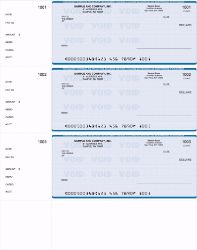
Personal layouts. Browse personal checks for styles two owners can share.
Business layouts. Company accounts can use manual business checks with named signers on file.
A proof first. Review printed names before anything ships.
A person to ask. Reach the team through Checkomatic contact with layout questions.
About the Author
Compiled for households and companies that split an account, this Checkomatic page is built from the model Uniform Commercial Code (sections 3-116, 3-401, 3-402, 3-414 and 4-401), CFPB answers on joint accounts, and the Idaho, Maine and Virginia statutes shown in the tables.
This page gives general information and is not legal advice. Rules differ by state and by bank, so run your own situation past your bank or an attorney first.
Frequently Asked Questions
Can I write a joint account check without my spouse knowing?
Can joint account checks show both names?
Can I be removed as a signer without my consent?
What happens to a joint account check if one owner dies?
Will the bank compare both signatures?
Who is responsible if a check from a joint account is dishonored?
If we both signed, can the payee collect from just one of us?
Does a joint account mean we each own half?
Can one owner close a joint checking account?
Must a two-owner company account use two signatures?
Accepted by the world’s leading banks