Why Real Estate Companies Rely on Business Checks
Real estate is a paper-check-intensive industry despite its high transaction volumes and technology adoption. The reason is compliance. State real estate licensing laws require brokerages to maintain separate trust accounts for client funds, and most state regulations require documented, traceable disbursements from those accounts. Electronic transfers from trust accounts raise compliance questions that checks do not. A check drawn on a trust account with a check number, date, payee, and authorized signature is a complete audit trail for a regulator or licensing board.
Commission disbursements to independent contractor agents have a similar documentation need. The brokerage must produce 1099-NEC forms at year end for every agent paid $600 or more, and the commission check records are the source for those figures. Missing check entries, transposed amounts, or incomplete payee names create 1099 mismatches that cost more to resolve than any time saved by simplifying the check format.
Beyond compliance, real estate investors with rental or renovation portfolios write checks to contractors, maintenance crews, property managers, and utility providers on every property they own. A dedicated investment property checking account with business checks creates the clean Schedule E documentation that tax preparation and lender reporting require.
Commission Disbursement Checks for Real Estate Brokerages
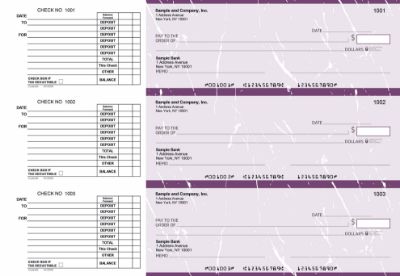
Manual 3-on-page accounts payable checks from Checkomatic, for real estate brokerage and investor vendor and commission payments.
A real estate brokerage pays agent commission at or shortly after closing, once the title company has funded the transaction and wired or distributed the commission proceeds to the brokerage. The brokerage then cuts individual checks to each participating agent for their net commission after the brokerage split, franchise fees, transaction fees, and any other deductions.
What to Include on a Commission Check Stub
Voucher-format computer checks with two stubs are the most useful format for commission disbursements. The stub going to the agent should show:
- Property address and closing date
- Gross commission amount (total before any deductions)
- Brokerage split or cap credit applied
- Transaction fees, franchise fees, or other deductions itemized individually
- Net commission amount matching the check
- Year-to-date commission paid to the agent from this brokerage
The second stub stays in the brokerage's files as the disbursement record. At year end, the year-to-date totals on the commission stubs should reconcile exactly with the 1099-NEC amount reported for each agent.
Manual vs Computer Checks for Commission Disbursements
Brokerages that close more than 10 to 15 transactions per month and use QuickBooks or another accounting platform benefit from computer checks in voucher format. The software calculates each agent's net commission, prints the check and stub automatically, and records the transaction. Brokerages with lower volume or no accounting software can use manual business checks with handwritten stubs for each commission payment. Both formats from Checkomatic are accepted at all major US banks and include the same security features.
Trust Account and Escrow Checks for Real Estate
Real estate trust accounts are legally separate from the brokerage operating account. State real estate licensing laws require that client funds, including earnest money deposits, security deposits, and closing proceeds held in escrow, be maintained in a dedicated trust account and disbursed only for authorized purposes with full documentation.
Trust Account Check Requirements
Business checks drawn on a real estate trust account should clearly identify the trust account in the business name printed on the check , for example, "Smith Realty Group Trust Account" rather than simply "Smith Realty Group." This makes it immediately clear to the bank, to regulators, and to any recipient that the funds come from the trust account rather than the operating account.
Dual Signature for Trust Account Disbursements
Many brokerages require two authorized signatures on trust account checks, particularly for disbursements above a threshold amount. The broker of record and an authorized office manager or licensed associate co-sign each trust account check before it is released. Dual signature checks include two signature lines pre-printed on the face of the check. Both must be signed before the bank processes the payment. This is a financial control that protects the brokerage against unauthorized trust account disbursements and demonstrates compliance to licensing boards. Checkomatic's multi-purpose manual business checks include the dual signature line at no additional charge.
Escrow Disbursement Checks at Closing
At a real estate closing, the title company or escrow officer disburses funds to all parties: the seller, the listing brokerage, the buyer's brokerage, lien holders, and any other parties with a claim on the proceeds. These disbursements may be made by wire, cashier's check, or business check depending on the amount, the recipient's preference, and the state's closing practices. For smaller disbursements or situations where a recipient specifically requests a paper check, the title company issues a business check from its operating or escrow account. The check format used depends on the closing software the title company runs.
Title Company Check Formats
Title companies use specialized closing software to manage settlements, generate closing disclosures, and disburse funds. The most widely used closing platforms in the US output check printing data to a specific position on the sheet when generating disbursement checks. The check stock must match that position exactly.
Check-in-Middle for Closing Software
Title companies using Softpro, Landtech, and similar closing platforms typically require checks in the check-in-middle format. The check prints in the center of the 8.5 x 11 inch sheet with one stub above and one below it. This is the position the closing software's print template uses. Ordering the wrong format creates misaligned print output where the payee name, amount, and date land in the wrong fields on the sheet.
Before ordering, confirm which format your closing software uses by running a check print preview in the software settings. If the preview shows the check printing in the center of the page, order check-in-middle format. If it prints at the top, order check-on-top. Do not rely on assumptions , closing software templates differ and some firms configure non-standard layouts. For the check-in-middle format compatible with title company closing software, see business checks in middle. For all software-compatible check formats, see software compatible business checks.
Business Checks for Real Estate Investors
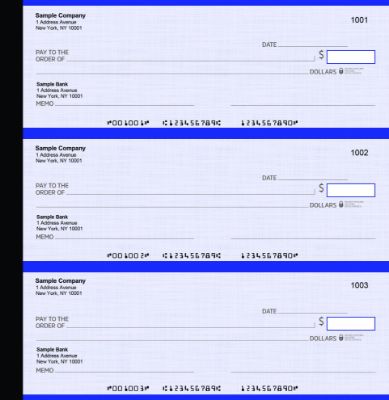
Manual executive deskbook checks from Checkomatic, portable field check format for real estate agents and brokers.
Real estate investors who own rental properties or manage renovation projects write checks regularly for maintenance repairs, contractor work, insurance premiums, utility bills, property management fees, and HOA dues. A dedicated investment property checking account with business checks keeps these payments separate from personal finances and creates the Schedule E documentation that tax filing and lender reporting require.
Common Real Estate Investor Check Payments
- Contractor and handyman payments for repairs and renovations
- Property management company fees
- Insurance premium payments
- Utility payments for vacant or turnover properties
- HOA dues for condos and planned communities
- Material purchases at supply houses
- Landscaping and cleaning vendor invoices
- Pest control and inspection fee payments
What to Record on Investment Property Check Stubs
For tax purposes, each check payment from an investment property account should document the property address and the expense category on the stub or memo line. This makes year-end Schedule E preparation faster and provides clear documentation if the IRS questions any expense deduction. A check stub noting "123 Main St , Plumbing repair" leaves no ambiguity about which property the expense belongs to and what it was for.
Manual vs Computer Checks for Real Estate Investors
Investors who own one to three properties and write fewer than 20 checks per month typically find manual business checks in a binder or deskbook format most practical. No printer required. Write the check at the property, at the supply house, or wherever the payment is needed. The stub records the property address and purpose immediately. Investors managing larger portfolios using QuickBooks or a property accounting platform benefit from computer checks in voucher format that create transaction records automatically. For the full manual check range, see manual checks. For the 3-on-a-page AP format for higher-volume investor payments, see manual 3-on-page accounts payable checks.
Payroll Checks for Real Estate Office Staff
Payroll business checks from Checkomatic, earnings stubs for real estate brokerage and investor employees.
Real estate agents are typically independent contractors, not employees, and receive commission checks rather than payroll checks. However, most brokerages also employ W-2 staff: administrative assistants, transaction coordinators, marketing coordinators, office managers, and receptionists. These employees receive regular payroll checks with earnings stubs showing their hours, gross pay, deductions, and net pay.
Payroll Checks vs Commission Checks , The Key Difference
A payroll check for a W-2 employee has tax withholding deducted at source: federal income tax, state income tax, Social Security, and Medicare. The earnings stub shows gross pay before deductions and net pay after. A commission check for an independent contractor agent has no withholding , the full net commission is paid, and the agent is responsible for their own estimated tax payments. The 1099-NEC at year end reports the agent's total commissions received. Both types of checks come from the brokerage operating account, but they document different payment relationships and have different tax consequences.
For the complete payroll check guide and format options, see business checks for payroll: the complete employer guide.
Which Check Format Fits Your Real Estate Company
Computer Checks in Voucher Format , For Commission and Office AP
Real estate brokerages using QuickBooks or another accounting platform for commission tracking and office AP benefit most from computer checks in check-on-top voucher format. The software calculates each agent's net commission or each vendor's payment, prints the check and stub automatically, and records the transaction. For the computer check range, see computer checks.
Manual Checks , For Investors and Field Payments
Real estate investors paying contractors at the property level, agents writing checks at client meetings, and brokerages with low check volume that do not use accounting software all benefit from manual checks in binder or deskbook format. For the full manual range, see manual checks.
Check-in-Middle , For Title Company Closing Software
Title companies and settlement agents using Softpro, Landtech, or other closing platforms that default to the center print position need check-in-middle format stock. For this format, see business checks in middle.
Multi-Purpose Checks With Dual Signature , For Trust Accounts
Brokerages that require two authorized signatures on trust account disbursements need dual signature checks. These include two signature lines on the check face, both of which must be signed before the bank processes the payment. Checkomatic includes the dual signature line at no additional cost on multi-purpose manual checks. See multi-purpose manual business checks.
Real Estate Check Format Comparison Table
| Format | Best Real Estate Use | Requires | Stub Detail | Link |
|---|---|---|---|---|
| Computer check on top (voucher) | Commission disbursements, office AP | Printer + accounting software | 2 stubs for agent and brokerage records | Computer checks |
| Check in middle | Title company closing disbursements (Softpro, Landtech) | Printer + closing software | 1 stub above, 1 below check | Business checks in middle |
| Manual binder or deskbook | Investor vendor payments, agent field checks | No printer or software needed | Handwritten stub | Manual checks |
| Multi-purpose manual with dual signature | Trust account disbursements requiring two signers | No printer or software needed | Two signature lines pre-printed | Manual business checks |
| Payroll computer check | W-2 office staff payroll | Printer + payroll software | Earnings stub with hours, deductions, net pay | Payroll checks |
1099-NEC Recordkeeping for Agent Commission Checks
Real estate agents working as independent contractors with a brokerage are subject to 1099-NEC reporting when their total commission payments from that brokerage reach $600 or more in a calendar year. The brokerage must issue a 1099-NEC to each qualifying agent by January 31 of the following year and file a copy with the IRS.
How Commission Check Records Support 1099 Compliance
Every commission check you write creates a record: the payee name, the closing date, the property address, and the net commission amount. If you use accounting software for check printing, the software maintains a running total of payments to each payee automatically. If you write manual commission checks, your check register carries the same information provided you record every payment completely and promptly.
At year end, you extract total commission payments per agent, identify which agents received $600 or more, and issue 1099-NEC forms. A clean commission check register is the fastest and most reliable source for these totals. Missing or incomplete entries require bank statement reconstruction that costs more in accounting time than maintaining the register would have.
Check Fraud Protection for Real Estate Payments
Real estate companies write high-value checks. Commission disbursements at the brokerage level, closing disbursements at the title company, and large contractor payments for renovation investors are all attractive fraud targets. Check washing , where a criminal intercepts a mailed check, removes the ink, and rewrites the payee and amount , is particularly effective on checks without chemical-reactive security features.
Security Features on Every Checkomatic Business Check
Every Checkomatic business check includes these security features as standard on every order at the base price:
- Chemical-reactive paper: Stains visibly when washing solvents contact the paper, revealing any alteration before the check is processed.
- Microprint signature line: Tiny repeating text that blurs on any photocopy, flagging reproductions.
- Void pantograph: Background pattern that makes VOID appear when the check is copied or scanned.
- Heat-sensitive ink: Disappears when pressed with a warm thumb , an authenticity test bank tellers apply routinely.
- Coin-reactive ink: Changes appearance when rubbed with a hard metal object.
- True watermark: Visible from both sides under light. Absent from any printed reproduction.
For the complete security feature guide and fraud protection strategies relevant to real estate, see are business checks safe: security features that actually matter. For bank-side positive pay protection that matches every presented check against your issued check list before payment, see what is positive pay and how does it work.
How to Order Business Checks for Your Real Estate Company
What to Have Ready Before Ordering
- Legal business name: Exactly as registered with your state and your bank. For trust accounts, include "Trust Account" in the name to distinguish from the operating account.
- Business address: The address registered to the specific checking account you are ordering checks for.
- ABA routing number: Nine digits from the lower-left of an existing check on the same account. Do not use a routing number from a different account or a lookup site.
- Account number: From an existing check or online banking account details.
- Starting check number: One higher than the last check used from this account.
- Company logo: Black and white logo printing is free on every Checkomatic order. A color logo is available as an add-on.
- Dual signature: If required for trust account or brokerage checks, specify this at checkout. Included at no extra cost.
- Format confirmation: Confirm your software's print template before ordering computer or title company checks.
Separate Orders for Separate Accounts
Order separately for each account: one order with the operating account routing and account number, a separate order with the trust account routing and account number. Checks from different accounts must never be commingled in your check supply. Store each account's check stock in a separate, clearly labeled location. For the full business check range, see business checks.
What Customers Say About Checkomatic
All reviews below are published on checkomatic.com and reproduced verbatim. Source: checkomatic.com/quickbooks-starter-pack-product, 4.5 stars from 166 verified reviews.
"Been with them for 15 years. Always reliable, always good quality, good service. What more can you ask for?"
ATV Inc. | ★★★★★ 5/5 | April 5, 2024 | Source: checkomatic.com/quickbooks-starter-pack-product
"First time ordering and I am super impressed with the quality of the checks. No issues with delivery. I will be ordering again!"
TClinton | ★★★★★ 5/5 | April 9, 2025 | Source: checkomatic.com/quickbooks-starter-pack-product
"We use CheckoMatic for all of our check needs! They have great prices and we receive our products in a timely manner!"
CG's Tax Service | ★★★★★ 5/5 | September 18, 2024 | Source: checkomatic.com/quickbooks-starter-pack-product
"I got 500 checks for less than half of what the bank wanted for 200!"
VVA Voucher Checks (Vietnam Veterans of America) | ★★★★★ 5/5 | July 6, 2024 | Source: checkomatic.com/quickbooks-starter-pack-product
"ASJ Wilson Construction has been a client of checkomatic for some years now and they've never disappointed this company. Thank you checkomatic for all that you do."
ASJ Wilson Construction | ★★★★★ 5/5 | June 6, 2024 | Source: checkomatic.com/quickbooks-starter-pack-product
"Affordable and efficient. My go-to business check printer."
Doe | ★★★★★ 5/5 | January 24, 2025 | Source: checkomatic.com/quickbooks-starter-pack-product
Why Choose Checkomatic for Real Estate Business Checks
Every Format Real Estate Companies Need
Computer checks for commission disbursements and office AP. Manual checks for investors and field payments. Check-in-middle for title company closing software. Dual signature for trust accounts. All from Checkomatic, all manufactured to ABA quality standards, all with the same security features. Browse the full range at business checks, computer checks, and manual checks.
Free Logo Printing on Every Order
Real estate is a brand-conscious industry. Checks that carry your brokerage logo, colors, and professional appearance reinforce your brand identity with every payment. Black and white logo printing is included at no extra charge on every Checkomatic order. Color logo printing is available as an add-on. For manual checks with logo for real estate professionals, see manual business checks with logo.
All Security Features as Standard
Real estate companies write high-value checks for commissions, closings, and contractor payments. Every Checkomatic business check includes the full standard security feature set at the base price: chemical-reactive paper, microprinting, void pantograph, heat-sensitive ink, coin-reactive ink, and true watermark. These are not optional add-ons. For the complete security feature guide, see are business checks safe: security features that actually matter.
Dual Signature at No Extra Charge
Trust account disbursements requiring two authorized signatures can be handled with Checkomatic's dual signature line option, available at no additional charge on manual business check orders. Both signature lines print on the face of the check. Both must be signed before the bank processes the payment.