-
 Contact Us
-
 Re order
-
 Log in
-
 Cart 0
You have no items in your shopping cart.
What Are Certified Funds? Which Payments Qualify
You have probably seen the phrase in a lease, a closing notice, an auction listing or a court order: payment must be made in "certified funds." Then comes the pause. Does a cashier's check count? What about a money order, a wire, or a check from your company account?
Here is the part that surprises people: we found no single federal definition of the phrase. This guide shows who decides what counts, compares three state statutes side by side, and gives you a checklist for the person receiving the money.
Quick Summary
Certified funds are payments the receiver can treat as reliably collected, close to cash. Which payments qualify depends on who set the rule: a state statute for many real estate closings, otherwise the contract, lease or seller. Cashier's, certified and teller's checks appear on every list we read, while money orders, wires and company checks are treated differently.
Key points
- No federal definition found. Regulation CC defines several check types, but we found no definition of the phrase itself.
- Different states, different lists. Missouri, Illinois and North Carolina each name different payment types.
- Money orders have no one answer. One state lists bank money orders and another does not, so avoid blanket claims.
- Company checks are sometimes allowed. Illinois allows personal checks and North Carolina allows personal or commercial checks, each up to a capped amount per closing.
- Available is not final. A bank can release funds before a bad check is discovered.
- Ask in writing. The person requiring certified funds should tell you exactly what they accept.
| Question | Short answer | Source type |
|---|---|---|
| Is "certified funds" defined in federal law? | Not that we found | Regulation CC, section 229.2 |
| Is a cashier's check certified funds? | Listed in all three statutes we read | State statutes |
| Is a money order certified funds? | It depends on the rule that applies | State statutes, UCC 3-104 |
| Can certified funds turn out to be fake? | Yes. The FTC and OCC warn that cashier's checks and money orders can be fake | FTC and OCC guidance |
Table 1. The short answers, checked 21 October 2026. General information, not legal advice.
Need checks for your own business account? Talk to the Checkomatic team about layouts, quantities and a proof before you order.
What is in this guide
- What are certified funds in plain English?
- Which payment types count as certified funds?
- Who decides what counts?
- How does a real estate closing change the rules?
- Is a money order or a wire transfer certified funds?
- When does the bank make the money available?
- How do you confirm certified funds are real?
- Frequently asked questions
What Are Certified Funds in Plain English?
Certified funds are money the receiver can count on without waiting to see whether the payment fails. The phrase is a requirement label, not a type of check. Whoever writes the contract, lease or statute decides which payments meet it.
Is "certified funds" just another name for a certified check?
No, because that is only one instrument. UCC 3-409(d) describes it as a check accepted by the bank it is drawn on, and a refusal to certify is not dishonor. Certified funds is the wider category that a certified check can satisfy. For how certification works, read our certified check explainer.
Is there a federal definition?
We found none. Regulation CC, section 229.2, defines the terms cashier's check, teller's check and check, and the UCC covers certified checks, but we looked at those definitions rather than running a full search of the whole regulation. Federal rules name instruments. The state statutes we read define the category for closings.
Which Payment Types Count as Certified Funds?
It varies, but three bank-issued checks recur: cashier's, certified and teller's checks. Each of the three state statutes we read names all three, and in North Carolina they are listed exceptions to the collected funds rule. Beyond those, the lists split on cash, wires, money orders and company checks.
- Cashier's check: a bank's own check, covered in our cashier's check guide.
- Certified check: a check the paying bank has accepted.
- Teller's check: a check drawn by one bank on another bank, per Regulation CC.
- Cash and wires: named in some statutes, not in others.
Does a cashier's check count as certified funds?
In the statutes we read, yes. Under UCC 3-104(g), one bank acts as both issuer and payer of a cashier's check, and Regulation CC calls it a direct obligation of the bank.
Is cash certified funds?
Sometimes. Missouri's definition lists U.S. currency, and Illinois lists cash, while the North Carolina section we read lists no cash at all. Ask the requester whether cash is accepted at all.
Can a company or personal check ever be good funds?
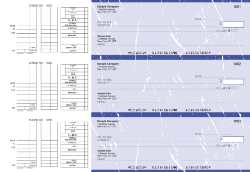
In some closings, yes, within a cap. Illinois's 2010 text allows personal checks up to $5,000 per closing, and North Carolina allows a personal or commercial check up to $5,000 per closing. Missouri's definition does not list them. If you write checks for a business, see our business checks overview, and ask the closing agent whether yours is accepted.
Who Decides What Counts: the State, the Contract or the Seller?
The rule that governs your transaction decides. For many real estate closings that is a state statute. For rent, an auction, a court payment or a private sale, start with the document that used the phrase. If that document does not define it, ask the requester which payment types are accepted.
The table puts the same payment under each rule.
| Payment | Missouri (RSMo 381.410, as amended in 2025) | Illinois (2010 Public Act) | North Carolina (G.S. 45A-4) | Regulation CC next day, in person |
|---|---|---|---|---|
| Cash | Listed (U.S. currency) | Listed | Not listed | Not a check |
| Cashier's check | Listed | Listed | Listed | Yes |
| Certified check | Listed | Listed | Listed | Yes |
| Teller's check | Listed | Listed | Listed | Yes |
| Wire transfer | Listed if unconditionally received | Listed if credited | Not listed | Not a check |
| Real-time payment | Listed with written advice of collected funds | Not in the 2010 text | Not listed | Not a check |
| Money order | Not listed | Bank money orders listed | Not listed | USPS money order yes; others not named |
| Personal check; company check | Not listed | Personal checks listed, up to $5,000 per closing; company checks not named | Personal or commercial check listed, up to $5,000 per closing | Not named |
Table 2. Same payment, different rules. Illinois reflects the 2010 enactment only, because we did not read the current codified text. Rules change, so confirm before closing.
How should you read this table?
"Not listed" means the section we read does not name that payment. It does not mean the payment is banned, and it does not mean it is accepted. The same goes for the Regulation CC column, which only covers whether a bank must treat the deposit as next business day when it is made in person, as our check clearing guide explains in general terms.
What if your state is not in the table?
Ask. We did not verify the rules for California, Texas, Florida or New York here, and we do not claim that any state follows the pattern above. Ask the closing agent, the lender or a lawyer for the written list that applies to your deal.
How Does a Real Estate Closing Change the Rules?
Closings are where the phrase turns into a legal requirement in some states. Treat the examples below as samples, not a map.
- Missouri, RSMo 381.412: when a settlement agent accepts more than $2,500 to close, a buyer, seller or lender that is not a financial institution must pay as certified funds. Escrow, government and financial institution account checks are exempt. See our certified check guide for the instrument itself.
- North Carolina, G.S. 45A-4: settlement proceeds may not be disbursed unless they are collected funds, with listed exceptions such as the capped personal or commercial check above.
- Illinois: the 2010 text says "good funds," North Carolina says "collected funds" and Missouri says "certified funds." They overlap but are not identical. Rules change, so confirm the current wording before you close.
What does the CFPB say about closing payments?
The CFPB's closing guidance says closing funds are typically a cashier's check or a bank wire, and tells buyers to confirm with the closing agent. That matches the statutes above, but it is a general note, not a rule for your state. For the pros and cons of each route, see wire transfer vs check.
Is a Money Order or a Wire Transfer Certified Funds?
There is no one answer. The state lists above treat wires and money orders differently, and a contract may differ again.
Is a money order certified funds?
Under Illinois's 2010 text, bank money orders are listed. Missouri's definition and the North Carolina section we read do not list them. UCC 3-104(f) says an instrument can be a check even if it is called a money order, so the label does not decide. For the general mechanics, see check types and terminology.
The FTC also warns that fake checks can look like money orders, whatever any list says.
Is a wire transfer certified funds?
Missouri lists wires that are unconditionally received, and Illinois lists credited wires. North Carolina's section does not name wires. The common thread is that the money must actually arrive, not only be promised.
What about real-time payments?
Missouri's definition covers real-time payment networks when you hold written advice of collected funds. The other two statutes we read do not name them.
When Does the Bank Make Certified Funds Available?
For checks, often the next business day. Regulation CC, section 229.10(c)(1), treats a cashier's, certified or teller's check as a next business day item when the payee hands it to a bank employee and deposits it in their own account. A U.S. Postal Service money order is treated the same way, but other deposit methods can follow different timing, so ask your bank.
Exceptions exist. Section 229.13 includes a large-deposit exception for amounts over $6,725 on any one banking day, as shown in the eCFR in October 2026, and such dollar thresholds are adjusted over time. The usual timeline is in our clearing-time guide.
| Term | What it means | Who sets it |
|---|---|---|
| Funds available | Your bank lets you use the money | The bank, under Regulation CC |
| Check is good | The issuing bank honors it | The issuing bank |
| Certified funds | The payment meets the requester's rule | Statute, contract or seller |
Table 3. Three terms people mix up. Funds can be available before anyone confirms the check is good.
Is available the same as final?
No. The FTC says funds may be available quickly, but that does not mean it is a good check, and a fake can take weeks to discover. The OCC's 2007 bulletin makes a similar point about customers who assume a check cleared because the money is available.
How Do You Confirm Certified Funds Are Real Before You Accept Them?
Verify with the issuing bank, and do not rely only on how the check looks. The steps below are a practical checklist, not a legal requirement. The independent phone number step is a common suggestion rather than a rule, so adapt it to your situation.
- Get the requirement in writing. Ask the requester which payment types they accept.
- Look up the issuing bank yourself. Use a number from your own search, not one printed on the check or sent in a message.
- Contact the issuing bank. Ask what it can confirm about the check.
- Deposit it through your own bank. Ask when the money is final, not only when it is available.
- Hold back goods or refunds. Do not release anything of value, or refund an overpayment, until you hear it is final.
- Keep copies. Save the front and back of the check and any receipt.
Can certified funds still be fake?
Yes. The FTC and OCC warn that cashier's checks and money orders can be fake. Read more in our guides to check fraud scams and check fraud prevention.
What if you are the one paying?
Ask the receiver what they accept before you buy a check or send a wire. If a cashier's check is lost or stolen, our cashier's check guide covers what to do.
Checks for your own payments
Everyday business checks. Browse business checks for your regular payables.
Layouts that fit. Pick a format that suits your printer, software or handwriting.
Preview first. Approve a digital proof before anything is printed.
Ask us. Contact Checkomatic if you are unsure which fits.
About the Author
This guide was compiled by the Checkomatic team for anyone asked to pay or accept certified funds, using the UCC (Article 3), the Federal Reserve's Regulation CC, the Missouri statutes on certified funds, the 2009 Illinois Public Act on good funds, North Carolina's collected funds statute, and guidance from the FTC, the OCC and the CFPB.
General information only, not legal advice. State rules differ and change, so check with your closing agent, your bank or a lawyer before money changes hands.
Frequently Asked Questions
Are certified funds and good funds the same thing?
Will my company account check be accepted for certified funds?
When can I spend the money from a cashier's check once I deposit it?
Does certified funds mean the payment can never fail?
What if the requester will not say what counts?
Who should I call to check that a cashier's check is real?
Do all payments need to be certified funds?
Can a seller insist on a wire instead of a check?
Do the same rules apply to rent, auctions or court payments?
What do the Missouri, Illinois and North Carolina rules not tell me?
Accepted by the world’s leading banks