-
 Contact Us
-
 Re order
-
 Log in
-
 Cart 0
You have no items in your shopping cart.
What Is a Bank Draft? Meaning, Uses and Safety Tips
A seller, a landlord or an insurance form asks you to pay "by bank draft." You nod, then wonder whether that is a cashier's check, a wire or a monthly charge on your account. The confusion is common, because the same two words mean different things in different places.
This guide gives the plain answer first, then the four meanings, the costs, the timing rules and a short checklist for staying safe. If you only need the details of one common type, our guide to what a cashier's check is goes deeper.
Quick Summary
A bank draft is a payment order issued by a bank, so the bank and not the buyer's own account stands behind it. In the United States, banks usually call it a cashier's check or a teller's check. The term is also used for a foreign-currency draft and, by some insurers and lenders, for an automatic withdrawal.
Key points
- In US banking, "bank draft" has no single legal definition. The model Uniform Commercial Code (UCC) defines cashier's checks and teller's checks, and both are drafts issued by a bank.
- A cashier's check and a teller's check are different. A cashier's check names the bank that issues it. A teller's check names a different bank, or is payable at or through a bank.
- Insurers and lenders may mean something else. A "bank draft" on a premium form can simply mean the monthly amount is withdrawn from your account.
- Available funds are not proof the draft is real. The Federal Trade Commission warns that fake checks can take weeks to uncover.
- Costs vary by bank. One large bank lists a $10 fee for a cashier's check, and others differ. See the certified check guide for another option.
- For routine vendor payments, a business check is normally enough. A bank-issued item is for when the recipient needs funds backed by a bank.
| Meaning of "bank draft" | What it is | Who is on the hook | Where you see it |
|---|---|---|---|
| Bank-issued check | A cashier's check or teller's check | The issuing bank | Car, home and large purchases |
| Automatic withdrawal | A recurring debit from your account | You, as the account holder who approved it | Insurance, gym and loan payments |
| Foreign draft | A check issued by a foreign bank in a foreign currency | The foreign bank | International payments |
| Draft in the UCC | Any written order to pay money, including checks | Depends on the instrument | Legal and accounting texts |
Table 1. Four common meanings of "bank draft." Ask the person who used the term which one they mean.
Paying suppliers by check from your own account? Ask the Checkomatic team which business check format fits your workflow.
What is in this guide
- What does bank draft mean in the US?
- How does a bank draft work and how fast is it available?
- What fee should you expect for a bank draft?
- How does a bank draft compare with other ways to pay?
- What does bank draft mean for insurance or gym payments?
- What is an international bank draft?
- How do you tell if a bank draft is fake?
- What if a bank draft is lost or stolen?
- When should you use a bank draft?
- Frequently asked questions
- More questions about bank drafts
What Does "Bank Draft" Mean in the US?
It usually means a check that a bank issues against its own funds, though no single US law uses the phrase "bank draft." In everyday US banking, the items people mean are cashier's checks and teller's checks. In other countries, "bank draft" or "banker's draft" is the normal name for the same idea.
Is a bank draft the same as a cashier's check?
Often, yes, but not always. In the model UCC, a cashier's check is one where the bank issuing it is also the bank told to pay it, or a branch of that bank. Federal rules (Regulation CC) describe it as the bank's own obligation, bought to send money to someone else. The party who issues the order is the drawer, and the party told to pay is the drawee.
Cashier's check or teller's check: which bank is told to pay?
The difference is which bank is told to pay. A teller's check is issued by a bank but names a different bank to pay it, or is payable at or through a bank. A cashier's check names the issuing bank itself. For the person receiving the item, both come from a bank, and the label rarely changes how you deposit it.
Is every check a draft under the UCC?
Every check is a draft, but not every draft is a check. Under UCC 3-104, a draft is an instrument that contains an order to pay, and a check is a draft that is payable on demand and drawn on a bank, or a cashier's or teller's check. An item can still be a check even if its face says "money order." Our guide to the money order explains how that label is used.
How Does a Bank Draft Work and How Fast Is It Available?
The buyer pays the bank first, and the bank issues the item to the named payee. The payee deposits it, and the payee's bank usually makes the money available quickly. Quick availability is not the same as final payment, which is why the checks in the safety section matter.
- Ask your bank for the item. Give the payee's exact name and the amount, and bring photo ID.
- Pay the bank. The money comes from your account or from cash, plus any fee.
- Hand the item to the payee. Keep the receipt or a copy for your records.
- The payee deposits it. The bank sets the availability under federal rules.
- The item is paid or returned. A fake item is found later, not on the day of deposit.
Are bank draft funds available right away?
Often by the next business day. Under 12 CFR 229.10(c), a cashier's, certified or teller's check gets next-business-day availability when the payee deposits it into their own account, in person with a bank employee, and follows any special deposit slip rule the bank sets.
If it is not deposited in person, availability is due by the second business day. The rule has exceptions, so banks can still hold funds in some cases. Our guide to how long business checks take to clear covers the wider picture.
What Fee Should You Expect for a Bank Draft?
It depends on the bank and your account. Wells Fargo's Everyday Checking fee summary, effective July 28, 2026, lists $10 for a cashier's check and no fee to stop payment on a lost, stolen or destroyed cashier's check. Other banks charge differently, and some waive the fee for certain accounts. Ask your own bank before you go, and compare the cost with a certified check.
How Does a Bank Draft Compare With Other Ways to Pay?
Choose by how much certainty the receiver needs and how much speed you need. Table 2 compares the common options in plain terms. It describes how each is built, not a promise about any one bank's policy.
| Option | Who stands behind it | Typical use | Main thing to know |
|---|---|---|---|
| Cashier's or teller's check (bank draft) | The issuing bank | Large one-off purchases | Fake versions exist, so verify before you rely on it |
| Certified check | The bank that certifies it, using your account funds | Payments where the recipient wants bank assurance | Funds are set aside from your account |
| Money order | The issuer | Smaller payments | Issuers set limits. The label does not change that it can still be a check under the UCC |
| Wire transfer | Your bank, as the sender | Fast, large payments | The FTC says a reversal is unlikely, so send only to people you know |
| Business or personal check | You, through your account balance | Routine bills and vendor payments | It can bounce if funds are missing |
Table 2. Comparing a bank draft with other payment options. See wire transfer vs check for a closer look at those two.
What Does Bank Draft Mean for Insurance or Gym Payments?
It usually means an automatic withdrawal from your account each month. Blue Cross and Blue Shield of Kansas, for example, defines "bank draft" in its glossary as a plan where the insurer automatically withdraws the premium monthly from your bank account. How the withdrawal is processed behind the scenes differs by company, so do not assume.
Can a company take money from your account without permission?
Not for a recurring electronic debit on a consumer account. Under Regulation E (12 CFR 1005.10), a preauthorized transfer is valid only if the consumer approved it in writing, by signature or an equivalent form of authentication, and the company must give the consumer a copy.
How do you stop a recurring bank draft?
Tell your bank at least three business days before the scheduled date, in person or in writing. The bank may ask for written confirmation of an oral request, and you must send it within 14 days or the oral stop order stops being binding. Also tell the company, because cancelling with the bank does not end your contract. For related options, see check versus ACH payment.
What Is an International Bank Draft?
It is a draft payable abroad, often in a foreign currency. U.S. Bank's help page defines a foreign draft as a check issued by a foreign bank in a foreign currency.
It defines a foreign check as one a customer writes on a foreign bank. Processing times and fees vary by bank and country, so we do not quote them here. Ask your bank, and compare against a wire for urgent payments.
How Do You Tell if a Bank Draft Is Fake?
You cannot tell from the paper alone, so confirm it with the bank. The FTC says banks must make deposited funds available quickly, but that does not mean the check is good, and fake checks can take weeks to uncover. If it turns out to be fake, you are responsible for repaying the bank.
- Call the issuing bank yourself. Use a phone number you find independently, not one printed on the item or sent by the sender.
- Go to the bank in person if you can. Ask staff to confirm the item is genuine before you hand over goods.
- Be wary of overpayments. If a buyer sends more than the price and asks you to send back the extra, treat it as a red flag. The CFPB warns that you may have to repay the bank even after you spend the money.
- Do not rush. Pressure to ship, wire or buy gift cards before the check clears is a classic scam pattern.
Read more in our guides to checking a check's validity and check fraud in 2026.
What if a Bank Draft Is Lost or Stolen?
You can make a claim, but there is a waiting period. UCC 3-312 lets the remitter or payee of a lost, destroyed or stolen cashier's or teller's check send the bank a sworn declaration of loss. The claim takes effect on the later of the day it is made or the 90th day after the check's date. Until then the bank may still pay the check.
Does a bank draft expire?
The model UCC does not set a fixed expiry for it. Section 4-404 lets a bank refuse to pay an ordinary check presented more than six months after its date, and the section exempts only certified checks. A bank may still pay older items in good faith, and policies differ, so deposit promptly and ask your bank about its practice.
When Should You Use a Bank Draft?
Use one when the receiver needs funds backed by a bank, such as a car, a deposit or a large one-off purchase. For routine bills and vendor invoices, a check from your own account is normal and cheaper. Your choice should follow the risk the receiver faces.
| Situation | Reasonable choice | Why |
|---|---|---|
| Buying a used car from a private seller | Bank-issued check, verified with the bank | The seller wants bank-backed funds |
| Paying a rental deposit | Whatever the lease allows | Check the lease first |
| Paying a regular supplier | Business check from your account | Known relationship and a clear paper trail |
| Paying a foreign supplier | Wire or foreign draft | Ask the supplier and your bank which they accept |
| Monthly insurance or gym fee | Automatic withdrawal, "bank draft" on the form | Convenient, and you can stop it with notice |
| A stranger asking you to deposit and send money back | Do not | A common fake-check scam |
Table 3. A simple guide to choosing a payment method by situation.
Is a business check enough for everyday vendor payments?
Usually, yes. A check from your own account shows who paid, how much and when, and the vendor can verify the account with the bank. If a vendor does not accept checks, our guide on whether businesses have to accept checks explains what the law says.
When you pay from your own account
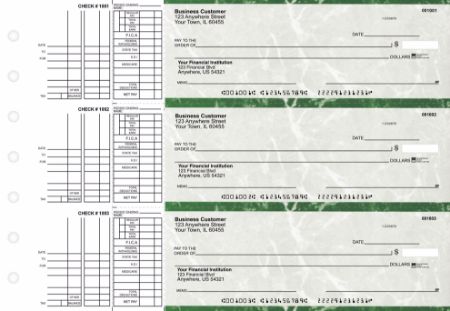
Checks sized for vendor payments. Multi-purpose and accounts payable formats leave room for invoice details beside each payment. See business checks.
Approve before it is printed. A digital proof lets you confirm your company name and account details first.
Built-in safeguards. Security features on ABA compliant stock guard the checks you send to suppliers.
Clear records. Stubs keep a note of each invoice paid beside the check number.
About the Author
This guide was written by the Checkomatic content team using primary sources: the model Uniform Commercial Code (sections 3-104, 3-312 and 4-404), Regulation CC (12 CFR 229.10), Regulation E (12 CFR 1005.10), Federal Trade Commission and CFPB scam guidance, and bank pages for fees and definitions. We print business checks and answer payment questions from small businesses daily.
General information only, not legal or financial advice. Bank policies, fees and state versions of the UCC differ. Confirm details with your bank before you pay.
Frequently Asked Questions
What is a bank draft?
Is a bank draft the same as a cashier's check?
Is a bank draft the same as a certified check?
When are bank draft funds available to the payee?
Can a bank draft be fake?
What fee does a bank draft carry?
What does bank draft mean for insurance payments?
How do I stop a bank draft payment from my account?
Can I get a refund on a lost bank draft?
Is a wire transfer better than a bank draft?
Accepted by the world’s leading banks