-
 Contact Us
-
 Re order
-
 Log in
-
 Cart 0
You have no items in your shopping cart.
What Is a Pay Stub? How to Read Every Line
You get one every time you are paid, and most people glance at the bottom number and move on. That is fine until the amount looks wrong, a form asks for proof of pay, or a tax form does not match what you remember.
A pay stub is simply the receipt for your wages. This guide explains what it is, walks through each line, and uses a worked example so you can see where the money goes. It is written for the person being paid, with one short section for owners who pay by paper check.
Quick Summary
A pay stub is a statement that comes with each payment of wages. It shows what you earned, what was taken out, and what you were paid. Read it top down: gross pay, deductions, taxes, net pay, then the year's running totals.
Key points
- Gross pay is the starting point. It is what you earned before anything was taken out.
- Net pay is the finish line. It is the amount left after deductions and taxes.
- YTD means year to date. It is a running total of each line since the start of the calendar year.
- Your employer pays too. For 2026, Social Security and Medicare are matched by the employer, as covered in our payroll guide.
- A stub is not a paycheck. The paycheck is the payment, and the stub is the statement about it.
- Check it every time. A five-minute read catches most errors early.
| Term | Plain meaning | Where to find it |
|---|---|---|
| Gross pay | Earnings before deductions | Top of the stub |
| Deductions | Money taken out before or after tax | Middle of the stub |
| Taxes withheld | Income tax plus Social Security and Medicare | Middle of the stub |
| Net pay | What you actually receive this period | Bottom line of the period column |
| YTD | Running total since January | A second column beside each line |
Table 1. The five terms that explain most of any pay stub.
Paying staff by paper check and not sure which layout carries a stub? Talk to the Checkomatic team and describe your payroll setup.
What is in this guide
- What is a pay stub and what does it show?
- How do you read each line on a pay stub?
- Why is net pay lower than gross pay?
- Is a pay stub the same as a paycheck, a check stub or a W-2?
- Do employers have to give you a pay stub?
- How do you check a pay stub for mistakes?
- If you pay by paper check, where does the stub go?
- Frequently asked questions
What Is a Pay Stub and What Does It Show?
A pay stub is an itemized statement of one pay period's wages. It lists your earnings, the amounts taken out, and your take-home pay. The Consumer Financial Protection Bureau publishes a plain-language tool on the topic, and its diagram covers the same core pieces: pay period, gross pay, year-to-date totals, taxes, deductions and net pay.
What is a pay stub used for?
Most people use it as a record. It lets you confirm the hours you were paid for, see what benefits cost, and track tax withheld.
You may also hear pay slip or earnings statement. The format varies from a portal page to a strip on a paper check, and our list of check types and terminology covers the paper side.
How Do You Read Each Line on a Pay Stub?
Read from the top down, because each section feeds the next. The header names you, your employer and the pay period. Then come earnings, deductions, taxes and net pay. The table below lists every common line, what it means, and who else is involved in paying it.
| Line on the stub | What it means | Who else pays or acts |
|---|---|---|
| Gross pay | Total earned this period, before anything is taken out | The employer pays it as wages |
| Pre-tax deductions | Amounts taken out before income tax is figured, such as 401(k) deferrals | You choose the amount; nobody else pays |
| Federal income tax | Withholding toward your yearly income tax bill | Comes from your pay; your employer sends it to the IRS |
| Social Security | 6.2% of wages up to $184,500 in 2026 | The employer pays a matching 6.2% |
| Medicare | 1.45% of all wages | The employer pays a matching 1.45% |
| Additional Medicare | An extra 0.9% on pay beyond $200,000 in one calendar year | No employer match |
| State and local tax | Income tax your state or locality charges, if any | Varies by where you live and work |
| Post-tax deductions | Amounts taken out after tax is figured | You; nobody else pays |
| Net pay | What is left to pay you this period | You receive it |
| YTD columns | Running totals since 1 January | Nobody; this is a record |
Table 2. Line, meaning and who else pays. Rates are the 2026 figures in IRS Publication 15 and IRS Topic 751.
What counts as gross pay?
Gross pay is everything you earned before deductions. For an hourly worker it is hours times rate, and for a salaried worker it is that period's share of the salary. Pay frequency changes the share, as our note on how many paychecks you get in a year explains.
What are pre-tax and post-tax deductions?
Pre-tax deductions come out before income tax is figured. The IRS says 401(k) deferrals are not current income for income tax but are still FICA wages. Cafeteria plan reductions, such as some health premiums, are generally not subject to FICA. Post-tax deductions come out afterward.
What do the tax lines on a pay stub mean?
Federal income tax is a prepayment toward your yearly bill. Social Security and Medicare, together called FICA, are the payroll taxes your employer matches. State and local lines depend on where you live and work, and some places have none.
What is net pay?
Net pay is gross pay minus every deduction and tax. It is the figure that lands in your account or on your check.
What does YTD mean on a pay stub?
YTD stands for year to date. It is a running total for each line, counted from the first day of the calendar year. If your YTD gross is not rising by about your gross pay each period, something is off, and the payroll check guide explains how employers record it.
Why Is Net Pay Lower Than Gross Pay?
Because several different things are taken out of your gross before you are paid. Some are taxes, some are benefits you chose, and some are optional savings. The illustration below uses made-up numbers so you can trace every dollar.
Say an employee works 80 hours in a two-week pay period at $25.00 an hour, which is $2,000.00 gross. This is the second pay period of the year, and the first was identical. The income tax amounts are invented round numbers, not tax table figures, as in our payroll walkthrough.
| Line | This period | YTD after period 2 |
|---|---|---|
| Gross pay (80 hours at $25.00) | 2,000.00 | 4,000.00 |
| Pre-tax health premium | -40.00 | -80.00 |
| Pre-tax 401(k) deferral | -100.00 | -200.00 |
| Federal income tax (invented) | -150.00 | -300.00 |
| Social Security at 6.2% | -121.52 | -243.04 |
| Medicare at 1.45% | -28.42 | -56.84 |
| State income tax (invented) | -60.00 | -120.00 |
| Post-tax deduction | -25.00 | -50.00 |
| Net pay | 1,475.06 | 2,950.12 |
Table 3. Illustration only: gross pay to net pay for one stub, with year-to-date totals. Rates are the 2026 payroll tax rates in IRS Publication 15.
The health premium is generally not subject to FICA, so FICA wages are $1,960.00. The 401(k) deferral is still FICA wages, so it is not subtracted. Then 6.2% gives $121.52 and 1.45% gives $28.42, as in this payroll check guide.
Does the employer pay Social Security and Medicare too?
Yes. The IRS sets Social Security at 6.2% on each side and Medicare at 1.45% on each side. The employer's share is not deducted from you, so it never touches your net pay, but Table 4 shows what it adds, and our payroll guide covers the employer side.
| Item | This period | YTD after period 2 |
|---|---|---|
| Employee Social Security and Medicare (taken from the employee) | 149.94 | 299.88 |
| Employer Social Security and Medicare (paid on top) | 149.94 | 299.88 |
| Employer cost from wages plus these two taxes | 2,149.94 | 4,299.88 |
Table 4. The employer's matching share in the same illustration. It excludes other employer costs such as benefits and unemployment taxes.
Is a Pay Stub the Same as a Paycheck, a Check Stub or a W-2?
No. A paycheck is the payment itself, a pay stub is the statement about it, and a check stub is the part of a paper check that holds that statement. A W-2 is a separate yearly report of your wages and taxes.
| Document | What it is | When you get it |
|---|---|---|
| Paycheck | The payment, by paper check or direct deposit | Each pay date |
| Pay stub | The itemized statement behind the payment | Usually each pay date |
| Check stub | A detachable strip on a paper check that carries the pay detail | With a paper check, when the layout includes one |
| Form W-2 | The employer's yearly report of wages and tax withheld | Once a year |
Table 5. Four related documents and how they differ. Compare paper and electronic payment in our payroll check vs direct deposit guide.
The IRS describes Form W-2 as the form used to report wages, tips and other compensation. Your last stub of the year will not always match it, because pre-tax items can lower some W-2 amounts, so ask payroll if they disagree.
Do Employers Have to Give You a Pay Stub?
The FLSA does not require employers to give employees pay stubs, according to a U.S. Department of Labor FAQ, though it does require them to keep wage records. A separate federal law for migrant agricultural workers, 29 U.S.C. 1821(d), does call for an itemized written statement each pay period.
States set their own rules on pay statements, so check yours with your state labor office. The Department of Labor keeps a directory of state labor offices. For employer-side detail, read our payroll services guide.
What if you never get a pay stub?
Ask your payroll contact first. If that fails, your state labor office can tell you what your state requires.
How Do You Check a Pay Stub for Mistakes?
Compare it with your own records, one block at a time. A five-minute pass is enough for most stubs. Work down this list, and keep each stub where you can find it later.
- Minute one, the header. Confirm your name, the employer, the pay period and the pay date.
- Minute two, the hours and rate. Match the hours to your own time records and the rate to what you agreed.
- Minute three, the deductions. Look for any benefit you did not choose, or any amount that changed without notice.
- Minute four, the taxes. Social Security should be 6.2% and Medicare 1.45% of the right wages in 2026, as covered in our payroll tax notes.
- Minute five, the totals. Check that net pay matches what you received and that each YTD line grew by this period's amount.
What should you do if the numbers look wrong?
Write down the line, the amount you expected and the amount shown, then send that to your payroll contact and ask for a corrected stub. If the problem continues, your state labor office is the next stop. Employers can keep clean records with a check register.
If You Pay by Paper Check, Where Does the Stub Go?
Owners who pay by paper check have two choices: the stub rides on the check, or the pay detail is sent separately. The layout you pick decides which.
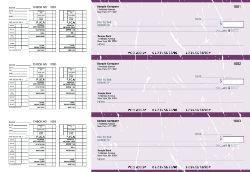
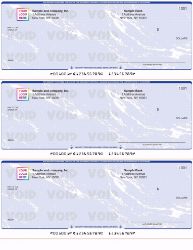
Some payroll check layouts include perforated stubs, and others print three checks to a sheet with none. If your layout has no stub, the earnings detail has to reach the employee some other way. Read how payroll checks and stubs fit together before you order, and ask whether the pressure seal checks for payroll format suits you.
Agencies that pay temporary staff face the same choice, covered in staffing agency business checks. Expense payments are separate, as employee reimbursement checks explains.
Payroll checks from Checkomatic
Stubs that fit. Pick a layout with perforated stubs so the pay detail travels with each check.
Logo and layout. Add your company logo to payroll checks so staff recognize the source.
Check the details. Review names and numbers carefully before your first payroll run.
Questions welcome. The team can talk through a payroll setup before you order. See business checks.
About the Author
Put together by the Checkomatic team for people who read their pay and owners who issue it, this guide draws on IRS Publication 15 and Topic 751, IRS guidance on 401(k) and cafeteria plans and on Form W-2, the Department of Labor's FLSA guidance and recordkeeping rule at 29 CFR 516.2, 29 U.S.C. 1821, and the Consumer Financial Protection Bureau's pay stub tool from August 2021.
Treat this as background reading rather than legal, tax or payroll advice. Rates are for 2026 and can change, the worked example uses invented numbers, and state rules differ, so confirm with your employer, a payroll professional, your state labor office or a lawyer.
Frequently Asked Questions
Can a pay stub be electronic?
What if I lose a pay stub?
Do independent contractors get pay stubs?
Is the Social Security amount on my stub capped?
Why did my net pay change when my gross stayed the same?
Which date on my stub shows when I earned the money?
Why might my last stub of the year differ from my W-2?
What is Additional Medicare Tax on a stub?
What does FICA stand for on a pay stub?
How often should I get a pay stub?
Accepted by the world’s leading banks