Wire Transfer vs Check: When to Use Each for Business Payments
Quick Answer: Wire transfers and business checks are both legitimate B2B payment methods with different strengths. Wire transfers win on speed (same-day) and international reach. Business checks win on cost, reversibility, remittance documentation, and universal vendor acceptance. For most routine US vendor payments, business checks are the better choice. Reserve wire transfers for urgent large payments, real estate closings, and international transactions where same-day settlement is required and the wire fee is justified.
How Wire Transfers and Business Checks Work
How a Wire Transfer Works
A wire transfer is an electronic bank-to-bank instruction to move funds from one account to another. For domestic US payments, wire transfers move through the Federal Reserve's Fedwire network. The sending bank debits your account, sends a real-time settlement instruction through Fedwire to the receiving bank, and the receiving bank credits the payee's account. Each wire is processed individually, not in a batch, which is why it settles so quickly. For international payments, wire transfers route through the SWIFT network, which connects banks across more than 200 countries.
Wire transfers require you to provide the receiving bank's routing number (ABA number for domestic, BIC/SWIFT code for international), the payee's account number, and the payment amount. Once your bank releases the wire, it moves in real time. Domestic wires typically complete within hours on the same business day when initiated before the bank's internal cutoff, usually mid-to-late afternoon Eastern Time.
How a Business Check Works
A business check is a written instruction ordering your bank to pay a specified amount to the payee named on the check. You fill out the check, sign it as the authorized signatory on file with your bank, and deliver it to the payee by mail or in person. The payee deposits the check at their bank, which presents it to your bank through the check clearing system. Your bank verifies the check and releases funds from your account. The entire cycle from writing the check to cleared funds typically takes 2 to 8 business days depending on mail transit time and the payee's bank hold policies under Regulation CC.
Business checks require no special bank initiation steps at payment time. You write the check when you have the payee's name and the amount confirmed. The payee handles the rest. Your account is not debited until the check clears, which means a check gives you slightly more control over payment timing than a wire does.
Wire Transfer vs Check: Full Comparison Table
Factor
Wire Transfer
Business Check
Settlement speed
Same business day (domestic)
2 to 8 business days total
Per-transaction cost
$15 to $50 outgoing
$3 to $20 fully loaded
Reversibility
Generally irreversible once sent
Reversible via stop payment before deposit
Remittance data
Short reference field only
Two detachable stubs with invoice detail
International reach
Yes, via SWIFT
Yes, but slow and currency-dependent
Vendor acceptance
Requires vendor bank account details
Near-universal acceptance
Fraud profile
BEC fraud; often unrecoverable
Check washing; stoppable; UCC recourse
Paper trail
Electronic record only
Physical stub + electronic bank image
Payment timing control
Debits immediately on release
Debits when check clears
Transaction limit
No standard limit
No standard limit
Speed and Settlement Time Compared
Speed is the clearest advantage of wire transfers over business checks. For most businesses, the question is whether same-day settlement is actually needed or whether 2 to 5 business days is acceptable.
Wire Transfer Settlement Timeline
Domestic (Fedwire): Initiate before your bank's cutoff (typically 3:00 to 5:00 p.m. Eastern Time). Funds arrive at the receiving bank the same business day, usually within hours. The receiving bank may take additional time to post funds to the payee's account.
International (SWIFT): 1 to 5 business days depending on the destination country, the number of correspondent banks involved, and any currency conversion steps.
After the bank cutoff: Wires initiated after your bank's internal cutoff go out the next business day. Missing the cutoff by a few minutes means a one-day delay.
Business Check Settlement Timeline
Mail transit: 1 to 5 business days for the check to reach the payee.
Check clearing after deposit: Under Regulation CC, the first $225 of a check deposit is available the next business day. Larger amounts are typically available within 2 business days at most banks for checks from established payors, though longer holds apply to new accounts and certain check types.
Total timeline: 2 to 8 business days from writing the check to cleared funds in the payee's account. For local payments delivered in person, the check can clear in 1 to 3 business days.
When speed actually matters: Most routine vendor invoices, rent payments, and supplier payments do not require same-day settlement. If the invoice has net-30 terms, a check written on day 25 and cleared on day 29 is just as on-time as a wire sent on day 29. Reserve wire transfers for payments where being even one day late has real consequences.
Cost Comparison: Wire Transfer vs Business Check
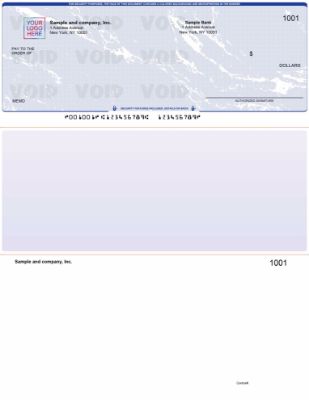
AP business checks from Checkomatic ; $3 to $20 per check fully loaded vs $15 to $50 per wire for the same routine vendor payment.
Cost is where the comparison between wire transfers and business checks is most concrete. The difference per transaction is significant, and at volume it becomes a meaningful line item.
Wire Transfer Costs
Outgoing domestic wire: $15 to $30 at most US banks.
Outgoing international wire: $25 to $50, plus possible correspondent bank fees that reduce the amount received by the payee.
Incoming wire fee: $0 to $15 depending on the receiving bank.
At $25 per outgoing domestic wire and 50 wires per month, a business spends $1,250 per month on wire fees alone. At 100 wires per month, that is $2,500 per month, or $30,000 per year. For large businesses with high wire volumes, the fee reduction from switching routine payments to checks or ACH is directly measurable.
Business Check Costs
Check stock per check: $0.15 to $0.25 per check ordered in quantity directly from a manufacturer like Checkomatic.
Postage: $0.73 for a standard first-class letter.
AP staff time: $2.00 to $3.00 per check fully loaded at typical AP wage rates.
Total fully loaded per check: $3 to $20, depending on business size and staff cost allocation.
At $5 fully loaded per check and 50 checks per month, a business spends $250 per month. Compared to $1,250 in wire fees for the same number of payments, the annual savings of switching from wires to checks for routine payments is $12,000 per year. For a complete payment cost comparison across all methods, see card vs check payments: costs, pros, cons compared.
When the Wire Fee Is Worth Paying
The wire fee is cost-justified when the payment amount is large enough that the fee is immaterial, or when same-day settlement is operationally required. On a $500,000 real estate closing, a $30 wire fee is 0.006 percent of the transaction. On a $300 vendor invoice, the same $30 wire fee is 10 percent of the payment amount. Scale the wire fee against the payment size when deciding whether it is justified.
Reversibility: Stop Payment vs Wire Irrevocability
This is the most practically important difference between wire transfers and business checks for businesses managing payment risk.
Wire Transfers: Generally Irreversible
Once a domestic wire is accepted by the receiving bank through Fedwire, it is functionally irrevocable. There is a very brief window before the wire leaves the sending institution when cancellation may be possible, but this is typically minutes and is not guaranteed by any standard. If a wire is sent to the wrong account number, the wrong routing number, or the wrong payee entirely, recovery requires the sending bank to contact the receiving bank and request a voluntary return. The receiving bank is not legally obligated to comply. If the funds have already been moved or withdrawn by the payee, recovery may be impossible.
This irreversibility is the central risk factor when criminals use business email compromise (BEC) to intercept payment communications and trick accounts payable staff into wiring funds to a fraudulent account. Once the wire goes out, the money is gone in most cases.
Business Checks: Reversible Before Deposit
A business check can be stopped at any point before it is deposited by the payee. A stop payment order placed with your bank costs $15 to $35 at most institutions and remains in effect for 6 months (renewable). The stop payment prevents the check from clearing even if the payee presents it. This gives your business a meaningful window to correct payment errors, resolve disputes, or address lost or stolen checks before the funds leave your account.
After a check is deposited and cleared, recovery requires a bank investigation or legal action, but the window for stopping payment before clearing is a significant advantage over wire transfers for routine payment management. For complete stop payment guidance, see how to stop payment on a check: step-by-step guide.
Wire transfer irrevocability in practice: A business email compromise attack typically involves a criminal intercepting payment approval communications, changing the bank account details in the payment request, and convincing AP staff to wire funds to the criminal's account instead of the legitimate vendor. Because wires are irreversible, there is no stop payment option. Businesses that route large payments through wire transfers need dual approval controls and bank account verification protocols before any wire is released.
Fraud Risk: Wire Transfer vs Business Check
Wire transfers and business checks face different fraud threats. Neither is inherently safer than the other ; they are vulnerable in different ways, which affects how you protect against each.
Wire Transfer Fraud: Business Email Compromise
The dominant wire transfer fraud vector is business email compromise (BEC). A criminal gains access to or spoofs a business email account involved in the payment process ; often a vendor's billing department or a C-suite executive at the paying company. The criminal sends a payment request with altered bank details, directing the wire to their own account. Because BEC attacks are sophisticated and often indistinguishable from legitimate payment requests, they succeed frequently. The FBI's 2023 Internet Crime Report identified BEC as the highest-cost cybercrime category in the US. And because wires are irreversible, recovery after a BEC attack is rare.
Defense against wire fraud requires process controls: verify any new or changed bank account details through a direct phone call to a known contact number before releasing any wire. Dual approval requirements for large wires add a second line of defense.
Business Check Fraud: Check Washing and Theft
The dominant business check fraud vector is check washing: intercepting a check in the mail, chemically removing the ink from the payee and amount fields, and rewriting the check to a fraudulent payee for a larger amount. Check washing requires physical access to the check, which limits the attacker pool to mail thieves rather than remote criminals.
The defense is security check stock. Chemically sensitive paper reacts to washing chemicals with a visible stain that makes tampering immediately apparent at the bank. Microprinting and void pantograph features stop counterfeit check attempts. Under UCC Article 3, a bank that pays a materially altered check bears liability for the difference between the original and altered amounts if the drawer exercised ordinary care in writing and mailing the check. This provides legal recourse that wire fraud victims typically lack.
Remittance Documentation: Where Business Checks Have the Advantage
This is the least discussed but most practically valuable advantage of business checks over wire transfers for businesses managing accounts payable at any significant volume.
What Remittance Documentation Is
QuickBooks voucher checks from Checkomatic ; two stubs carry full invoice-level remittance detail; wire transfers provide only a short reference field.
When you pay a vendor, they need to know which invoices your payment covers. If you owe a vendor $4,750 across three open invoices of $2,000, $1,500, and $1,250, the vendor's accounts receivable team needs to know which of those three invoices your payment of $4,750 covers. Without this information, they cannot close the invoices in their system. This creates unnecessary back-and-forth calls, delayed account reconciliation, and AP friction on both sides.
Wire Transfer Remittance Limitations
A domestic wire transfer carries a short reference field in the payment message, typically 140 characters or less. This allows a payment reference or invoice number, but it cannot accommodate full invoice-level detail for multi-invoice payments. When you wire $4,750 against three invoices, you must separately email, mail, or call the vendor with remittance detail explaining how the $4,750 is allocated. This adds a step to every multi-invoice wire payment.
Business Check Remittance Advantage
A voucher-format business check includes two detachable stubs, each the same size as the check itself. One stub goes to the vendor with the payment. The stub includes fields for: vendor name, invoice numbers, amounts per invoice, discounts taken, credits applied, and the net payment amount. The vendor's AP team receives the check and the remittance detail in one envelope. No separate email or call needed.
This is why voucher format remains the standard for US business accounts payable even as electronic payment options have expanded. The physical remittance record reduces vendor communication overhead and speeds up the payee's accounts receivable reconciliation. For voucher format business checks and all other AP check formats, see voucher checks vs wallet checks: when to use each.
When to Use a Wire Transfer
Wire transfers are the right payment method in these specific situations. Outside of these scenarios, a business check or ACH payment is typically the better choice.
Real Estate Closings and Large One-Time Settlements
Real estate title companies require confirmed, same-day-settled funds at closing. A check that might clear in 2 business days creates uncertainty that delays the closing. A wire that settles by mid-afternoon on the day of closing gives the title company the fund confirmation they need to proceed. This is the most common and most justified use case for wire transfers in small and medium-sized business payments.
International Vendor Payments
Domestic ACH does not cross US borders. An international SWIFT wire is the standard method for paying overseas suppliers, manufacturers, and service providers in their local currency or in USD. A US business check sent internationally faces currency conversion, international clearing delays, and some foreign banks may add fees or refuse to process foreign checks. For regular international supplier payments, wire is the practical choice.
Very Large Urgent Payments
For a six-figure or seven-figure payment where same-day settlement is actually required, a wire's $30 fee is immaterial against the transaction size, and the certainty of same-day settlement is worth the cost. Examples: equipment purchases where the seller requires confirmed funds before shipping, large inventory purchases with time-sensitive terms, tax payments with same-day deadlines.
Payees That Cannot Accept Checks
Some international payees cannot process US checks. Some domestic payees with automated AP systems are set up to receive wires and do not have check deposit workflows. If the payee specifies wire as the required payment method, use wire.
When to Use a Business Check
Routine Domestic Vendor Payments
For most routine vendor invoices with net-30 terms, a business check written 5 to 10 days before the due date arrives and clears well within the payment window. The lower per-transaction cost, built-in remittance documentation, and reversibility through stop payment make checks the practical default for high-volume domestic AP runs.
Payroll When Employees Prefer or Require Paper Checks
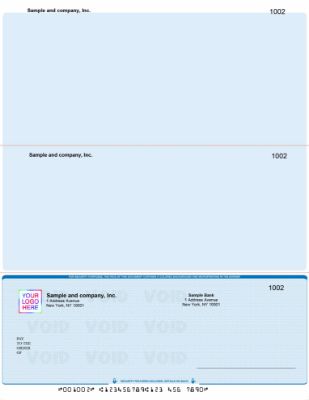
Payroll business checks from Checkomatic ; pay stubs attached for employee earnings detail when paper payroll is required.
Some employees do not have bank accounts or prefer physical paychecks. Paper payroll checks remain the most universally accepted payroll payment method and provide the employee with a detachable pay stub showing earnings detail, taxes withheld, and deductions. See business checks for payroll: the complete employer guide for payroll check format guidance.
Payments Where Reversibility Matters
Any payment to a new vendor where you want the option to stop payment if the goods or services are not delivered as agreed. Any payment where the dollar amount is uncertain until delivery and might need adjustment. Any situation where payment-in-dispute risk is elevated and you want recourse before the funds clear.
Vendors Who Prefer or Require Checks
Many small contractors, landlords, local service providers, and specialty vendors work on paper check workflows and do not have electronic payment setups. Refusing to pay by check forces payment method negotiation that slows the relationship. Checks remain the most universally accepted business payment method in the US and require the least vendor setup effort.
Decision Framework: Wire Transfer vs Check by Situation
Payment Situation
Best Method
Why
Real estate closing, same-day funds required
✅ Wire
Same-day settlement required
International supplier payment
✅ Wire (SWIFT)
ACH does not cross US borders
Routine vendor invoice, net-30 terms
✅ Business check
Lower cost, remittance stubs, reversible
Employee payroll, paper check required
✅ Business check
Universal acceptance, pay stub attached
Large urgent same-day domestic payment
✅ Wire
Fee is immaterial at large amounts
Small contractor, prefers paper
✅ Business check
No electronic setup needed from vendor
Payment to new vendor, dispute risk elevated
✅ Business check
Stop payment available before clearing
Multi-invoice consolidated payment
✅ Business check
Voucher stub carries all invoice detail
Payee cannot accept checks
✅ Wire
Payee's system requires wire
Rent or landlord payment
✅ Business check
Most landlords accept and prefer checks
What Customers Say About Checkomatic
All reviews below are published on checkomatic.com and reproduced verbatim. Source: checkomatic.com/quickbooks-starter-pack-product, 4.5 stars from 166 verified reviews.
"I got 500 checks for less than half of what the bank wanted for 200!"
VVA Voucher Checks (Vietnam Veterans of America) | ★★★★★ 5/5 | July 6, 2024 | Source: checkomatic.com/quickbooks-starter-pack-product
"Been with them for 15 years. Always reliable, always good quality, good service. What more can you ask for?"
ATV Inc. | ★★★★★ 5/5 | April 5, 2024 | Source: checkomatic.com/quickbooks-starter-pack-product
"First time ordering and I am super impressed with the quality of the checks. No issues with delivery. I will be ordering again!"
"We use CheckoMatic for all of our check needs! They have great prices and we receive our products in a timely manner!"
CG's Tax Service | ★★★★★ 5/5 | September 18, 2024 | Source: checkomatic.com/quickbooks-starter-pack-product
"ASJ Wilson Construction has been a client of checkomatic for some years now and they've never disappointed this company. Thank you checkomatic for all that you do."
ASJ Wilson Construction | ★★★★★ 5/5 | June 6, 2024 | Source: checkomatic.com/quickbooks-starter-pack-product
"Affordable and efficient. My go-to business check printer."
Doe | ★★★★★ 5/5 | January 24, 2025 | Source: checkomatic.com/quickbooks-starter-pack-product
Why Choose Checkomatic for Business Check Payments
Lower Per-Transaction Cost Than Wire Transfers for Routine Payments
At $3 to $5 fully loaded per check versus $15 to $30 per wire, business checks cost 70 to 90 percent less per transaction for routine domestic vendor payments. A business switching 50 routine monthly wire payments to checks saves $500 to $1,250 per month in wire fees. Browse all business check formats at business checks and QuickBooks checks.
Voucher Format Eliminates Separate Remittance Communication
Checkomatic's voucher-format AP checks include two detachable stubs with full invoice-level remittance fields. Every check payment carries its own remittance documentation. No separate email, no phone call, no remittance transmission file needed. For AP payment volumes of 20 or more checks per month, eliminating the separate remittance step saves meaningful staff time per payment cycle.
Six Security Features Standard on Every Check
Chemically sensitive paper, microprinting, void pantograph, UV fluorescent fibers, heat-sensitive ink, and genuine watermark on every order at the base price. These features address check washing, counterfeiting, and physical fraud methods that wire transfers are not vulnerable to. For security feature details, see are business checks safe? Security features that actually matter.
Stop Payment Available on Every Check Before Clearing
Unlike wire transfers, every business check is reversible via stop payment before the payee deposits it. This gives your AP team the ability to correct payment errors, resolve disputes, or address lost checks without the "irrevocable payment" problem that wire fraud creates. For the complete stop payment guide, see how to stop payment on a check: step-by-step guide. For the best place to order checks with full security features, see what is the best place to order checks online.
Frequently Asked Questions
What is the difference between a wire transfer and a check?
A wire transfer is an electronic bank-to-bank instruction that settles the same business day and is generally irreversible. A business check is a paper payment instrument that takes 2 to 8 days to arrive and clear, is reversible via stop payment before deposit, and carries invoice-level remittance detail in its stubs. Wires win on speed and international reach. Checks win on cost, reversibility, remittance documentation, and universal vendor acceptance.
Is a wire transfer faster than a check?
Yes. Domestic wire transfers settle the same business day if initiated before the bank's cutoff. A business check takes 1 to 5 days to arrive by mail, then 1 to 3 additional days to clear after deposit. For payments where same-day settlement is required, wire is the only option. For routine payments where 2 to 5 business days of clearing time is acceptable, a check delivers comparable results at a fraction of the per-transaction cost.
Is a wire transfer safer than a check?
They have different fraud profiles. Wire transfers face business email compromise (BEC) fraud ; sophisticated attacks that are often unrecoverable because wires are irreversible. Business checks face check washing ; physical alteration fraud that security check stock defends against, and which is recoverable under UCC Article 3. Neither is inherently safer. Use dual approval controls for wires. Use security check stock and stop payment awareness for checks.
Can you stop payment on a wire transfer?
Generally no. Once a domestic wire is accepted through Fedwire, it is irreversible. A brief cancellation window may exist before the wire leaves the sending bank, but it is not guaranteed and closes within minutes. If the wrong amount or wrong account was wired, your bank must request a voluntary return from the receiving bank, which is not obligated to comply. By contrast, a stop payment on a business check costs $15 to $35 and can be placed before the check is deposited. See how to stop payment on a check: step-by-step guide.
When should a business use a wire transfer instead of a check?
Use a wire for real estate closings (same-day funds required), international payments (SWIFT is the standard), very large urgent domestic payments (fee is immaterial), and payees who cannot accept checks. For routine domestic vendor payments, payroll, rent, and recurring invoices, a business check is usually the more cost-effective and operationally flexible choice. For all business check formats, see business checks at Checkomatic.