Blog

Aug 07, 2026

Deposit Slips: What They Are and How to Fill One Out

What Is a Deposit Slip

Deposit slip definition: a deposit slip (also called a deposit ticket) is a paper form that bank account holders fill out to provide instructions to their bank when depositing cash, checks, or both into their account. It identifies the account receiving the funds, itemizes what is being deposited, and specifies how much of the deposit the account holder wants credited versus received back as cash. The completed slip is submitted alongside the cash and checks being deposited.

Deposit ticket vs deposit slip: both terms mean the same thing. Banks and credit unions use both terms interchangeably on their forms and in their communications. You may see either phrase on a form from the same bank at different times.

The deposit slip creates a paper record for both the depositor and the bank. For the bank, it provides deposit instructions and a record of what was received. For the depositor, the bank receipt stamped at deposit serves as proof that a specific amount was received by the bank on a specific date. This receipt is valuable for resolving any dispute about whether a deposit was made or how much was deposited.

Deposit slips are primarily used for in-person teller deposits, night deposit slip submissions at night drop boxes, and ATM deposits at machines that require an envelope. Mobile deposits and most modern ATMs handle deposits without a physical slip.


Where to Get Deposit Slips

Deposit slip pre-printed vs blank: pre-printed deposit slips have your name and account number already printed as part of your check order. When you order checks from Checkomatic, your business deposit slips are printed to match your account, pre-filled with your business name and account details so you do not need to handwrite them on every slip.

Counter deposit slips are blank slips kept at bank branch teller counters for use by any depositor. These require you to write your name, account number, and all deposit details manually. Counter slips work fine for one-off deposits but become time-consuming when you deposit frequently.

Deposit slips may also be included in the back pages of a checkbook. Personal checkbooks from Checkomatic include check registers; for business deposit slips matched to your account, order separately at checkomatic.com/deposit-slips-options.

Your bank's online portal may allow you to print deposit slips for your account. QuickBooks also includes a deposit slip printing function that pre-fills deposit details from your QuickBooks records, reducing manual entry for businesses using that accounting platform.


Deposit Slip Fields Explained

All deposit slip fields appear in a standard order across most US banks. Understanding each field before filling out the slip eliminates errors.


Name and Date

The deposit slip date field records when the deposit is being made. Write today's date. The deposit slip name field identifies the account holder. Pre-printed slips have this filled in; verify it is correct before submitting. Counter slips require you to write your full name as registered with the bank.


Deposit Slip Account Number

The deposit slip account number is the checking or savings account number receiving the funds. This is the most important field on the deposit slip: an incorrect account number sends your deposit to the wrong account. Pre-printed deposit slips have this already filled in. For counter slips, write your account number carefully and verify every digit. Your account number appears on your checks (the middle set of numbers in the MICR line at the bottom), in your bank's mobile app under account details, and on your monthly bank statement.


Deposit Slip Routing Number

Some deposit slips include a routing number field. The deposit slip routing number is a nine-digit code identifying your bank. However, read the critical warning about this field in the routing number section below before using this number for anything other than the deposit slip itself.


Cash Field

The deposit slip cash field records the total dollar value of all currency and coins included in the deposit. Count your cash carefully before writing the total. Some business deposit slip formats include separate fields for bills and coins; enter them separately. Leave the cash field blank if you are depositing checks only.


Checks Field

The deposit slip checks field is a numbered list where each check being deposited gets its own line. Deposit slip check number list: for each check, write the check number and dollar amount on the same line. The check number (the small number in the upper right corner of the check face) helps the bank identify specific checks in the batch and supports any later dispute or trace. If the slip does not have space for check numbers, write the amount of each check on separate lines.


Deposit Slip Subtotal

The deposit slip subtotal is the sum of all cash and all check amounts listed on the slip. Add the cash total to all the check amounts and write the combined figure in the Subtotal field. If checks are listed on both the front and back of the slip, include the back total in this calculation.


Less Cash Received

The less cash received deposit slip field is where you record any cash you want back from the deposit rather than credited to your account. If you want to take no cash back, leave this field blank or write $0.00. This field is explained in detail in its own section below.


Net Deposit

The net deposit deposit slip field is the final amount that the bank will credit to your account: Subtotal minus Less Cash Received. This is the number your bank statement will reflect as the deposit for this transaction.


How to Fill Out a Deposit Slip: 7 Steps

Fill out a deposit slip step by step in this order:

  1. Write your name and today's date. On a pre-printed slip, verify the name is correct. On a counter slip, write your full name as it appears on your account.
  2. Write your account number. Double-check each digit. An error here redirects your deposit to the wrong account. Verify against your checks or bank statement if unsure.
  3. Enter the total cash amount. Count your bills and coins, confirm the total, and write it in the Cash field. Leave blank if depositing checks only.
  4. List each check separately. Write the check number and amount of each check on its own line. If you run out of lines on the front, continue on the back. Write the subtotal of the back-of-slip checks on the front in the designated field, or note "See back."
  5. Calculate the subtotal. Add all cash and all check amounts. Write the total in the Subtotal field.
  6. Enter less cash received (if applicable). Write the amount of cash you want back in the Less Cash Received field. If taking cash back, sign the slip on the signature line. Leave this field blank if depositing the full amount.
  7. Calculate the net deposit. Subtract Less Cash Received from the Subtotal. Write the result in the Net Deposit or Total field. This is what goes into your account.

Hand the completed slip to the teller with your cash and endorsed checks. The teller will process the deposit and provide a stamped receipt. Keep the receipt until the deposit appears correctly in your account.


What Does Less Cash Received Mean

Less cash received on a deposit slip is the amount of cash you want the teller to hand back to you at the time of deposit, rather than depositing it into your account. This field allows you to make change or access a portion of your deposit as cash without making a separate withdrawal.

Example: you bring three checks totaling $800 to deposit. You also want $50 in cash for the week. You enter $800 in the Checks section, $800 as the Subtotal, $50 in the Less Cash Received field, and $750 as the Net Deposit. The teller deposits $750 to your account and hands you $50 in cash.

For businesses, this field is almost never used. SmartPayables confirms: "Most businesses won't use this field" because businesses deposit the full amount and make any needed cash withdrawals separately for cleaner accounting records. Each transaction type (deposit, withdrawal) appearing separately in the business account register makes reconciliation cleaner than mixing the two in one deposit transaction.

For personal banking, less cash received is a convenience feature that saves a second trip to the ATM or a separate withdrawal slip. The requirement to sign the deposit slip when using this field is the bank's mechanism for confirming you authorized the cash portion of the transaction.


How to Calculate the Net Deposit

Net deposit = Subtotal minus Less Cash Received.

If you are depositing the full amount with no cash back: Net Deposit = Subtotal (Less Cash Received is $0).

If you want some cash back: Net Deposit = Subtotal minus the Less Cash Received amount.

Always verify your arithmetic before handing the slip to the teller. A math error on the deposit slip causes a discrepancy between what you declare and what the teller counts, which requires the teller to reconcile and may delay your deposit. For business deposits with many checks, use a calculator or add the check amounts in your accounting software first, then transfer the verified total to the deposit slip.


When Do You Sign a Deposit Slip

Deposit slip signature when required: you only need to sign a deposit slip when you are receiving cash back from the deposit (using the Less Cash Received field). For a standard deposit with no cash back, no signature is required on the deposit slip.

The Balance Money confirms: "You typically only need to sign a deposit slip when you want cash back from your deposit. If you're only depositing funds, you don't need to sign the deposit slip." SmartPayables adds: "For simple deposits without cash back, a signature usually isn't required."

When you do sign, sign in the designated signature field, not across the check sections or routing information. Your signature authorizes the cash portion of the transaction.


How to List Multiple Checks on a Deposit Slip

How many checks on deposit slip front: most deposit slips provide space for three to eight checks on the front. Deposit slip back of slip: if you have more checks than lines on the front, continue the list on the reverse side. Most deposit slips have additional lines on the reverse side for exactly this purpose.

For the back of the slip: list each additional check's number and amount just as you did on the front. Add those amounts and write a subtotal at the bottom of the back. Transfer that subtotal to the designated "Total from back" or "Checks listed on back" line on the front, then include it in your front-side subtotal calculation.

If you have more checks than the front and back of a single slip can accommodate, ask the teller for a continuation slip. Deluxe's business deposit guide confirms: "If you still have more checks than available lines, ask your bank for a continuation slip." Attach the continuation slip to the primary deposit slip and note the combined check total on the primary slip's subtotal line.

For businesses depositing large numbers of checks regularly, pre-printed multi-check deposit slips with more lines per page are available. Checkomatic's business deposit slips are formatted for business check volumes.


The Deposit Slip Routing Number Warning

Important: Many banks print a warning directly on deposit slips that reads: "Do not use this routing number for automated payments. Use a voided check instead." This warning is there for a specific technical reason explained below.

The deposit slip routing number warning direct deposit issue: some banks use different routing numbers for different types of transactions. The routing number on a deposit slip is the bank's check-clearing routing number for processing incoming paper deposits. The routing number on a check is the ABA routing number used for ACH electronic transfers, direct deposit payroll, and automated bill payments.

At many banks, these two routing numbers are identical. But at some banks, they differ. A Bogleheads forum thread documented exactly this scenario: a depositor noticed their deposit slip carried the routing number warning and that the routing number on their deposit slip did not match the one on their checks, even though both were from the same bank.

The deposit slip routing number vs check routing number problem: if you provide the deposit slip routing number to your employer for direct deposit setup and that number differs from your check's ABA routing number, your direct deposit payroll will be rejected or misdirected. Recovering a misdirected ACH transfer can take days.

The reliable solution: always use a voided check, a direct deposit authorization form from your bank, or a bank letter on letterhead for direct deposit and ACH setup. Artsyltech confirms: "Deposit slips sometimes use a different routing number specifically for deposits rather than the one needed for electronic transfers. Additionally, some deposit slips might not include all the required information in the standardized format that automated systems expect."

For more on voided checks and their role in direct deposit and ACH setup, see our check writing guide and our ABA routing numbers guide.


Business Deposit Slip vs Personal Deposit Slip

Business deposit slip fields differ from personal deposit slips in several ways. Understanding these differences matters for businesses that deposit frequently and want their slips to match bank expectations for business accounts.


Fields Specific to Business Deposit Slips

A business deposit slip includes the business name (full legal business name, not the owner's personal name), the business address and phone number, the bank's name and address (for deposits processed at branches that serve multiple bank clients), the business account number, and sometimes a deposit slip number (often pre-printed for sequencing and audit purposes).

Personal deposit slips typically have only the account holder's name, address, account number, and date. Business deposit slips are more detailed because businesses need a formal paper trail for accounting records, audits, and reconciliation against their accounts receivable ledgers.


Cash Breakdown Fields

Some business deposit slip formats include separate denomination fields for cash: a bills field and a coin field. Personal deposit slips typically have a single cash total field. The denomination breakdown on business slips supports cash control at businesses like retail stores that count the drawer at close and need to verify specific denomination totals in their deposit records.


Multiple Accounts

Businesses with separate checking accounts for AP, payroll, and operating funds use separate deposit slips for each account. The account number field on each slip directs the deposit to the correct account. Using the wrong slip for the wrong account sends funds to an unintended account, requiring a transfer to correct. Pre-printed business deposit slips with the account number already on each slip eliminate this error type by making the destination account visually obvious.


NCR Paper for Business Deposit Slips

Business deposit slip NCR paper is the standard for professionally printed business deposit slips. NCR stands for No Carbon Required. NCR paper is a multi-layer form where writing on the top sheet transfers through pressure to the layers below, creating duplicate copies without a separate carbon sheet between them.

CheckDepot's business deposit guide confirms: "Company deposit slips are typically printed on specialized NCR paper. NCR stands for 'no carbon required.' This paper allows deposit information to appear on multiple layers of paper."

For business deposits, the NCR copy structure gives the business a copy of the deposit detail (which checks were deposited, the amounts, the total) without needing to photocopy the slip at the branch. The bank retains the original; the business retains the copy. This copy is the primary source document for reconciling the bank deposit against the business's accounts receivable records.

Single-part deposit slips (no copy) require either making a photocopy before submitting or relying solely on the bank's deposit receipt. The bank receipt shows the total deposited but does not itemize individual check amounts. For a business reconciling accounts receivable against specific invoices, the itemized deposit slip copy is more useful than the bank receipt alone.

Checkomatic's business deposit slips are available in the NCR format for businesses that need self-copying capability without a separate carbon sheet.


When You Do Not Need a Deposit Slip

Deposit slips are not always required. Knowing when you can skip the slip saves time.


ATM Deposit Slip Required

At most modern ATMs, no deposit slip is required. You insert your debit card, select deposit, and feed cash or checks into the machine. The ATM images the checks and counts the cash electronically. At older ATMs that accept envelopes, you may need to prepare a deposit slip and place it in the envelope with your cash and checks. ATM deposit slip required or not depends entirely on the specific ATM model, so check the screen instructions before preparing a slip.


Mobile Deposit Slip Not Needed

Mobile deposit slip not needed: when you deposit a check using your bank's mobile app, no deposit slip is required. You photograph the front and back of the check, enter or confirm the amount, and submit. The app records the deposit against your account without a physical slip. The only physical requirement for mobile deposits is the endorsement on the back of the check, typically "For mobile deposit only at [Bank Name]" plus your signature. For more on mobile deposit endorsement requirements, see our endorsements guide.


In-Person Teller Deposit With Debit Card

Many banks now allow in-person teller deposits using only your debit card for identification rather than a deposit slip. The teller accesses your account via the card and applies the deposit. PNC confirms this option is available at their branches. Not all banks offer this, and not all customers prefer it, so deposit slips remain common for in-person teller visits.


Cashier's Checks and Money Orders

Investopedia notes: "You typically don't need to fill out a deposit slip for an ATM or mobile deposit or for the deposit of a cashier's check or money order" at some institutions. Policies vary by bank; verify with your branch for large or unusual deposits.


Regulation CC and the Special Deposit Slip

Regulation CC special deposit slip: the Regulation CC deposit next day rule comes from the federal Expedited Funds Availability Act, implemented as Regulation CC, includes a provision that affects deposit slips for specific check types. For next-day availability of funds from government checks (US Treasury, state and local government) and cashier's checks deposited in person, some banks may require a "special deposit slip" or specific notation on the deposit slip to trigger the expedited availability.

The Federal Reserve's Regulation CC compliance guide states: "If the customer desires next-day availability of funds from these checks, you may require use of a special deposit slip." This means if you deposit a US Treasury refund check or a state tax refund check and expect next-day access to those funds, ask the teller whether a special deposit slip or notation is required at your bank. Without it, the bank may apply a longer hold even on checks that qualify for next-day availability.

For routine check deposits (personal and business checks), the Regulation CC next-day deposit rule requires that the first $275 of a non-next-day deposit be available the next business day, with the remainder subject to standard hold periods. The deposit slip itself does not affect this calculation; the check type does.

For an overview of how checks are processed after deposit and what determines hold times, see our check validity and fraud prevention guide.


Deposit Slip vs Voided Check for Direct Deposit Setup

Deposit slip vs voided check direct deposit: the two documents serve different purposes, and confusing them creates problems. A deposit slip is for making deposits. A voided check is for providing your banking credentials to an employer, biller, or financial institution for electronic transfer setup.

For direct deposit payroll, automated bill payments, and ACH transfers, employers and billers need your ABA routing number and account number in a standardized, verifiable format. The voided check provides both numbers in the MICR line at the bottom, which is machine-readable and universally formatted across all US banks.

A pre-printed deposit slip might be accepted by some employers as a substitute for a voided check, as it shows your account number and sometimes a routing number. However, the deposit slip routing number warning (covered in the section above) means the routing number on a deposit slip may not be the correct ABA routing number for ACH transfers. The voided check's routing number is always the ABA code used for electronic transfers.

Paychex confirms: "A deposit slip contains same routing and account numbers" , but only when the bank happens to use the same routing number on both. Voidedcheck.org cautions: "A deposit slip often doesn't have this [ABA routing number], making a voided check important for getting paid on time."

The safe rule: use a voided check, a bank letter on letterhead, or your bank's official direct deposit authorization form for any electronic payment setup. Use a deposit slip only for making deposits at a branch or night drop. For full guidance on voided checks and their uses, see our check writing guide.


Common Deposit Slip Errors

Deposit slip account number error is the most consequential mistake: writing the wrong account number directs your deposit to another account. Always verify the account number digit by digit against your checks or bank statement. Pre-printed deposit slips eliminate this error entirely.

Deposit slip total incorrect: arithmetic errors in the Subtotal or Net Deposit fields cause the teller to reconcile the discrepancy before processing, slowing the transaction. For business deposits with many checks, total the amounts in your accounting software before writing them on the slip. Transfer the verified total to the slip rather than computing it by hand at the teller window.

Illegible handwriting: deposit slips processed by scanners and image capture systems require legible numbers. Write clearly in the boxes, using numerals rather than words. CheckDepot confirms illegible writing can delay deposit processing.

Omitting check numbers: not listing check numbers on the deposit slip is not an error that prevents processing, but it reduces your ability to trace a specific check later if a question arises about a particular payment. Listing check numbers takes a few extra seconds and provides a searchable record.

Not listing checks on the back: if you have more checks than front-side lines and simply skip the extras, the deposit will be short of what you intended. Always continue on the back and bring the back total forward to the front subtotal.

Forgetting to sign when taking cash back: if you use the Less Cash Received field, you must sign the slip. A teller cannot release cash from a deposit without the account holder's signature authorizing it. Forgetting to sign means the teller cannot complete the transaction until you sign.

For the general principles behind accurate check and banking documentation, see our checkbook management guide.


How Long to Keep Deposit Slip Receipts

How long keep deposit slip receipts (deposit slip receipt keep how long): keep the bank receipt from every deposit until the transaction appears correctly in your bank statement, which is typically within one to three business days. After confirming the deposit posted correctly, you can discard the individual receipt for routine personal deposits.

For business deposits, the standard retention recommendation aligns with accounting and tax record-keeping rules. The IRS recommends keeping business financial records for at least three years from the filing date of the relevant tax return, and for seven years if you filed a claim for a loss. Business deposit records support the revenue figures on tax returns, so keeping deposit slips and receipts for three to seven years is prudent.

Keep deposit slips longer in these situations: if a deposit is disputed by the bank or a customer (the payor claims they paid, you claim you did not receive it), the deposit slip is your primary evidence. If a check in the deposit later bounces, the deposit slip shows you deposited it on a specific date, supporting your claim against the issuer. If a tax audit covers income from a specific period, deposit slips provide the paper trail behind revenue entries.

For businesses using QuickBooks or other accounting software that integrates with deposit slips, the software records may supplement or replace the paper slips for record-keeping purposes, but physical receipts from the bank remain the most authoritative evidence of a specific transaction.


Checkomatic Business Deposit Slips

An ABA compliant check from Checkomatic means every check and deposit slip matches ABA-compliant security paper specifications used across the US banking system.

Checkomatic is an in-house check manufacturer (in-house check manufacturer) that has produced ABA-compliant (ABA compliant) personal and business checks and deposit slips in Monroe, NY since 1997. As a direct manufacturer, every deposit slip order is produced at the Monroe NY facility with direct quality control over pre-printed account information, NCR paper layering, and field formatting.


Pre-Printed Business Deposit Slips

Checkomatic's business deposit slips are pre-printed with your business name, account number, and bank details, eliminating the need to handwrite this information on every slip. Pre-printed slips reduce account number errors, speed up the deposit process, and produce a consistent, professional-looking deposit document that banks process without questions.

Ordering deposit slips matched to your Checkomatic check order ensures the pre-printed account number and bank information on the deposit slips match your check stock exactly. Having consistent account information across checks and deposit slips eliminates one of the most common sources of deposit processing confusion: mismatched account details between the slip and the account.


Matching Your Check Order

Checkomatic's full business check range works alongside the business deposit slips for a complete in-house check management system. Whether you use check on top (voucher) format3-on-a-page checks, or manual business checks, matching deposit slips complete the deposit workflow. For businesses using QuickBooks payroll and AP checks, QuickBooks checks pair with deposit slips for end-to-end payment documentation.


All Orders Include

Every Checkomatic check order ships on CPSA certified (CPSA certified) ABA-compliant security paper with six fraud deterrent features. Free logo printing (free logo printing) is included on every business order at no extra charge. No pre-selected add-on programs at checkout. Standard turnaround is 3 to 5 business days from digital proof approval. Order checks, deposit slips, check envelopes, and 7-ring check binders together at checkomatic.com.


The Short Version on Deposit Slips

A deposit slip is a paper form used to direct cash and checks into your bank account at a branch, night drop, or envelope-style ATM. Fill it out in seven steps: name and date, account number, cash amount, list each check by number and amount, subtotal, less cash received (if any), and net deposit. Sign only when taking cash back. You do not need a deposit slip for mobile deposits or most modern ATM deposits. Never use the routing number on a deposit slip for direct deposit or ACH setup; use a voided check instead, because some banks print a different routing number on deposit slips than the ABA routing number used for electronic transfers. Business deposit slips include more fields than personal slips and are typically printed on NCR multi-copy paper for the business to retain a copy. Keep deposit slip receipts until deposits confirm in your account; keep business deposit records for three to seven years.


Frequently Asked Questions


What is a deposit slip?

Deposit slip definition: a deposit slip (also called a deposit ticket) is a paper form filled out by a bank account holder to provide instructions for depositing cash, checks, or both into their account. It identifies the receiving account, itemizes the deposit contents, specifies any cash back requested via the less cash received field, and calculates the net deposit that will be credited. Deposit slips are used for in-person teller deposits, night drop box deposits, and some ATM deposits. They are not required for mobile check deposits or most modern ATMs. The completed deposit slip goes to the teller with the cash and endorsed checks; the bank returns a stamped receipt confirming the deposit amount and date.


How do you fill out a deposit slip step by step?

How to fill out a deposit slip in 7 steps: (1) Write your name and the current date. (2) Write your account number and verify each digit. (3) Enter total cash in the Cash field; leave blank if depositing checks only. (4) List each check on its own line in the Checks section with the check number and amount. If more checks than lines, continue on the back of the deposit slip. (5) Add cash and all check amounts for the deposit slip subtotal. (6) Enter any less cash received amount if you want cash back, and sign the slip. (7) Calculate the net deposit (subtotal minus less cash received) and write it in the Net Deposit field. Hand the completed slip to the teller with your endorsed checks and cash.


Can I use a deposit slip instead of a voided check for direct deposit setup?

Not reliably. The deposit slip routing number warning printed on many bank deposit slips reads: "Do not use this routing number for automated payments." This is because some banks use a different routing number on deposit slips than the ABA routing number on checks that is required for ACH and direct deposit. If the numbers happen to be the same at your bank, some employers may accept a pre-printed deposit slip. But because the deposit slip routing number vs check routing number may differ without any indication on the slip, a voided check, a direct deposit authorization form, or a bank letter on letterhead is the more reliable document for direct deposit vs voided check purposes.


What is "less cash received" on a deposit slip?

Less cash received on a deposit slip is the amount of cash you want the teller to hand back to you at the time of deposit, rather than depositing the full amount. If you deposit $800 in checks but want $50 back, write $50 in the Less Cash Received field and $750 in the Net Deposit field. Sign the deposit slip when using this field to authorize the cash portion. Businesses generally leave this field blank, depositing the full amount and making any cash withdrawals as separate transactions for cleaner accounting records.


Do you need a deposit slip for ATM or mobile deposits?

ATM deposit slip required: generally no for modern ATMs, which use debit card identification and electronic imaging or counting rather than paper slips. Older envelope-style ATMs may still require a deposit slip inside the envelope. Mobile deposit slip not needed: mobile check deposits through your bank's app do not require a physical deposit slip. The app images the check and records the deposit electronically. Deposit slips remain required for in-person teller deposits, night drop deposits, and deposits through armored carrier services. Always check the specific ATM's on-screen instructions; requirements vary by machine model and bank.

Aug 07, 2026

What Is a Check Printing Company and How to Choose the Right One

A check printing company is a business that manufactures personal and business checks. When you order checks from a check printing company, they print your business name, mailing address, logo, bank name, ABA routing number, and account number onto ABA-compliant check stock. The MICR (Magnetic Ink Character Recognition) line at the bottom of every check, which carries your routing and account number in certified magnetic toner, is pre-printed before the check reaches you. Your accounting software or handwriting completes the variable fields (payee, amount, date) when you use the check.

Check printing companies serve both individual consumers who need personal checks and businesses that need check stock for payroll, accounts payable, or vendor payments. They stock multiple formats to match different accounting software print templates and offer customization including logos, colors, and security level upgrades.

The check printing industry in the United States is regulated by ABA (American Bankers Association) specifications, which govern the physical dimensions, MICR line position, and encoding standards that banks require for automated check processing. Every legitimate check printing company produces checks that meet or exceed these specifications, meaning checks from any reputable printer clear at any US bank.


Direct Manufacturer vs Order Broker: The Most Important Distinction

Not all check printing companies are the same. The single most important distinction between check printing companies is whether they manufacture checks in-house or broker your order to a third-party printer. This difference affects price, turnaround, quality control, and accountability.


Direct Manufacturer

A direct check printing company owns and operates its own printing equipment. Your order enters their production facility, is printed by their team, verified for quality, and shipped from their warehouse. Every step of the process is controlled by the company you ordered from. Examples: check printing companies that explicitly state they manufacture in-house at a named facility.

Benefits of ordering from a direct manufacturer:

  • Lower prices because no intermediary markup is added
  • Faster turnaround because no forwarding step delays production
  • Single point of accountability for errors, reprints, and quality issues
  • Rush production is possible because the company controls its own schedule
  • Your banking information is handled by fewer parties


Order Broker

An order broker accepts check orders on a website but does not manufacture checks. They forward your order to a third-party check manufacturer, receive the finished product, and ship it to you (or arrange direct shipment from the manufacturer to you). The broker adds a margin to cover their operating costs and profit.

Disadvantages of ordering from an order broker:

  • Higher per-check price due to the intermediary margin
  • Slower turnaround because the order must pass through an additional step
  • More complex accountability when errors occur
  • Your banking information passes through an additional party
  • Rush production depends on the third-party manufacturer's availability, not the broker's


Check Printing Company vs Your Bank

Many businesses order checks through their bank because it is convenient and familiar. The bank handles every other financial product , why not checks? The answer is simple: banks do not manufacture checks. They are order brokers. Your bank accepts your check order, sends it to one of a small number of major check printers, marks up the price, and delivers the finished product back to you.


What CPSA Certification Means for a Check Printing Company

CPSA stands for Check Payment Systems Association, the industry trade organization that establishes standards for check production security, quality, and data handling in the United States. CPSA certification indicates that a check printing company has demonstrated compliance with these standards through a formal certification process.


What CPSA Certification Covers

  • Security feature standards: CPSA defines the minimum security features that certified check stock must include, covering chemically sensitive paper, microprinting, void pantograph, UV fluorescent fibers, and MICR encoding in certified magnetic toner.
  • Data handling practices: Certified check printing companies follow established protocols for handling customer banking information including routing numbers and account numbers.
  • Production quality: CPSA standards cover print quality, paper weight, and dimensional accuracy to ensure consistent bank processing across all check types.


Why CPSA Certification Matters

Not all check printing companies are CPSA certified. Companies that skip certification may still produce checks that look correct but use lower-quality MICR toner that causes automated bank processing errors, security paper that provides weaker chemical resistance against check washing fraud, or data handling practices that increase the risk of your banking information being compromised.

When evaluating check printing companies, CPSA certification is one of the most reliable indicators that a company meets industry standards rather than minimum baseline requirements.


How Check Printing Companies Verify Your Routing Number

One of the most important steps a check printing company performs before producing your order is routing number verification. A 9-digit ABA routing number that passes verification is confirmed as belonging to an active US banking institution. This step prevents two common problems.


Transposed Digits

A single transposed digit in your routing number (for example, 021000089 instead of 021000098) produces a check that routes to the wrong bank or fails to route at all. Without verification, the check printing company prints the entire batch with the wrong number. You receive checks that cannot clear. Every check must be reprinted. The verification step catches transposition errors before a single check is produced.


Outdated Routing Numbers

Banks merge, acquire, and restructure regularly. A routing number that was active when you last ordered checks may have been reassigned or deactivated since then. The Federal Reserve E-Payments Routing Directory is the authoritative source for currently active routing numbers. A check printing company that verifies against this directory before production catches outdated numbers before they produce a batch of unusable checks.


What to Ask

Before placing an order with any check printing company, ask: "Do you verify my routing number against the Federal Reserve E-Payments Routing Directory before printing?" A reputable check printing company will confirm this step. A company that cannot confirm it skips verification and passes the risk of routing errors to you.


Seven Criteria to Evaluate Any Check Printing Company

Evaluating check printing companies across seven criteria identifies the best option before you enter any banking information. These are the same criteria that define what makes a check printing company trustworthy and reliable for ongoing business check production.


1. CPSA Certification

Confirms the company meets industry security and quality standards. Look for explicit CPSA certification mention on the website or product pages, not just general claims of "bank-grade security."


2. In-House Manufacturing

Confirms the company prints your checks themselves rather than brokering to a third party. Look for a named manufacturing facility and an explicit statement about in-house production.


3. MICR Pre-Verification

Confirms your routing number is verified against the Federal Reserve E-Payments Routing Directory before production begins. This is non-negotiable for preventing bank processing errors.


4. Accounting Software Compatibility

Confirms the check stock matches your software's print template. QuickBooks, Sage, MYOB, Xero, and other platforms have specific dimensional requirements. Format mismatches produce misaligned checks that are unusable. For QuickBooks-compatible formats, see QuickBooks checks.

Blue


5. Security Features at Base Price

Confirms that chemically sensitive paper, microprinting, void pantograph, UV fluorescent fibers, and pre-encoded MICR are included without a security upgrade fee. Some check printing companies charge separately for security features that reputable manufacturers include as standard.


6. Turnaround Time With Rush Options

Standard turnaround for a direct manufacturer is 3 to 5 business days. Rush production should be available for urgent situations. Confirm both the standard and rush timelines before ordering. For Checkomatic's current shipping options, see shipping and handling.


7. Clear Reprint Policy

Confirms what happens if your checks are produced with errors. A reputable check printing company offers a free reprint when errors are caused by their production process. Understand the policy before ordering.


Red Flags When Choosing a Check Printing Company

Most check printing company problems are avoidable when you know what signals to look for before placing an order. Here are the red flags that indicate a check printing company to avoid.


No CPSA Certification Mentioned

A check printing company that does not mention CPSA certification either is not certified or does not consider it worth mentioning. Neither is a good sign. Certification is a standard that reputable companies display prominently.


Vague Security Feature Claims

"Meets bank standards" or "bank-grade security" without listing specific features is marketing language, not a specification. A trustworthy check printing company lists each security feature individually: chemically sensitive paper, microprinting, void pantograph, UV fluorescent fibers, heat-sensitive ink, and pre-encoded MICR.


No Routing Number Verification Step

If the checkout process does not include a step where you verify your routing and account numbers against an existing check, or if the company does not confirm they verify your routing number before production, skip that supplier.


No Digital Proof Before Production

A digital proof lets you verify every piece of pre-printed information (business name, address, routing number, account number, logo) before a single check is printed. Check printing companies that skip the proof step to speed up the order are passing quality control responsibility to you after the fact.


Unusually Low Prices With No Explanation

Check printing has real material costs: security paper, certified MICR toner, production equipment, quality control. Prices significantly below market rates often indicate lower-quality MICR toner, no security paper, or brokered production where your data passes through additional parties. The cheapest option in check printing is rarely the safest.


No Clear Reprint Policy

If a check printing company does not clearly state what happens when checks are produced incorrectly, assume the answer is unfavorable. Reputable check printing companies post their reprint and correction policies clearly.


Questions to Ask Any Check Printing Company Before You Order

These are the specific questions that distinguish trustworthy check printing companies from those that cut corners. A company that answers all of these clearly and promptly is one worth ordering from.

  1. "Do you manufacture checks in-house or forward orders to a third-party printer?" You want "in-house" as the answer.
  2. "Are you CPSA certified?" You want a yes with a certification reference.
  3. "Do you verify my routing number against the Federal Reserve E-Payments Routing Directory before printing?" You want a yes.
  4. "What security features are included at the base price?" You want a specific list, not a general claim.
  5. "What is your reprint policy if checks are produced with an error on your end?" You want a clear, free-reprint commitment for their errors.
  6. "Is your checkout process SSL secured?" You want a yes, and you should verify it by checking for https in the browser address bar when you enter your banking information.
  7. "What accounting software formats do you support?" If you use QuickBooks, Sage, or another platform, confirm explicit compatibility before ordering.

For a complete guide to evaluating check suppliers across these criteria, see our guide on what is the best place to order checks online.
 

What Customers Say About Checkomatic

All reviews below are published on checkomatic.com and reproduced verbatim. Source: checkomatic.com/quickbooks-starter-pack-product, 4.5 stars from 166 verified reviews.

"Been with them for 15 years. Always reliable, always good quality, good service. What more can you ask for?"

ATV Inc. | ★★★★★ 5/5 | April 5, 2024 | Source: checkomatic.com/quickbooks-starter-pack-product

"I got 500 checks for less than half of what the bank wanted for 200!"

VVA Voucher Checks (Vietnam Veterans of America) | ★★★★★ 5/5 | July 6, 2024 | Source: checkomatic.com/quickbooks-starter-pack-product

"ASJ Wilson Construction has been a client of checkomatic for some years now and they've never disappointed this company. Thank you checkomatic for all that you do."

ASJ Wilson Construction | ★★★★★ 5/5 | June 6, 2024 | Source: checkomatic.com/quickbooks-starter-pack-product

"We use CheckoMatic for all of our check needs! They have great prices and we receive our products in a timely manner!"

CG's Tax Service | ★★★★★ 5/5 | September 18, 2024 | Source: checkomatic.com/quickbooks-starter-pack-product

"First time ordering and I am super impressed with the quality of the checks. No issues with delivery. I will be ordering again!"

TClinton | ★★★★★ 5/5 | April 9, 2025 | Source: checkomatic.com/quickbooks-starter-pack-product

"Affordable and efficient. My go-to business check printer."

Doe | ★★★★★ 5/5 | January 24, 2025 | Source: checkomatic.com/quickbooks-starter-pack-product


Why Choose Checkomatic as Your Check Printing Company

Direct Manufacturer Since 1997

Checkomatic manufactures all checks at its own facility in Monroe, NY. No third-party print vendors. No order brokering. Your banking information is handled exclusively by the team that prints and ships your checks. In-house manufacturing is what makes standard 3 to 5 business day production and same-day rush production possible.


CPSA Certified

Checkomatic is CPSA certified. Every check order includes CPSA-compliant security features at the base price: chemically sensitive paper, microprinting, void pantograph, UV fluorescent fibers, heat-sensitive ink, and pre-encoded MICR. No security upgrade required for standard protection.


MICR Pre-Verified Against the Federal Reserve Directory

Every routing number is verified against the Federal Reserve E-Payments Routing Directory before production begins. This eliminates the most common cause of bank processing errors in check production and prevents the reprinting delays that occur when routing errors are caught after delivery.


Compatible With Over 500 Accounting Platforms

Pre-calibrated check stock for QuickBooks, Sage, MYOB, Xero, Microsoft Dynamics, NetSuite, FreshBooks, and over 500 other platforms. See the full range at computer checks for business and QuickBooks checks.

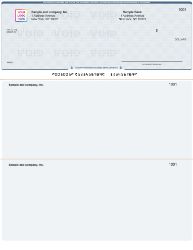
Quickbooks® Check on Top


50 to 70 Percent Below Bank Pricing

Direct in-house manufacturing eliminates the bank's markup. Free black-and-white logo printing on every order regardless of quantity. Volume discounts reduce per-check cost as quantity increases. Browse business checks and manual checks for current pricing. For new businesses, the business check starter packs bundle checks, deposit slips, and envelopes in one order.


Aug 06, 2026

How to Write a Check: Step-by-Step Complete Guide

Before You Start Writing a Check

Before filling out a check, verify two things. First, confirm your available account balance covers the check amount. Writing a check for more than your available balance triggers an NSF (non-sufficient funds) fee averaging $16.82 per Bankrate's 2025/2026 study, plus potential fees to the payee. Second, gather the payee's full legal name. A check written to a misspelled name or an informal nickname may be refused by the recipient's bank. For businesses, use the official business name exactly as registered.

Use a blue or black permanent ink pen. Never use pencil (erasable), red ink (can interfere with optical scanning), or felt-tip markers (bleed through paper). Permanent ink dries quickly and is harder to alter than water-soluble inks.

Do not sign the check until you are ready to deposit, hand it to the payee, or mail it. A signed check with blank fields left unfilled is a fraud risk. For a full explanation of check security practices, see our check fraud prevention guide.


Step 1: Write the Date

Where: Upper right corner of the check, in the field labeled "Date"

Format: MM/DD/YYYY (e.g., 06/15/2025)

What to write: Today's date, or a future date if post-dating

Write the date in the small field in the upper right corner of the check. The date tells the bank and the payee when the check was written and establishes when the check's 180-day validity period begins.

The standard format is month/day/year: 06/15/2025 for June 15, 2025. You can also write it out as "June 15, 2025" if you prefer the spelled-out month.

The fill out check date step matters for two reasons. First, a check without a date can still be cashed at a bank's discretion, but missing dates can cause confusion at some institutions. Second, the date establishes the starting point for the stale check rule: a check becomes stale, and banks are not obligated to honor it, 180 days (six months) after the date written. If your landlord deposits your rent check seven months after you wrote it, the bank may legitimately refuse it.

Post-dating (writing a future date) is covered in detail below. The short version: writing a future date does not legally prevent most banks from processing the check before that date arrives.


Step 2: Write the Payee Name

Where: The line labeled "Pay to the order of" in the upper center of the check

What to write: The full legal name of the person or business receiving payment

On the payee line check field (labeled "Pay to the order of"), write the full name of the person, organization, or business you are paying. For individuals, use their full legal name as they would use it at a bank. For businesses, use the official registered business name. For government agencies, use the full official agency name.

Spelling matters. A check made out to "Steven Smith" when the recipient's account is registered to "Stephen Smith" may be flagged at deposit. If you are unsure of the exact spelling of a business name, check their invoice or website before writing.

How to write payee name on check for multiple parties: if you are writing the check to two people, the conjunction determines who must endorse. "John Smith AND Jane Doe" requires both signatures. "John Smith OR Jane Doe" allows either to cash or deposit the check alone. This is governed by UCC 3-110(d), covered in detail in our multiple signature checks guide.

Fill the space from your last written character to the end of the payee line with a horizontal line or dashes. This prevents someone from adding a name after yours (for example, converting "John Smith" into "John Smith OR Jane Doe" to allow a different person to cash the check).


Step 3: Write the Numeric Amount

Where: The small rectangular box to the right of the payee line, after the pre-printed dollar sign

Format: Dollars and cents with two decimal places (e.g., $130.45 or $200.00)

Write the check amount in numbers in the small box on the right side of the check. The check amount in numbers should include the full dollar and cents amount with a decimal point separating them. Write the numbers starting as far left in the box as possible, right up against the pre-printed dollar sign. This prevents someone from inserting an additional digit in front of your amount.

Always include two decimal places, even for whole dollar amounts. Write $200.00, not $200. Writing the decimal and zeros makes the amount unambiguous and closes the gap that would allow someone to add ".50" after a trailing round number. If the check is for $1,300 exactly, write $1,300.00.

The numeric amount in the box is not the legally controlling amount if it conflicts with the written amount on the line below. However, banks use it to process the check through automated systems. The two amounts should always match.


Step 4: Write the Amount in Words

Where: The long line below the payee line, ending in the word "Dollars"

Format: Dollars spelled out, cents as a fraction over 100

Example: "One hundred thirty and 45/100 _____________________ DOLLARS"

Write the check amount in words on the long line directly below the payee line. This is the legally controlling amount field under UCC 3-114. If the written amount and the numeric box amount differ, the bank pays the written amount.

Start writing at the far left of the line, as close to the beginning as possible. Write the dollar amount fully spelled out in words, then write "and" followed by the cents as a fraction over 100. After writing the complete amount, draw a horizontal line from the end of your text all the way to the word "DOLLARS" printed at the right end of the line. This drawn line prevents anyone from adding additional text to inflate the amount.

For whole dollar amounts: write "and 00/100" or "no/100" or "xx/100" to explicitly indicate zero cents. Do not leave the cents portion blank. Example: "Two hundred and 00/100 _________________________ DOLLARS"

For amounts with cents: write the dollars in words, "and," then the cents as a number over 100. Example: "One hundred thirty and 45/100 _________________ DOLLARS"


Step 5: Add a Memo

Where: The small field at the lower left, labeled "Memo" or "For"

Required: No, but strongly recommended for records

The memo line check purpose is documentation and communication. It is optional but writing something here takes five seconds and can save significant trouble later.

Common memo entries include: "July rent" or "July 2025 rent" for a rent payment, "Invoice #4521" for a contractor payment, your utility account number for a bill payment, "2024 income tax" for an IRS payment, or "Annual donation" for a charitable contribution. The IRS specifically recommends writing your Social Security number on checks sent to them.

Important: the memo line is for reference only. Banks are not obligated to follow instructions written on the memo line. Wells Fargo confirms this explicitly: "Banks are not obligated to follow any restrictions or instructions, such as 'void after 30 days,' 'void over $50,' or 'payment in full.'" Writing "final payment" in the memo does not legally constitute an accord and satisfaction in most states without the payee's explicit agreement. If you have specific legal intent behind a payment (such as settling a disputed debt), consult an attorney rather than relying on memo line notation.


Step 6: Sign the Check

Where: The signature line at the lower right of the check

Required: Yes , an unsigned check is invalid

When: As late as possible before deposit or delivery

The signature line check field is in the lower right corner. Sign your name there. Use the same signature you used when you opened your checking account. An unsigned check cannot be cashed or deposited; it is not a valid payment instrument without your authorization signature.

Sign last, as a deliberate final step. SoFi's guide warns: "Don't sign your name on the bottom of the check until it is completely filled out. If a check has your signature, but no payee name or dollar amount, you are leaving yourself wide open for any thief with a pen to fill in the blanks." A fully-signed blank check is essentially a blank check in the worst sense.

Sign only after every other field is complete and you are ready to hand the check to the payee, deposit it, or mail it. For checks being mailed, use a restrictive endorsement on the back and a sealed security envelope. For more on endorsement types and when to use them, see our endorsements and stamps guide.


How to Write Cents on a Check

To write cents on check (how to write cents on check): use the cents as fraction check method, placing the cent amount as a numerator over 100 on the written amount line.

How to write cents on a check is one of the most commonly asked questions about check writing. The answer for the written amount line: express cents as a fraction with the cents amount over 100.

  • $25.50: "Twenty-five and 50/100"
  • $130.45: "One hundred thirty and 45/100"
  • $75.09: "Seventy-five and 09/100"
  • $500.00: "Five hundred and 00/100"
  • $1,200.75: "One thousand two hundred and 75/100"

For the cents fraction, always write the actual cents value as a two-digit number over 100, even if the cents value is less than 10 (write 09/100, not 9/100). For whole dollar amounts, write 00/100, no/100, or xx/100 , all three are widely accepted ways to denote zero cents.

In the numeric amount box, write the cents after a decimal point: $130.45, $500.00, $75.09. Use exactly two decimal places. Banks use the numeric box for automated processing but the written line to verify the amount and resolve any discrepancy.


Amount in Words: Examples for Common Check Amounts

Here are the correct written-amount-line formats for frequently written check values. These answer the common questions about how to write a large amount check in words:

How to write $100 on a check:
How to write 100 on a check: "One hundred and 00/100 _________________________ DOLLARS"

How to write $500 on a check:
How to write 500 on a check: "Five hundred and 00/100 ________________________ DOLLARS"

How to write $1,000 on a check:
How to write 1000 on a check: "One thousand and 00/100 _______________________ DOLLARS"

How to write $1,500 on a check:
"One thousand five hundred and 00/100 ___________ DOLLARS"

How to write $2,500 on a check:
"Two thousand five hundred and 00/100 ____________ DOLLARS"

How to write $1,350.75 on a check:
"One thousand three hundred fifty and 75/100 _____ DOLLARS"

How to write $10,000 on a check:
"Ten thousand and 00/100 ________________________ DOLLARS"

Note that for amounts in the thousands, you do not need to write "dollars" within the words , save that for the pre-printed "DOLLARS" at the end of the line. Write the number words only, then the "and XX/100" cents fraction, then the line, then the printed "DOLLARS."


What Happens If the Two Amounts Are Different

The UCC 3-114 written amount rule: the check written amount controls UCC rule (UCC Section 3-114) governs any discrepancy between the numeric amount in the box and the written amount on the line below. Banks pay the written amount.

If you write $150 in the box but "One hundred and 00/100" in words, the bank pays $100. If you write $1,000 in the box but "One thousand five hundred and 00/100" in words, the bank pays $1,500. Regions Bank confirms: "If the numeric and written amounts are different, banks generally process the written amount."

This rule exists because written words are considered the more deliberate and less error-prone expression of intent, and because they are harder to alter without detection. It is the same reason legal documents express numbers in both numerals and words for important figures.

The practical implication: always complete the written amount line carefully and verify it matches the numeric box before signing. A simple transposition error in the numeric box ($415 instead of $145) is corrected by the written line if the written line is accurate. A transposition error in the written line goes to the payee and cannot be easily corrected after the check clears. If you discover a discrepancy after the check clears, the bank honored the written amount per UCC 3-114, and your recourse is with the payee, not the bank.


How to Void a Check

Void check write VOID instruction: to void a check, write the word VOID in large, clear letters across the front of the check using a blue or black permanent ink pen. The letters should be large enough to clearly indicate the check is void but should not completely cover the routing number and account number in the MICR line at the bottom , these numbers are sometimes needed for direct deposit setup or automated payment enrollment.

Huntington Bank offers an alternative approach: write VOID on each individual field (date line, payee line, amount box, written amount line, and signature line) if you want to keep the MICR line fully visible. Both methods are valid.

After voiding: record the voided check number in your check register with the notation "VOID" so you can account for the missing check number during bank reconciliation. Then shred the voided check. Do not throw an unshredded voided check in the recycling or trash , it carries your account number and routing number and should be destroyed.

Correction fluid on check is prohibited: never use white-out on a check. Correction fluid on a check invalidates the check and may be treated as evidence of tampering. Banks will not process a check where correction fluid has been applied. If you make an error, void the check and write a new one.

Voided checks serve a second purpose beyond correcting errors: they are commonly requested for setting up direct deposit payroll, ACH automatic payments, and other electronic payment arrangements that need your routing and account number. For more on how to set up these payments using a voided check, see our ABA routing numbers guide.


Post-Dating a Check

A post-dated check is a check written with a future date, signaling that you intend the check to not be deposited or cashed until that date arrives. Post-dating is a common and legal practice, but it does not legally bind banks to wait.

Both Wells Fargo and Fidelity confirm: most banks are not required to delay processing a post-dated check. Wells Fargo states: "Banks may still process a check even if it includes such notations, is past the date you wrote, or has no date at all." Fidelity notes: "Just because a check has been postdated doesn't mean the person receiving it or the bank cashing it must honor that date."

If you need a check to not clear before a specific date, the reliable method is to place a stop payment on the check with your bank, timed to expire on or after the intended processing date. A stop payment fee typically runs $20-35, but it provides actual legal protection that post-dating alone does not. Tell the payee about the stop payment so they know not to deposit before the agreed date, then contact your bank to release the stop payment when you are ready for the check to clear.


Checks Made Out to Cash

Check payable to cash: writing "Cash" in the payee field creates a bearer instrument , a check that any person physically holding it can attempt to cash or deposit. Check to cash risk: if such a check is lost or stolen before you hand it to the intended recipient, whoever finds it can present it for payment.

Huntington Bank's guide explicitly flags this: "Be aware, though, that this can be risky if the check ever gets lost or stolen. Anybody can cash or deposit a check made out to 'cash.'"

Most financial guides advise against writing checks to cash except when completely necessary. The situations where it makes sense are narrow: you need to cash a check yourself at your own bank and do not want your name on it for some reason, or you are giving a gift and truly do not know who will receive the check. For any payment to a known recipient, always write their name in the payee field.


Common Check Writing Errors and How to Avoid Them

Check writing mistakes to avoid:


Error 1: Leaving Blank Space After the Written Amount

Blank space after check amount is a fraud risk: if you write "One hundred and 00/100" and leave a large empty space before "DOLLARS," someone could add "fifty" to make it read "One hundred fifty and 00/100." Always draw a line from the end of your written amount to the word "DOLLARS." Regions Bank identifies this as one of the most common check writing errors.


Error 2: Not Starting the Numeric Amount Far Left

If you write "$150.00" with a large gap between the dollar sign and the "1," someone could insert a "9" to make it "$9150.00." Write the first digit as close to the dollar sign as possible in the amount box.


Error 3: Forgetting to Sign

SoFi confirms: "One of the biggest mistakes check writers make is forgetting to sign the check. Neglecting to do so makes the check invalid and uncashable." The check is not a valid payment instrument without the payer's signature. Banks will return unsigned checks.


Error 4: Using Correction Fluid

Correction fluid (white-out) on a check invalidates it and may trigger a tampering review. If you make an error, void the check and write a new one. Never use correction fluid, white-out tape, or erasers on any part of a check.


Error 5: Mismatching Numeric and Written Amounts

Always verify that the numeric box amount and the written line amount match before signing. A mismatch is corrected by the written amount under UCC 3-114, which may mean the payee receives more or less than you intended.


Error 6: Writing Checks to Vague Payees

Writing "Electric Company" instead of "Pacific Gas and Electric Company" or "landlord" instead of your landlord's legal name may cause the check to be refused at deposit. Use the exact legal name of the payee as it appears on the invoice or account statement.


Error 7: Mailing Unsigned Checks

Double-check that the check is signed before sealing the envelope. An unsigned mailed check requires you to send a replacement, losing time and creating a gap in your payment record.


Error 8: Writing the Wrong Year

In January, many people habitually write the prior year. A check dated January 15, 2024 written in January 2025 may still clear, but creates a dating record issue in your bank statement and check register.


Pen, Ink, and Checkbook Storage

Check writing pen ink guidelines: use blue or black permanent ink. Blue ink is traditional and clearly distinguishable from pre-printed black text on the check. Black ink also works. Avoid:

  • Pencil (erasable, not permanent, invalidates the check's integrity)
  • Red ink (can interfere with optical scanning equipment)
  • Green or other colored inks (not standard, may cause scanning issues)
  • Felt-tip markers or gel pens that bleed through paper

Store your checkbook in a secure location, not in an easily accessible desk drawer or left in a car. Your checkbook contains your routing number and account number on every check, as well as your personal check register. Unauthorized access to your checkbook gives a fraudster everything needed to create counterfeit checks or initiate unauthorized ACH withdrawals from your account.

For business check storage with organized access, Checkomatic's 7-ring check binders keep manual business checks organized and protected while remaining accessible at a workstation.


The 180-Day Stale Check Rule

Stale check 180 days: most US banks treat a check as stale after 180 days (six months) from the date written on the check. Banks are not legally obligated to honor stale checks, though they may choose to do so at their discretion.

From the payer's perspective: a check you wrote in January that the payee does not deposit until August may be refused by your bank. The payee then has an unpaid obligation and must contact you for a new check. Keep this in mind for any payment arrangement where the payee might not deposit immediately , large contractor final payments, year-end charitable donations, or rent checks given in advance.

From the payee's perspective: deposit checks promptly. A check sitting in a drawer for more than six months becomes a stale item that the payer's bank may refuse. If you receive a check and cannot deposit immediately, at least verify within the first few months that the check is still current and not approaching the 180-day window.

If you have issued a check that has not been cashed for six months and you want to clear the outstanding item from your books, contact the payee first and confirm the payment. If the payee has lost the check or does not respond, place a stop payment with your bank and reissue the payment through a new check or alternative method.

Checks that are stale are also covered in the check validity section of our check validity and fraud prevention guide.


When Writing a Check Is Still the Right Choice

Understanding how to write a check also means knowing when a check is the best tool for the payment. With electronic alternatives widely available, checks are not always the right method. But in specific situations, they remain the most practical or legally sound option.

Rent payments: Many landlords prefer checks for the paper trail they provide, and some do not offer digital payment options without a processing fee surcharge. A monthly rent check is one of the most common ongoing uses for personal checks.

Contractor and service provider payments: Contractors who prefer not to pay card processing fees on their full invoice amount often request checks. The canceled check image provides documented proof of payment with the contractor's endorsement signature, which is valuable for home improvement records.

Charitable donations: The check delivers the full donated amount to the charity with no interchange fee deducted, unlike card donations where the charity nets 97-98.5% after processing. The canceled check serves as a tax deduction record with the charity's bank deposit confirmation on the back.

Large personal transactions: For payments over $1,000 to individuals (paying for a used car, splitting a large shared expense, settling a loan repayment between family members), a check provides documentation that a card tap or cash does not.

For the full analysis of when checks are the best payment method versus digital alternatives, see our advantages and disadvantages of personal checks guide.


Getting the Right Checks From Checkomatic

Checkomatic has manufactured ABA compliant check stock (ABA-compliant) personal and business checks in Monroe, NY since 1997. As an in-house check manufacturer (in-house check manufacturer), every check is produced at the Monroe NY facility with direct quality control over the check fields, MICR encoding, and security paper.

The check writing guide above applies to every format Checkomatic produces. The six steps are the same whether you are writing a personal check from a wallet-size checkbook or filling in a business manual payroll check by hand. The fields are in the same positions. The rules governing amounts, signatures, and voiding are universal.


Personal Checks for Every Day Use

Checkomatic's personal check range covers all standard wallet-size formats: personal checkbooks in blue, burgundy, and green (single or duplicate with carbon copies), personal top stub checks (stub above each check for payment notes), personal deskset checks, and secretary deskbook checks. A check register is included with every personal checkbook order so you can track every check written and maintain a running balance.


Business Checks for Software Printing

For businesses that print checks through QuickBooks, Sage, or other accounting software, Checkomatic's computer check formats fill in all variable fields (payee, date, amount, check number) automatically from the software, with only the signature applied by hand. Available formats: check on top (QuickBooks voucher), check in middle (Sage 50), and 3-on-a-page. See QuickBooks checks for QuickBooks-tested formats.


Manual Business Checks for Handwriting

For businesses that write checks by hand, Checkomatic's manual business checks include pre-printed stub fields for accounts payable, payroll, or multi-purpose payments. The check writing steps above apply identically to manual business checks.


Security Features on Every Order

Every Checkomatic check ships on ABA-compliant security paper with six fraud deterrent features including chemically reactive paper that resists check washing. CPSA certified (CPSA certified) status appears on every order. Free logo printing (free black and white logo printing) is included on business check orders at no extra charge. No pre-selected add-on programs at checkout. Standard turnaround is 3 to 5 business days from digital proof approval. Start at checkomatic.com.


Summary: How to Write a Check

Six steps to write a check: (1) write the current date in the upper right date field, (2) write the payee's full legal name on the "Pay to the order of" line and draw a line to fill remaining space, (3) write the dollar and cents amount in the numeric box starting far left with two decimal places, (4) write the amount in words on the line below with cents as a fraction over 100 and draw a line to "DOLLARS," (5) add an optional memo noting payment purpose, (6) sign on the lower right signature line as the final step.

The written amount controls if amounts differ (UCC 3-114). Use blue or black permanent ink. Never use correction fluid. Void errors by writing VOID in large letters and starting fresh. Post-dating does not legally prevent banks from processing the check early. Checks expire after 180 days. Sign last, as close to delivery or deposit as possible.


Frequently Asked Questions


How do you write a check step by step?

How to write a check step by step: (1) Fill out check date in the upper right field using MM/DD/YYYY format. (2) Write the payee's full legal name on the "Pay to the order of" line and draw a horizontal line to fill remaining space. (3) Write the check amount in numbers in the small box on the right, starting as far left as possible, always with two decimal places. (4) Write the amount in words on the line below the payee, with cents as a fraction over 100, and draw a line to "DOLLARS." (5) Add an optional memo in the lower left field. (6) Sign on the signature line at the lower right. Sign last to minimize fraud exposure from a signed blank check.


How do you write cents on a check?

How to write cents on a check: on the written amount line, express cents as a fraction with the cents number over 100. For $130.45 write "One hundred thirty and 45/100." For $500.00 (whole dollars) write "Five hundred and 00/100" or "Five hundred and no/100" or "Five hundred and xx/100." All three zero-cent formats are accepted. In the numeric box, write the cents after a decimal point: $130.45 or $500.00. Always write two decimal places in the numeric box. The check amount words examples with fraction format are the legally controlling amount under UCC 3-114.


What happens if the written amount and the numeric amount on a check are different?

Under UCC Section 3-114, the check written amount controls UCC rule applies: banks pay the written amount in words if it differs from the numeric box. If you write $150 in the box but "One hundred and 00/100" in words, the bank pays $100. Regions Bank confirms: "If the numeric and written amounts are different, banks generally process the written amount." This rule exists because written words are harder to alter and are the more deliberate expression of intent. Always verify both amounts match before signing.


How do you void a check?

Void check write VOID: write the word VOID in large letters across the front of the check using a permanent ink pen. Try not to obscure the MICR line at the bottom (routing number and account number), which may be needed for direct deposit or ACH setup. Alternatively, write VOID on each individual field: date, payee, amount box, written amount line, and signature line. Never use correction fluid on a check. Record the voided check number in your check register as VOID. Shred the voided check securely after recording it. An unsigned voided check with visible MICR line is commonly requested for direct deposit setup.


Can you post-date a check?

Post-dated check how to write: write a future date in the date field instead of today's date. However, banks are generally not required to wait until that date to process the check. Both Wells Fargo and Fidelity confirm this. If you need a check to not clear before a specific date, place a stop payment order with your bank timed to expire on or after the intended processing date. The stop payment provides legal protection that post-dating alone does not. Notify the payee of the arrangement and release the stop payment when ready for the check to clear.

Aug 05, 2026

Check Promotions and Savings: Complete Money Guide

Why Checks Cost What They Do

Check pricing is a function of three things: the paper and printing cost, the manufacturer's margin, and the distribution channel markup. Each adds to the final price you pay per check.

The paper cost is real. ABA-compliant security paper with six fraud deterrent features (chemically reactive coating, genuine watermark, microprinting, thermochromic ink, void pantograph, UV fluorescent fibers) costs more than standard copy paper. The MICR encoding, printing, and quality control for checks that must clear through bank reader-sorter equipment adds manufacturing cost above typical document printing. This base production cost is roughly the same whether you order from a bank, a direct manufacturer, or a retailer.

The manufacturer's margin and the distribution channel markup are where the variation occurs. A bank orders checks wholesale from Deluxe or Harland Clarke and resells them to account holders at retail. Bankrate's research found that standard bank account holders pay 40-66 cents per single check through their bank. The same quality of check ordered from a direct manufacturer like Checkomatic costs 15-25 cents per personal check. The difference is the distribution channel markup, not a difference in quality.

Understanding this structure is the foundation for every check savings strategy below. For more on how bank check markup works and why banks outsource printing to the same manufacturers as direct-order companies, see our bank checks ordering guide.


Strategy 1: Bank Account Free Check Tiers

The bank account free checks benefit is the first place to look. Checking account promotions checks: free check account tiers where specific checking account types include free checks as a perk. If your account qualifies, this is the lowest-cost option since free checks cost nothing.


Banks That Offer Free Checks With Qualifying Accounts

Checking account with free checks benefits at major US banks include:

  • Ally Bank: 20 free checks per request for all Ally checking account holders, no balance requirement. Ally is the only major bank that offers free checks without a premium account tier requirement.


  • Chase: Free standard checks for Premier Plus Checking and Sapphire Banking accounts. Both require monthly fees that can be waived by maintaining minimum balances or qualifying direct deposits.


  • Wells Fargo: Free checks for Prime Checking and Premier Checking. Monthly fees apply; fee waivers require minimum balance thresholds.


  • SoFi: Free check shipping to all SoFi Money account holders.


  • Discover Bank: Free standard checks with qualifying accounts.


  • Navy Federal Credit Union: Free checks for members with qualifying accounts.


The key calculation with free check accounts: look at the total cost of the account tier that provides the benefit. An account with a $25 monthly fee ($300 annually) that can be waived by maintaining a $25,000 minimum balance is not a free-check benefit for most people , the opportunity cost of the minimum balance exceeds the check savings. For accounts where the free check benefit requires no balance you would not otherwise maintain, it is a genuine saving.


US Bank Account Discounts

For banks that do not offer completely free checks, account discounts still reduce the cost. US Bank shows discounted check styles with a green tag in their ordering portal for eligible account holders. The specific discount depends on the account type and the check design selected. Checking your bank's ordering portal before placing a check order elsewhere takes less than five minutes and may reveal a discount that changes the math.


Strategy 2: Direct Manufacturer Pricing vs Bank Pricing

The largest and most reliable check savings strategy for most people is ordering from a direct manufacturer rather than through a bank. The bank check markup savings available at a direct manufacturer are consistent and do not require a specific account tier or a promotional code.

Bankrate's research established the benchmark: standard bank accounts charge 40-66 cents per single check and 43-75 cents per duplicate check (duplicate vs single check pricing gap is modest). Non-bank providers charge 5-24 cents per single check. Checkomatic's Monroe, NY in-house manufacturing delivers personal checks at approximately 15-25 cents per check depending on format and quantity, with the same ABA-compliant security paper.

On a box of 200 personal checks, the difference between ordering through a bank (at 40 cents each = $80) versus ordering from Checkomatic (at 20 cents each = $40) is $40 per order. For a family ordering once every three to five years, that difference is modest. For a small business ordering four boxes of business checks twice per year, the direct manufacturer check price difference is several hundred dollars annually.

The direct manufacturer channel also delivers faster. Checkomatic's standard turnaround is 3 to 5 business days from digital proof approval. Bank check delivery through Deluxe or Harland Clarke typically takes 7-14 business days. If you run out of checks and need them quickly, ordering direct saves both time and money. See the full comparison in our cheap checks online guide.


Strategy 3: Check Promo Codes Explained

Check promo code mechanics are consistent across most direct check manufacturers. Understanding how they work helps you find and apply the best available discount on each order.


Where to Find Check Promo Codes

Check promotion codes sites that aggregate check coupons include CouponCabin and RetailMeNot, both mentioned by Bankrate as reliable sources for check discounts. NerdWallet suggests also checking Groupon for check coupons. Bank check coupon sources and manufacturer websites both display current promotions directly on a dedicated coupon or promotions page. Email newsletters from check manufacturers frequently carry exclusive subscriber-only discount codes not published on the website. Manufacturers' social media accounts (Twitter/X, Facebook) may post limited-time promotional codes.

Deluxe's coupon page offers structured discounts: $30 off orders over $200, $50 off orders over $350, a new customer code for 40% off business checks and forms, and a free shipping code. Deluxe's codes are alphanumeric 5-6-character codes applied at checkout. Artistic Checks lists first-box pricing as low as $8.40 with a new-customer code. Extra Value Checks offers a buy-one, second-box-for-77-cents promotion on personal checks with a published code.


How Check Promo Codes Work

Check promo code how it works: at most check manufacturers, the promo code is entered in a designated field at checkout, either in the site header or the shopping cart. The discount applies to qualifying items in the order. Most manufacturers limit one promo code per order, meaning you cannot stack two codes. If a multi-box bundle discount is already active on your order, applying a promo code for a percentage off may give you less than one or the other alone , choose whichever produces the larger total discount.

Expiration dates matter. NerdWallet confirms: promo codes have expiration dates; the system will not apply an expired code. Checking the code's terms before building your order saves the disappointment of a discount that expired. Codes from aggregator sites are sometimes not updated when they expire, so always verify with the manufacturer.


First-Order Promotion Codes vs Reorder Codes

First order check discount codes are typically the largest promotions available. New customer offers can range from 30-50% off the first order. Deluxe advertises 40% off for new customers on business checks. Checks Unlimited's new customer pricing saves up to 50% compared to bank prices per their promotional materials. Reorder codes for existing customers are smaller, typically 10-20% off or a fixed dollar discount on orders above a minimum.

The implication for planning: if you know you will need checks regularly, placing a larger first order rather than starting with a small box gives you the maximum use of the first-order discount tier before you move to smaller reorder codes.


Strategy 4: Bulk Order Discounts

The bulk check order savings structure is consistent across most direct check manufacturers. Ordering more boxes in a single transaction reduces the per-check cost at defined quantity tiers.


How Bulk Pricing Works

Most check manufacturers price by the box and offer tiered discounts for two-box and four-box orders:

  • Single box: Standard pricing. Personal check boxes: $15-25 for 100-150 checks.


  • Two-box order: Typical 25-30% discount over single-box per-unit pricing.


  • Four-box order: Typical 35% discount over single-box pricing. Often includes bonus perks such as free shipping or a free fourth box in promotional periods.


Checks Unlimited's current structure offers up to 30% off 2-box orders and up to 35% off 4-box orders. A 4-box order of 80 checks per box yields 320 checks, which Checks Unlimited notes is enough for most individuals for 2-3 years.

CheckWorks' bulk pricing brings four packs (480 checks) to approximately 8 cents per check compared to 15-20 cents per check at single-box pricing, per DepositAccounts' research. Costco's check service via Harland Clarke prices 200 checks at $18.38 (9.2 cents per check) and 400 checks at $25.52 (6.4 cents per check) for Costco members , a 30% discount for doubling the quantity.


When Bulk Buying Makes Sense

The per-check cost math at different order volumes favors bulk buying when you use enough checks to justify the upfront quantity. For personal check users writing 15-20 checks per year, a box of 150 checks lasts 7-10 years. Buying 4 boxes to save 35% on per-check cost means holding 10-20 years of supply, which is not practical. For business users writing 20-50 checks per week, bulk buying makes obvious sense. The personal check bulk discount sweet spot for personal users is typically two boxes: enough savings to be meaningful, not so many checks that they expire before use (checks are generally valid for 6 months after their printed date, though the paper itself does not expire).

For business check bulk discount ordering, the volume math works differently. A business writing 50 AP checks per week uses 2,500 checks per year. A 4-box order of 500 checks per box = 2,000 checks, which lasts roughly 48 weeks. At that volume, the 4-box bulk discount represents real annual savings worth planning around.


Strategy 5: Economy Shipping Savings

Economy shipping checks savings is one of the simplest and most overlooked cost reductions on a check order. Most check manufacturers offer multiple shipping speeds: standard (economy), first class, and expedited. Bankrate notes: "Go with economy shipping. If the seller offers different shipping speeds, and you don't need expedited shipping, opting for the longest shipping time will likely save you significant money."

Economy shipping typically saves $5-15 per order compared to expedited shipping, depending on the manufacturer and destination. For personal check orders that are not urgent (you still have 10-20 checks in your current book), planning ahead and choosing economy shipping can easily save more per order than a moderate promo code discount would.

Some manufacturers offer check order free shipping on specific products or promotional periods. Extra Value Checks offers free standard shipping on personal checks. Costco members receive free standard delivery. Checkomatic's standard turnaround already ships within 3-5 business days from proof approval at standard rates, meaning you get fast delivery without paying for expedited processing.


Strategy 6: Skip Add-Ons at Checkout

Check order add-ons are optional extras offered at checkout that increase your order total without being necessary for most users. Check order add-ons skip advice from NerdWallet: "Skip the add-ons. You may be offered add-ons, such as fraud protection, expedited printing and trackable shipping, and these will increase your final bill. For the best value, decline all such extras."

Common add-on offers at check manufacturers include third-party check fraud protection subscriptions (EZShield and similar services), expedited printing fees, trackable shipping upgrades, and premium design upgrades. For fraud protection specifically: if your checks already ship on ABA-compliant security paper with CPSA certification, the paper-level security features provide strong fraud deterrence without a monthly subscription fee. For a full explanation of what ABA security features do at the paper level, see our safe and security checks guide.

Checkomatic does not include pre-selected add-ons at checkout. Every order starts at the check price without optional extras being auto-added to your cart.


The Hidden Cost of the Cheapest Check Paper

This is the check savings strategy that actually costs money in certain circumstances: choosing the lowest-priced check paper available without verifying that it meets ABA security standards.

ABA security check value: the difference in price between ABA-compliant security paper with six fraud deterrent features and basic check-compatible paper without those features can be 5-10 cents per check. On a box of 150 personal checks, that is $7.50-$15 in paper cost savings. On the surface, this looks like a valid saving.

The hidden cost: non-ABA check paper risk. The most critical security feature on ABA-compliant check paper is the chemically reactive coating, which produces permanent visible staining when check washing solvents contact the paper. This is the primary defense against mailed-check theft and check washing fraud. A check written for $500 and mailed to a landlord or contractor can be intercepted, washed to remove the ink, and rewritten for $5,000 on paper without this protection. The fraud may not be detected until the check clears and the victim notices the wrong amount was deducted from their account.

A single successful check wash on a $500 payment that costs the victim $5,000 eliminates the check paper savings from thousands of cheap-paper check orders. The math on security paper is not about the per-check price. It is about the tail risk that cheap check paper creates when any of your checks go through the mail.

The standard to verify: look for the CPSA padlock icon on any check order. The CPSA padlock cheap check verification confirms that the paper meets the Check Payment Systems Association's enhanced security feature guidelines, regardless of whether the check costs 8 cents or 25 cents per check. Both Checkomatic and the major check manufacturers (Deluxe, Harland Clarke) include CPSA padlock certification on their standard check stock.

The cheapest check paper that still meets ABA standards is the right target. The cheapest paper regardless of standard is a risk that outweighs the savings for any check that is mailed.


How Many Checks Come in a Box

How many checks in a box (checks per box quantity) varies by format and manufacturer:

  • Personal checks (standard): 100-150 checks per box in most formats. Duplicate (carbonless copy) boxes typically hold 100-125 checks.


  • Business computer checks: 250-500 checks per box. The number varies by manufacturer; most Checkomatic business formats come in 250-check boxes as standard, with larger quantities available.


  • Costco (Harland Clarke): Minimum 200 checks (two packs) per order, 400 checks for the full bundle.


  • Sam's Club: Up to 240-400 checks per order depending on format.


  • Bank starter pack: Typically 100-150 checks provided free with new account opening.


  • Ally Bank free checks: 20 checks per request.


The check starter pack free quantity: Bankrate confirms "many checking accounts come with a starting set of free checks, usually containing 100 to 150 checks, upon opening." The bank starter pack vs first reorder pricing gap is worth knowing: the free starter checks cover your immediate need, but the first reorder through your bank is typically at full bank pricing (40-66 cents per check), making the first reorder an ideal time to switch to a direct manufacturer.


How Many Checks Does the Average Person Use Per Year

Checks per year average: Federal Reserve data shows the average US consumer uses approximately 10-20 personal checks per year as of 2024. This figure includes checks written for recurring uses like rent (12 annually for monthly rent payers) plus occasional uses (charitable donations, contractor payments, healthcare).

For a rent payer writing 12 rent checks plus 8 other checks annually (20 total), a box of 150 checks lasts approximately 7.5 years. This annual check cost estimate has implications for savings strategy: the bulk discount on a 4-box order saves 35%, but holding 600 checks means a 30-year supply at that usage rate. The optimal order strategy for a low-volume personal check user is a single box at a time with a first-order discount code, not bulk buying.

Business users write checks at much higher volumes. A business writing 50 payroll and AP checks per week uses approximately 2,500 checks per year, consuming a 500-check box every 10 weeks. For this user, the bulk discount on a 4-box order makes significant sense, and annual check cost is a meaningful budget line item.


Per-Check Cost Math at Different Order Volumes

Per-check cost bulk order breakdown across ordering channels and quantities, using data from Bankrate, DepositAccounts, and manufacturer pricing:

Through a standard bank account: 40-66 cents per single check, 43-75 cents per duplicate. No bulk discount typically available.

Through a bank with free check benefit: 0 cents per check (Ally, Chase Premier Plus, Wells Fargo Prime, SoFi). Account fees may apply separately.

Direct manufacturer, single box (100-150 checks): 15-25 cents per personal check at Checkomatic-tier pricing. Comparable at most quality direct manufacturers.

Direct manufacturer, 2-box order: Approximately 12-18 cents per check after 25-30% bulk discount.

Direct manufacturer, 4-box order: Approximately 10-16 cents per check after 35% bulk discount.

Big-box retailer (Costco, 400 checks): Approximately 6-9 cents per check for standard designs, with free shipping for Costco members.

Walmart standard design (120 checks): Approximately 11 cents per check per Penny Hoarder's 2026 pricing data.

The per-check cost at volume is lowest at big-box retailers, but those channels offer limited format selection (personal checks only, limited business formats, no professional logo printing), no digital proof step, and typically longer delivery windows. For personal check users who want the basic blue safety design and care primarily about per-check price, Costco and Walmart are valid choices. For users who need business check formats, professional logo printing, specific accounting software compatibility, or faster delivery, direct manufacturer ordering from Checkomatic provides comparable or lower pricing with the full format range.


First-Order vs Reorder Check Pricing

The first order check discount gap is the largest single pricing discontinuity in the check market. New customer promotions from direct check manufacturers typically offer 30-50% off the first order. Checks Unlimited's new customer pricing is up to 50% below bank pricing. Deluxe offers 40% off for new business check customers. Extra Value Checks and Artistic Checks both have first-box promotional pricing significantly below reorder rates.

The reorder check discount for returning customers is smaller: typically 10-20% off or a fixed dollar amount on orders above a threshold. The net effect is that a customer who orders checks from a single manufacturer year after year pays progressively less competitive pricing than they would by shopping around for new-customer promotions periodically.

The practical implication: if you are due for a check reorder at a manufacturer where you have been ordering for years, check current new-customer pricing at one or two other CPSA-certified manufacturers before reordering. The first-order discount at a new source may be large enough to justify a one-time switch, after which you can return to your preferred manufacturer for subsequent orders. Since checks are made to ABA specifications regardless of manufacturer, the quality of the paper and MICR encoding does not change between CPSA-certified sources.


Business Check Savings Strategies

Business check savings have additional levers that personal check savings do not.


Format Selection Affects Cost

Not all business check formats cost the same per check. The 3-on-a-page format, which prints three checks per sheet with no voucher stubs, typically has a lower per-check cost than voucher formats (check on top, check in middle) because less paper is used per check and the layout is simpler. For businesses that send remittance data separately from the check (by email or separately printed remittance advice), 3-on-a-page is the cost-efficient format. Businesses that need the voucher stub for AP reconciliation pay slightly more per check for the additional paper and layout complexity.


Manual vs Computer Check Formats

Manual business checks, written by hand, typically have a similar per-check cost to computer formats. The choice between them is a workflow decision (do you use accounting software?) not primarily a cost decision. For a business writing fewer than five checks per week, manual format is often simpler and eliminates the alignment and software configuration overhead of computer check printing. See our personal vs business checks comparison for the full format selection guide.


Blank Check Stock for Multi-Account Operations

Businesses with multiple bank accounts can use blank check stock across all accounts from a single supply, rather than ordering separate boxes of pre-printed stock for each account. The single supply eliminates redundant stock ordering and reduces total cost when multiple account check needs are aggregated. Blank stock requires a MICR printer but allows one inventory to serve all accounts. See our check stock and paper supplies guide for the blank vs pre-printed cost comparison.


What Checkomatic's Direct Pricing Looks Like

Checkomatic is an in-house check manufacturer (in-house check manufacturer) that has produced personal and business checks in Monroe, NY since 1997. Every order is manufactured directly at the Monroe NY facility without bank intermediary markup. The pricing reflects direct manufacturing cost, not the 50-100% markup that banks add when reselling Deluxe or Harland Clarke checks.


Personal Checks

Checkomatic's personal check range at direct-manufacturer pricing covers all standard formats: personal checkbooks in blue, burgundy, and green (single or duplicate), personal top stub checks, personal deskset checks, and secretary deskbook checks. A check register is included with every personal checkbook order at no extra charge.


Business Checks

All six business check formats are available: check on top (voucher), check in middle, 3-on-a-page, the full manual business check range, and Z-fold pressure seal checks. All formats are compatible with QuickBooks, Sage, and other accounting software. For QuickBooks-specific formats, see QuickBooks checks.


Free Logo Printing

Free logo printing check value: free black and white logo printing is included on every Checkomatic business and personal check order at no extra charge. This is a value-add that most coupon and savings comparisons miss entirely. At other check manufacturers, logo printing is an add-on fee (typically $10-30 per order depending on the manufacturer). At Checkomatic, it is standard. For a business ordering checks regularly, this represents meaningful savings over manufacturers who charge for logo placement.


ABA Security on Every Order

Every Checkomatic check ships on ABA-compliant (ABA compliant) security paper with all six fraud deterrent features at base price. No security upgrade tier is needed. CPSA certified status is included on every order. The CPSA padlock appears on the check face confirming the paper meets Check Payment Systems Association security standards. This base security level is the same standard that bank-ordered checks through Deluxe carry, at direct-manufacturer pricing.

Start your order at checkomatic.com. Standard turnaround is 3 to 5 business days from digital proof approval. No pre-selected add-ons at checkout.


The Short Version on Check Promotions and Savings

Six strategies to reduce what you pay for checks: first, check if your bank account tier includes free checks (Ally for all members, Chase Premier Plus, Wells Fargo Prime, SoFi, Discover). Second, order from a direct manufacturer at 15-35 cents per check versus 40-66 cents at a standard bank account. Third, use check promo codes from the manufacturer's promotions page or aggregator sites like CouponCabin , new customer codes give the largest first order check discount. Fourth, order 2-4 boxes in one transaction to unlock 25-35% bulk check order savings. Fifth, choose economy shipping over expedited. Sixth, skip the add-on protection programs at checkout.

The check savings strategy that backfires: buying the cheapest possible check paper without ABA security features to save 5-10 cents per check, leaving every mailed check vulnerable to check washing fraud that can cost far more than the paper savings.


Frequently Asked Questions


What is the cheapest way to get checks?

The cheapest way to get checks depends on your account and order volume. If your bank account tier includes free checks (Ally for all members, Chase Premier Plus or Sapphire, Wells Fargo Prime or Premier, SoFi, Discover), use that benefit. If your account does not include free checks, ordering from a direct manufacturer like Checkomatic costs approximately 15-25 cents per personal check and 20-35 cents per business check, compared to the 40-66 cents per check bank check financial promotions at standard bank accounts per Bankrate's research. Ordering 2-4 boxes at once unlocks bulk check order savings of 25-35% per check. Using economy standard shipping rather than expedited saves another $5-15 per order.


How do check promo codes work?

Check promo code mechanics: promo codes are 5-6-character alphanumeric codes entered at checkout that apply a discount to qualifying check orders. They are available from the manufacturer's promotions page, coupon aggregator sites like CouponCabin and RetailMeNot, manufacturer email newsletters, and social media accounts. Most manufacturers allow only one promo code per order. First order check discount codes for new customers offer the largest savings (30-50% off). Reorder codes for existing customers are smaller. Codes expire; verify the expiration date before building your order. Check promotion codes sites like Groupon and Savings.com aggregate current check manufacturer offers in one place.


How many checks come in a box?

How many checks per box varies by format. Personal check boxes: 100-150 checks for single style, 100-125 for duplicate. Business check boxes: 250-500 per box for computer formats. Bank starter pack: typically 100-150 checks free with new account opening. Ally Bank free checks: 20 per request. Costco via Harland Clarke: minimum 200 checks per order. Sam's Club: 240-400 per order. The more checks per box, the lower the per-check price at most direct manufacturers, since fixed production setup costs are spread over more units. Bulk order savings at 2-box and 4-box tiers reflect this volume pricing structure.


Are cheap checks without ABA security features worth the savings?

No. Cheap check hidden costs make non-ABA check paper a risky choice for any mailed payment. The non-ABA check paper risk: paper without the chemically reactive coating can be washed with chemical solvents to remove ink, allowing the payee and amount to be altered and the check rewritten for a higher amount. A $500 rent check rewritten as $5,000 eliminates the paper savings from thousands of cheap-paper check orders. The CPSA padlock cheap check standard is the verification to look for: it confirms the check paper meets Check Payment Systems Association security feature requirements regardless of price. Always verify CPSA padlock certification before ordering from any source.


How many checks does the average person use per year?

The average person in the US uses approximately 10-20 personal checks per year based on Federal Reserve payment data. A rent payer writing monthly checks uses 12 per year plus occasional others, totaling roughly 15-25 per year. At 20 checks per year, a box of 150 checks lasts approximately 7-8 years. This annual check cost estimate matters for bulk buying decisions: a four-box bulk order at 35% discount makes sense for a business writing 50 checks per week but may not be practical for an individual writing 20 checks per year who would hold a 30-year supply. For low-volume personal use, single-box ordering with a first-order check discount code is more economical than bulk buying.

Aug 05, 2026

Fast Business Checks: How to Get Business Checks Delivered Quickly

Running out of business checks at the wrong time is not just inconvenient. It can mean a missed payroll run, a delayed vendor payment that triggers a late fee, or a contractor sitting idle while you wait for check stock. Paper checks remain the primary payment method for a significant portion of US business-to-business payments, and payroll for businesses with employees who do not use direct deposit still runs on paper.

The problem is that most business owners do not think about fast business checks until they are almost out. By then, standard production and shipping timelines may not work. Knowing the actual timelines, the rush options, and the simple steps that prevent delays is what keeps fast business checks available when you need them most.


Business Check Production and Shipping Timelines

Understanding what "fast" actually means for business check orders starts with separating production time from shipping time. These are two different stages, and both affect when your checks arrive.


Rush Production and Overnight Delivery Options

When standard production is too slow, two fast business check options accelerate your order: rush production and overnight delivery on your first 50 checks.


Rush Production

Rush production moves your order to the front of the production queue. Instead of entering the standard 3 to 5 business day production cycle, rush orders are printed within 1 to 2 business days. Rush production is available on all business check formats including computer checks, manual checks, QuickBooks-compatible checks, and personal checks. Select rush at checkout when placing your order. Rush production fees apply and vary by order size.


Overnight Delivery on First 50 Checks

For truly urgent situations, Checkomatic offers same-day production and overnight delivery on your first 50 checks. Orders placed before 3 PM EST on a business day are produced the same day and shipped overnight, arriving the next business day. This option is the fastest available for fast business checks and is ideal for businesses that need check stock immediately to cover a payroll run or urgent vendor payment while a full order is being produced.


Which Formats Get You Fast Business Checks Fastest

Not all business check formats take the same amount of time to produce. Format complexity, customization level, and stock availability all affect how quickly your fast business checks move through production.


Fastest Formats for Urgent Orders

  • Standard voucher checks (check on top): The most common format and the one most likely to be in-stock for fast production. Compatible with QuickBooks, Quicken, and most accounting software. This is the format to choose when speed matters.
  • 3-on-a-page computer checks: Also widely stocked and fast to produce. Three checks per sheet with no stubs. Ideal for high-volume accounts payable where speed matters more than physical stub records.
  • Manual checks: No software required, no alignment setup, ready to write immediately on arrival. Fastest usable format when your printer is down or your accounting software setup is incomplete.


Formats That May Add Time

  • Custom color logos: Full-color logo printing requires an additional setup step compared to standard black-and-white logo printing. If speed is the priority, choose black-and-white logo (free on every order) and skip the full-color upgrade for the fast order.
  • Non-standard formats: Check-in-middle or check-on-bottom formats are less commonly stocked than voucher checks. Confirm availability before ordering if you need a non-standard format with rush timing.

Browse all available fast business check formats at Business Checks and Computer Checks.

Picture for category Manual Business Checks


Why Reorders Ship Faster Than First-Time Orders

If you have ordered from Checkomatic before, your reorder will move through production faster than your original order did. Here is why this matters for fast business checks.


Banking Verification Is Already Done

On a first-time business check order, Checkomatic verifies your ABA routing number and checking account number before printing. This verification step protects against errors that would produce unusable checks and adds 1 to 2 days to the production timeline. On a reorder, verification was completed when you placed your original order. The printer already confirmed your routing number matches an active bank account. That step is skipped, and production begins immediately after your order is confirmed.


Your Information Is Already on File

Your business name, address, logo file, check format, and security level are all saved from your original order. You only need to update your starting check number, which changes every order. Entering fewer fields means less opportunity for errors and faster order confirmation.


What Causes Delays When Ordering Fast Business Checks

Most fast business check order delays are preventable. Here are the most common causes and how to eliminate each one before you place your order.


Delay 1: Incorrect Routing or Account Number

A transposed digit in your ABA routing number or checking account number stops production immediately. The printer flags the error, contacts you for a correction, and your order waits until you respond. This is the single most common cause of delayed business check orders. Always verify both numbers from an actual existing check before entering them, not from memory or a banking app display.


Delay 2: Missing Banking Verification Documents

First-time orders require a voided check or bank verification letter to confirm your account details. If you do not have this ready when you order, production waits until the document is submitted and reviewed. Have your voided check scanned and ready to upload before you start a first-time order.


Delay 3: Requesting Proof Approval

Most check printers offer an optional digital proof, a PDF showing exactly how your checks will look before printing. Requesting a proof is useful on first-time orders with custom logos or unusual formatting. On standard reorders, it adds 1 to 2 days while you review and approve. Skip proof approval on simple reorders where nothing has changed except the starting check number.


Delay 4: Ordering Through a Bank or Retailer

Banks and retail office suppliers batch check orders on weekly production schedules through third-party printers. Your order waits for the next batch run. For fast business checks, order directly from a manufacturer with daily in-house production. See our complete guide on What Is the Best Place to Order Checks Online for a full comparison.

Gift box with business checks


Delay 5: Ordering a Non-Standard Format

If you order a check format that is not in-stock, the printer may need to source the paper stock before production begins. Standard voucher checks and 3-on-page formats are almost always in-stock. Non-standard sizes or specialty formats may add 1 to 2 days for stock sourcing.


What to Do If You Run Out of Business Checks Before Your Order Arrives

Running out of fast business checks between orders happens. Here is how to handle payments while you wait for your new stock to arrive.


Option 1: ACH Transfer or Wire Payment

For vendor payments and bill pay, ACH transfers process in 1 to 3 business days and wire transfers clear the same business day. Both work without check stock. Set up ACH from your bank's online portal with the vendor's routing and account number. This is the cleanest solution for amounts over $100 where a wire fee is justified.


Option 2: Order the Overnight 50-Check Option

If you need physical checks immediately, order Checkomatic's overnight 50-check option before 3 PM EST. The 50 checks arrive the next business day. Place a standard or rush order for your full quantity at the same time. The overnight 50 covers your immediate needs while the full order is in production.


Option 3: Bank Counter Checks

Most bank branches issue counter checks on the spot. These are plain checks from the bank's supply with your account information filled in by the teller. Counter checks work for emergency payments but have limited security features and no logo. They are not suitable for regular business use but will work for 1 to 3 urgent payments while your order is in transit.

Blank Laser Checks on Top


Option 4: Digital Payment Platforms

For contractors, freelancers, or vendors who accept digital payment, platforms that support business-to-business transfers can cover payments that would normally use a check. Many accept ACH details that draw from the same business checking account your checks use.


Cheap Business Checks With Fast Shipping

The assumption that fast business checks cost significantly more than standard-speed checks is mostly wrong. Rush production fees add a modest cost to the order. The base price of the checks themselves does not increase for fast production.


Why Direct Manufacturers Offer Both Lower Price and Faster Speed

Banks charge 50 to 70 percent more per check than direct manufacturers and take twice as long to deliver. The higher price and slower speed are both caused by the same thing: banks route orders through third-party printers and add retail markup. A direct manufacturer like Checkomatic produces checks in-house, ships from a single facility in Monroe, NY, and sells at manufacturing cost. You pay less per check and receive them faster.


Free Logo Printing Does Not Slow Your Order

Black-and-white logo printing is free on every Checkomatic business check order and does not add production time on standard and rush orders. If you want a logo on your checks, order it. It will not affect how fast your checks ship. For QuickBooks-compatible checks with fast delivery, see QuickBooks Checks. For personal checks with fast shipping, see Personal Checks. For a complete starter kit with checks, deposit slips, and envelopes in one fast order, see Starter Packs.


What Customers Say About Checkomatic Business Checks

All reviews below are published on checkomatic.com and reproduced verbatim. Source: checkomatic.com/quickbooks-starter-pack-product, 4.5 stars from 166 verified reviews.

"First time ordering and I am super impressed with the quality of the checks. No issues with delivery. I will be ordering again!"

TClinton | ★★★★★ 5/5 | April 9, 2025 | Source: checkomatic.com/quickbooks-starter-pack-product

"Been with them for 15 years. Always reliable, always good quality, good service. What more can you ask for?"

ATV Inc. | ★★★★★ 5/5 | April 5, 2024 | Source: checkomatic.com/quickbooks-starter-pack-product

"We use CheckoMatic for all of our check needs! They have great prices and we receive our products in a timely manner!"

CG's Tax Service | ★★★★★ 5/5 | September 18, 2024 | Source: checkomatic.com/quickbooks-starter-pack-product

"I got 500 checks for less than half of what the bank wanted for 200!"

VVA Voucher Checks (Vietnam Veterans of America) | ★★★★★ 5/5 | July 6, 2024 | Source: checkomatic.com/quickbooks-starter-pack-product

"ASJ Wilson Construction has been a client of checkomatic for some years now and they've never disappointed this company. Thank you checkomatic for all that you do."

ASJ Wilson Construction | ★★★★★ 5/5 | June 6, 2024 | Source: checkomatic.com/quickbooks-starter-pack-product

"Affordable and efficient. My go-to business check printer."

Doe | ★★★★★ 5/5 | January 24, 2025 | Source: checkomatic.com/quickbooks-starter-pack-product


Why Choose Checkomatic for Fast Business Checks

In-House Production Ships in 3 to 5 Business Days Standard

All fast business checks are produced at Checkomatic's own facility in Monroe, NY. No third-party printers. No batch scheduling. Daily production means your order enters the queue the day it is confirmed and ships within 3 to 5 business days on standard production. Rush production ships in 1 to 2 business days.


Overnight Option for Truly Urgent Needs

Orders placed before 3 PM EST get same-day production on the first 50 checks with overnight delivery arriving the next business day. This is the fastest business check option available and covers urgent payroll or vendor payment situations. See full details at Shipping and Handling.


All Formats Available for Fast Delivery

Voucher checks, 3-on-page computer checks, manual checks, QuickBooks-compatible checks, and personal checks are all available with rush production. No format is excluded from fast shipping options. Browse the full range at Manual Checks and Business Checks.


50 to 70 Percent Below Bank Pricing

Fast business checks from Checkomatic cost 50 to 70 percent less than bank-issued checks and arrive 2 to 4 times faster. Free black-and-white logo printing is included on every order. No minimum quantity required for the rush option.


ABA-Compliant MICR Pre-Verified

Every routing number is verified against the Federal Reserve E-Payments Routing Directory before production begins. This eliminates the most common cause of check rejection at the bank and prevents the reprinting delays that occur when MICR errors are caught after delivery.


Aug 04, 2026

Business Checks and Payroll Services: Complete Guide

Payroll Check Definition and How It Differs From AP Checks

Payroll check definition: a payroll check is a business check issued by an employer to an employee as compensation for work performed. It is drawn from the employer's payroll bank account and includes an attached pay stub (also called an earnings statement or check stub) that itemizes gross wages, all deductions, and net pay for the pay period.

The payroll check vs regular business check comparison shows three key differences. First, the stub: a payroll check always carries a pay stub with specific legally required fields for employee compensation disclosure. A regular AP check for vendor payments may include a voucher stub for remittance detail, but the fields and legal requirements are entirely different. Second, the account: payroll checks are drawn from a dedicated payroll bank account that is separate from the operating or AP account. This separation is a standard internal control for financial record-keeping and fraud prevention. Third, the law: payroll checks are subject to state pay stub laws and federal wage payment rules (FLSA and EFTA) that do not apply to vendor AP payments.

ADP's payroll check guide confirms: "Included with a payroll check is a pay statement or pay stub, which shows the employee's gross wages, deductions, net pay and other pertinent information. Specific requirements for pay statements vary by state."

For the differences between personal checks and business checks more broadly, including size and format differences, see our personal vs business checks comparison guide. For the complete range of business check formats, see our types of checks guide.


Payroll Check Stub Fields Explained

The payroll check stub fields are the specific data elements printed on the pay stub attached to each payroll check. These fields vary somewhat by employer and state, but the core set covers everything an employee needs to understand their compensation for the pay period.


Identification Fields

Every pay stub must identify both parties. Employee identification fields include the employee's full name and often an employee ID number. Employer identification fields include the employer's business name and address. Some states require additional identification fields: New York requires the employer's phone number; California requires specific business identification numbers.


Pay Period Fields

The pay period start date and end date define the work period being compensated. These fields are required by most Access states that mandate pay stubs. The pay date (when the check is issued) appears separately from the pay period dates.


Hours and Rate Fields

For non-exempt (hourly) employees, the pay stub must show regular hours worked, the regular pay rate per hour, overtime hours worked (any hours over 40 in a workweek under federal FLSA), and the overtime rate (at least 1.5 times the regular rate under FLSA). For salaried exempt employees, the hours and rate fields may be simplified or may show salary rather than an hourly rate.


Pay Stub Gross Pay Net Pay Fields

Gross wages (total compensation before any deductions) is one of the most important pay stub fields. It includes regular wages, overtime wages, bonuses, commissions, and any other taxable compensation for the period. Net pay (the take-home amount after all deductions) is the amount that appears on the payroll check itself. The relationship between gross pay and net pay is explained by the itemized deductions between them.


Pay Stub Deductions Fields

Itemized deductions on the pay stub show exactly what was withheld and why. Standard deduction fields include:

  • Federal income tax withheld (based on W-4 withholding elections)


  • Social Security tax (FICA): 6.2% of gross up to the annual wage base


  • Medicare tax (FICA): 1.45% of all gross wages; additional 0.9% above $200,000


  • State income tax (amount varies by state; some states have no income tax)


  • Local income tax (if applicable in the employee's jurisdiction)


  • Health, dental, and vision insurance premiums (employee's share)


  • Retirement plan contributions (401(k), 403(b), SIMPLE IRA, etc.)


  • HSA or FSA contributions


  • Garnishments (child support, tax levies, student loan garnishments)


Some states also require year-to-date (YTD) totals for earnings and deductions, not just the current period amounts. Illinois, Nevada, Washington, Colorado, and Massachusetts are among the states requiring YTD totals on every pay stub.


Federal Pay Stub Law: What FLSA Requires

The federal pay stub law FLSA is often misunderstood. The Fair Labor Standards Act does not require employers to provide pay stubs to employees. This surprises many people. The federal requirement is for the employer to maintain the records internally , the FLSA requires that employers keep accurate payroll records for at least three years , but the FLSA does not mandate that those records be shared with employees in any format.

The IRS requires payroll tax records to be kept for four years, which supersedes the FLSA three-year minimum as a practical matter. Most businesses keep payroll records for at least four years to satisfy both requirements. Lift HCM's 2026 pay stub analysis notes: "Generating them is effectively a best practice even where state law doesn't require distribution" because most FLSA-required recordkeeping information lives on a pay stub anyway.

The consequence of this federal gap is that pay stub requirements are almost entirely a state-level compliance matter. A business operating in a state with no pay stub requirement is not legally obligated to give employees a pay stub under federal law. A business operating in California, New York, or Texas is subject to state-level requirements that are significantly more prescriptive than the federal baseline.


State Pay Stub Requirements by Category

Pay stub requirements by state: the states that require printed pay stubs framework has been analyzed by Lift HCM and Patriot Software into four broad categories. Understanding which category applies to your business's state determines your payroll check stub compliance obligations.


Access States (Approximately 36 States Plus D.C.)

Access states require employers to proactively provide pay stubs to employees each pay period, either electronically or on paper. The employer cannot simply make records available on request; they must actively distribute the pay stub each payroll cycle. Most states fall into this category. Alaska, Arizona, Colorado, Connecticut, Hawaii, Iowa, Maine, Minnesota, New Mexico, North Carolina, Texas, and Vermont are examples of Access states.

Illinois moved from a no-requirement state to an Access state on January 1, 2025, under Public Act 103-0953. Illinois employers as of 2025 must provide a pay stub for every pay period, retain copies for three years, and fulfill employee requests for copies within 21 calendar days.


Access Plus Printable States

These states require not only that employees receive pay stubs but that they can access and print them. Electronic-only delivery that employees cannot print does not satisfy the requirement. California, New York, Massachusetts, Nevada, Washington, and Colorado are in this category. California's pay stub requirements are the most detailed of any state: nine specific mandatory fields including piece-rate details and the last four digits of the employee's Social Security number.


Opt-Out States

Delaware, Minnesota, and Oregon allow electronic delivery of pay stubs as the default. However, employees have a clear right to request paper copies, and employers must switch those employees to paper delivery upon request. A business in an opt-out state can distribute electronic stubs to most employees but must maintain a paper process for any employee who opts out.


No Requirement States

A smaller group of states, including Arkansas, Florida, Louisiana, Mississippi, Nebraska, South Dakota, Tennessee, and Virginia, have no pay stub distribution requirement. Employers in these states are not legally required to provide pay stubs to employees. Even in these states, maintaining payroll records is still a federal obligation under FLSA and IRS rules.


Direct Deposit vs Paper Payroll Check

The direct deposit vs paper check payroll decision affects both the employer's operational workflow and the employee's access to wages. Neither method is universally superior; the right choice depends on the employee population, the business's size, and state law requirements.


Direct Deposit Advantages for Employers

Direct deposit eliminates the cost of check stock, MICR printing, envelope and postage, and physical distribution. For a business with 50 employees, switching from paper payroll checks to direct deposit eliminates a meaningful per-payroll supply and labor cost. Funds transfer reliably on the scheduled date without the risk of checks being lost, delayed in mail, or deposited late by the employee. Payroll software integration with direct deposit is generally seamless.


Paper Payroll Check Advantages

Paper payroll checks serve employees who do not have bank accounts and cannot receive direct deposit. The Federal Deposit Insurance Corporation (FDIC) reports that approximately 4.5 percent of US households were unbanked as of 2023. For employers with unbanked employees, paper payroll checks are the primary payment method. Paper checks also work without internet access, banking infrastructure, or employee technology, making them reliable in all environments. Some employees simply prefer the tangibility and control of a paper check.

ADP's payroll check guide notes: "Printing payroll checks may be economically feasible for the smallest businesses where all employees work in the same location and checks can be delivered in person. Additionally, some employers don't like the deadlines associated with direct deposit and feel that paychecks give them more leeway." The payroll float advantage of paper checks also applies here: the funds are not debited from the payroll account until each employee deposits their check, which can benefit cash flow for businesses with timing-sensitive finances.


Can Employers Require Direct Deposit?

Can employer require direct deposit? The mandatory direct deposit by state rules are governed by both federal law and state-specific requirements. Under federal law, the Electronic Fund Transfer Act (EFTA) allows mandatory direct deposit under one condition: either the employee is free to choose any financial institution for the deposit, or the employer designates a specific bank but also offers at least one other payment option such as a paper payroll check or pay card.

The FLSA wages free and clear requirement adds a second constraint: employers cannot charge employees a fee based on their payment method. An employer cannot mandate direct deposit and then charge employees to use it, because that fee would effectively reduce take-home wages in violation of FLSA.

Paycor's mandatory direct deposit analysis confirms: "No employer can require an employee to use direct deposit at a specific bank without offering an alternative." Most states go further. California, Texas, New York, and many others explicitly require that employers offer an alternative to direct deposit, typically a paper payroll check or a pay card. For businesses in these states, maintaining a paper payroll check process for employees who prefer it is not optional; it is a legal requirement regardless of how convenient direct deposit would be operationally.


How to Print Payroll Checks: Five Steps

Payroll check printing steps: how to print payroll checks follows a consistent process whether you use payroll software with a built-in check function or a dedicated check printing application alongside your payroll system.


Step 1: Run Payroll to Calculate Net Pay

Before any checks are printed, calculate gross pay for each employee (hours worked times rate, or salary), deduct all federal and state taxes and voluntary deductions, and determine each employee's net pay. Patriot Software's guide confirms: "Run payroll to calculate gross pay, taxes, deductions, and net pay before printing checks." If you use payroll software, the system generates these calculations automatically and produces the check amounts. If you calculate payroll manually, complete all calculations and verify totals before moving to printing.


Step 2: Configure Check Layout in Your Software

In your payroll or check printing software, select the check layout that matches your check stock format. The payroll check format voucher (check on top) is the most common for QuickBooks payroll check printing, where the check prints in the top third of the sheet and the pay stub(s) print in the remaining two thirds. Sage 50 uses check in middle format. Select the type of check stock (pre-printed or blank) and verify your printer settings.


Step 3: Load Check Stock and Print a Test

Load your payroll check stock into the printer. Before printing the full payroll run, print a test check on plain paper to verify alignment. Misalignment between the printed paycheck data and the pre-printed check stock fields is one of the most common payroll printing errors, and a test print on plain paper allows you to catch and correct it without wasting check stock. If you use blank check stock, also confirm that MICR toner is loaded in the printer before beginning production.


Step 4: Print the Full Payroll Run

Once alignment is confirmed, print the full batch of payroll checks. Verify that each printed check shows the correct employee name, pay period, check amount, and check number. Review the MICR line at the bottom of each check to confirm it printed clearly with no smearing or dropouts.


Step 5: Distribute Checks Securely

Distribute payroll checks in person when possible, particularly for the first check to a new employee. Verify the employee's identity at distribution. For employees who cannot receive checks in person, mail in a sealed business envelope using the check envelope format. Do not send unenclosed checks through inter-office mail or leave checks in unlocked areas. For a full explanation of check security and mail theft risk, see our check fraud prevention guide.


Payroll Check Stock: Preprinted vs Blank

The payroll check stock preprinted vs blank decision follows the same logic as for AP checks, but payroll operations have specific considerations that change the analysis slightly.

Preprinted payroll check stock has the employer's name, address, routing number, and account number already printed on each sheet. The payroll software prints the variable data: employee name, pay date, check amount, check number, and the pay stub fields. A standard laser or inkjet printer fills in all variable data. No MICR printer is required.

Blank payroll check stock has no pre-printed information. The MICR printer prints everything: the fixed employer information, the routing and account numbers in the MICR line, and all variable payroll data. One supply of blank stock serves the payroll account regardless of changes to the employer's address or banking relationship, since all printed information is generated fresh on each check.

For payroll specifically, Patriot Software's printing guide notes that blank check stock printing "also need to use MICR ink," meaning a MICR-capable printer is required in addition to the blank stock. For businesses already using a MICR printer for AP blank stock, adding payroll to the same printing setup is operationally simple. For businesses that do not currently have a MICR printer, preprinted payroll check stock is the more accessible option.

For a complete explanation of blank vs preprinted check stock including the ANSI X9.100-10 paper specifications, see our check stock and paper supplies guide.


MICR Toner Requirement for Payroll Check Printing

The MICR toner payroll check requirement applies to any check printed on blank check stock, including blank payroll check stock. ADP's payroll printing guide explains: "Of these items, MICR is probably the most important because banks use magnetic readers to process payroll checks. Without MICR, the check is not as secure and the bank may take longer to complete the transaction or charge employers an additional fee."

MICR toner contains iron oxide particles that allow the characters in the MICR line (routing number, account number, check number) to be read by magnetic sensors in bank reader-sorter machines. Standard laser toner does not contain iron oxide. A payroll check printed with standard toner on blank stock may pass through optical processing at some banks, but it does not meet the ABA-compliant MICR encoding standard and risks processing errors or additional fees at reader-sorters that rely on magnetic reading.

For businesses using preprinted payroll check stock, the MICR line is already encoded on the stock by the manufacturer using MICR-compliant printing. The payroll software only prints the variable data on top of the pre-encoded MICR line, so no MICR printer is required. This is the primary reason many smaller businesses choose preprinted stock over blank stock for payroll operations.


QuickBooks Payroll Check Printing Workflow

The QuickBooks payroll check printing workflow is the most common payroll check printing setup for small and medium businesses. QuickBooks Enhanced Payroll, QuickBooks Desktop Payroll, and QuickBooks Online Payroll all support payroll check printing with different configuration steps but the same core process.

In QuickBooks Desktop with Enhanced Payroll, after running the payroll, go to Employees, then Print Paychecks, select the checks to print, verify the check number sequence, and print. The check prints using the voucher (check on top) template by default, placing the check in the top third and two stubs showing employee and employer copies of the pay detail below. The check format must match the loaded check stock.

QuickBooks Online Payroll handles check printing through the same Payroll menu. After approving payroll, select Print Checks from the payroll summary and follow the on-screen instructions. QuickBooks Online uses the same check on top voucher format as QuickBooks Desktop for payroll checks.

For QuickBooks compatibility, order Checkomatic's QuickBooks checks in the check on top voucher format, which is QuickBooks' default payroll print template. For manual payroll operations not using software, order Checkomatic's manual payroll checks with pre-printed payroll stub fields.


Why Payroll Needs Its Own Bank Account

Maintaining a separate bank account specifically for payroll is a standard internal control recommendation from accountants, the AICPA, and payroll compliance advisors. There are four practical reasons this separation matters.

First, it simplifies payroll tax compliance. When payroll runs through a dedicated account, the total debits to that account match payroll exactly. Auditing payroll tax deposits against the account balance is clean and verifiable. Mixing payroll and operating payments in the same account obscures this relationship and creates reconciliation work.

Second, it limits the blast radius of payroll check fraud. If a fraudster gains access to payroll account credentials or check stock, they can only access the payroll account balance, not the full operating account. Funding the payroll account in the specific amount of each payroll run (rather than maintaining a large standing balance) limits the maximum fraud exposure per incident.

Third, positive pay is more effective when payroll checks are on a dedicated account. With positive pay, the employer submits a list of authorized checks (check number, amount, payee) to the bank before each payroll run. The bank flags any check that does not match the pre-authorized list. A dedicated payroll account makes it easy to submit the payroll register as the positive pay file. A mixed account requires filtering payroll checks from other payments before submission.

Fourth, state wage payment compliance audits are cleaner. If your state labor department audits your wage payments, having all employee payments flowing from one dedicated account provides a clear audit trail with no ambiguity about which transactions are payroll.


Payroll Check Fraud Schemes

Payroll check fraud is a significant threat to businesses of all sizes. Payroll fraud statistics from the ACFE 2024 report: payroll fraud affects 27 percent of businesses, averages $2,800 per month in losses, and typically goes undetected for 18 months. Over 18 months, that average loss exceeds $50,000 before the scheme is caught.


Ghost Employee Fraud

Ghost employee payroll fraud is the most common payroll check fraud scheme. The ACFE Fraud Examiners Manual defines a ghost employee as "someone on the payroll who does not work for the victim company." A fraudster with access to the payroll system adds a fake employee record, logs hours or salary for the nonexistent worker, and directs the payroll check to a bank account they control. The ghost can be a fictional person, a former employee never removed from payroll, or a friend or relative of the fraudster.

ClearlyAcquired's fraud guide notes that ghost employee schemes "can cost companies $383,000 per case on average" and "often go unnoticed for 18 to 30 months, causing financial losses, legal issues, and reputational damage." Remote work environments are particularly vulnerable because visual head counts and in-person check distributions that previously exposed ghost employees are no longer routine.


Payroll Check Tampering

Payroll check tampering involves intercepting a legitimate payroll check and altering the payee name, amount, or endorsement before deposit. This can be done by an internal employee who handles physical check distribution, or externally through mail theft. ABA-compliant payroll check security paper with chemically reactive coating makes physical tampering detectable because washing solvents cause visible staining. For more on how check security paper prevents tampering, see our safe and security checks guide.


Overstated Hours and Rate Manipulation

Timesheet fraud involves hourly employees or managers falsifying clock-in/clock-out records to inflate regular or overtime hours. Rate manipulation involves unauthorized changes to pay rates in the payroll system, either by the employee through a compromised login or by a colluding payroll administrator. Both schemes require access to the payroll system and are prevented by segregation of duties (different people approve timesheets and process payroll) and access controls.


How to Prevent Payroll Check Fraud

Prevention of payroll check fraud centers on internal controls that make each fraud scheme harder to execute and easier to detect.


Dual Approval for New Hires and Pay Rate Changes

No new employee should be added to the payroll system without approval from both the hiring manager and a separate HR or payroll administrator. No pay rate change should be processed without approval from a manager and verification against the original offer letter or change documentation. Two-person approval for these high-risk transactions closes the ghost employee and rate manipulation entry points.


Segregation of Payroll Duties

The person who processes payroll should not be the same person who approves timesheets, hires employees, or has physical access to the signed checks. Separating these functions means a single bad actor cannot execute a complete fraud scheme alone. For small businesses where complete segregation is not operationally feasible, periodic review of the payroll register by the business owner against the employee roster is a minimum compensating control.


ABA-Compliant Payroll Check Stock

Using payroll check security features (ABA-compliant check stock with six security features) makes physical check tampering detectable. Chemically reactive paper produces visible staining when check washing is attempted. Microprinting along the signature line prevents accurate photocopying. The void pantograph causes "VOID" to appear if the check is photocopied. All Checkomatic payroll checks ship with these ABA security features at base price. See our check fraud scams guide for detailed fraud method explanations.


Positive Pay for Payroll Accounts

Payroll check positive pay is the most effective electronic fraud prevention tool available at the bank level for payroll operations. Before each payroll run, the employer submits a file of authorized payroll checks (check number, amount, payee name) to the bank. When a check is presented for payment, the bank matches it against the pre-authorized file. Any check not on the file, or any check where the amount or payee name does not match, is flagged for the employer's review before being paid.

Positive pay does not prevent a check from being written, but it prevents an unauthorized check from clearing without the employer's specific review and approval. A forged, tampered, or ghost employee check that does not match the pre-authorized payroll register will be flagged before it clears. Most business banks offer positive pay as an optional service; the fee is typically modest relative to the potential fraud losses it prevents.

For businesses with a dedicated payroll account, submitting the payroll check register file as the positive pay authorization is a natural fit. The payroll run generates the register; the register feeds the positive pay authorization; any deviation from the register is caught at the bank. For more on payroll check security in the context of the full check fraud landscape, see our check validity and fraud prevention guide.


Payroll Record Retention: IRS and FLSA Rules

Payroll record retention rules come from two federal sources with different retention periods. IRS payroll records 4 years: the IRS requires payroll tax records (W-2s, payroll tax deposits, 941 filings, 940 filings, and supporting documentation) to be kept for four years from the due date of the return or the date the tax was paid, whichever is later. FLSA records 3 years: the FLSA requires payroll records to be kept for three years for payroll, sales, and purchase records, and two years for records on which wage computations are based (timesheets, wage rate tables, work schedules).

In practice, the IRS four-year requirement governs the minimum retention period for most payroll documentation. Lift HCM's pay stub guide confirms: "The IRS does require employers to maintain precise payroll records for at least four years." Many compliance advisors recommend keeping payroll records for seven years to cover state statute of limitations periods for wage claims, which can be longer than the federal minimums.

For payroll checks specifically, canceled check images are retained by the bank under the Check 21 Act imaging standards. Employers do not need to store physical payroll checks; the digital image retained by the bank satisfies the record requirement for those instruments. The employer's payroll records (the payroll register, the individual pay computations, the deduction authorizations) should be retained in the employer's own files or payroll system regardless of bank records.


Checkomatic Payroll Check Formats

Checkomatic has manufactured payroll and business checks in Monroe, NY since 1997. As an in-house check manufacturer (in-house check manufacturer), every payroll check order is produced at the Monroe NY facility with direct quality control over MICR encoding, security paper, and stub field printing. Standard turnaround is 3 to 5 business days from digital proof approval.


Manual Payroll Checks

Checkomatic's manual payroll checks are the right choice for businesses that write payroll checks by hand rather than through accounting software. The 3-on-a-page format includes pre-printed payroll stub fields for gross pay, deductions, and net pay. The stub fills in at the time the check is written, giving the employee a complete pay record alongside their check. Manual payroll checks store in 7-ring check binders for organized desk-side check writing.


QuickBooks Computer Payroll Checks

For businesses printing payroll through QuickBooks, Checkomatic's QuickBooks checks in the check on top (voucher) format align with QuickBooks' default payroll print template. The software prints the employee name, pay period, gross-to-net detail on the stubs, and the net pay amount on the check face. The MICR line is pre-encoded on the pre-printed stock, requiring no MICR printer.


Computer Payroll Checks for Other Software

For Sage 50, MYOB, or other software using check in middle format, Checkomatic's check in middle format is the correct match. For high-volume payroll operations that mail checks, the Z-fold pressure seal format eliminates envelope and stuffing costs by folding and sealing the check as its own mailer. For the full payroll check format selection guide, see our business checks for payroll guide.


ABA Security Features on All Payroll Checks

Every ABA compliant payroll check from Checkomatic ships on ABA-compliant security paper with six fraud deterrent features: chemically reactive paper, genuine watermark, microprinting, thermochromic ink, void pantograph, and UV fluorescent fibers. CPSA certified status confirms the security paper meets the Check Payment Systems Association's enhanced security standard. Free black and white logo printing is included on every order. Start at checkomatic.com.


The Short Version on Business Checks and Payroll Services

Payroll checks differ from regular business checks in three ways: they always include a pay stub with gross pay, itemized deductions, and net pay; they come from a dedicated payroll account; and they are subject to state pay stub laws. Federal FLSA does not require pay stub distribution; roughly 36 states plus D.C. do, with California, New York, and Texas requiring employees to be able to print stubs.

Direct deposit is the most common payroll method, but most states require employers to offer a paper check alternative. Employers cannot require direct deposit at a specific bank without offering an alternative. Payroll fraud affects 27 percent of businesses per ACFE 2024 data, with ghost employee schemes and check tampering being the most common methods. Prevention requires dual approval for new hires, segregation of payroll duties, positive pay, and ABA-compliant payroll check stock. Payroll records must be kept four years under IRS rules.


Frequently Asked Questions


What is a payroll check and how does it differ from a regular business check?

Payroll check definition: a payroll check is a business check issued by an employer to an employee as compensation for work, always accompanied by a pay stub showing gross wages, itemized deductions, and net pay. The payroll check vs regular check distinction has three parts: payroll checks carry legally governed stub fields; they are drawn from a dedicated payroll bank account rather than the general operating account; and they are subject to state pay stub laws that do not apply to vendor AP checks. A regular AP business check pays a vendor invoice, may include a voucher stub for remittance detail, and faces no state-level pay stub disclosure requirements.


Are employers required to provide pay stubs to employees?

The federal pay stub law FLSA does not require employers to provide pay stubs to employees. FLSA requires employers to maintain payroll records for three years; the IRS requires payroll tax records for four years. State laws vary: approximately 36 states plus D.C. require employers to proactively provide pay stubs (Access states). States that require printed pay stubs where employees can also print them (Access Plus Printable) include California, New York, Texas, Colorado, Massachusetts, Nevada, and Washington. Opt-Out states (Delaware, Minnesota, Oregon) allow electronic default with employee paper request rights. States with no pay stub requirement include Arkansas, Florida, Louisiana, Mississippi, Nebraska, South Dakota, Tennessee, and Virginia. Illinois moved to an Access state on January 1, 2025.


Can employers require direct deposit instead of paper payroll checks?

The mandatory direct deposit by state rules allow employers to require direct deposit under two federal conditions: the employee can choose their own bank, or the employer offers at least one alternative payment method such as a paper payroll check or pay card. FLSA wages free and clear prohibits charging employees a fee based on payment method. Most states require that employers offer a paper payroll check alternative for employees who cannot or prefer not to use direct deposit, particularly unbanked employees. California, New York, Texas, and many other states explicitly require this alternative. Employers cannot mandate direct deposit at a specific bank without offering an alternative.


What fields must appear on a payroll check stub?

Payroll check stub fields required by most Access states include: employee name and ID, employer name and address, pay period start and end dates, regular hours and rate, overtime hours and rate, pay stub gross pay total, all pay stub deductions itemized (federal income tax, Social Security, Medicare, state and local taxes, benefits, retirement), and net pay. States requiring additional fields: California mandates nine specific fields including the last four digits of the employee's SSN; New York requires basis of pay and employer phone number; Illinois, Nevada, Washington, and Colorado require year-to-date totals on every stub. Always verify current requirements for your specific state.


What is payroll check fraud and how can businesses prevent it?

Payroll check fraud includes ghost employee payroll fraud (adding fake employees to payroll), payroll check tampering (altering intercepted checks), overstated hours fraud (falsifying timesheets), and rate manipulation (unauthorized pay rate changes). ACFE payroll fraud 2024 data: payroll fraud affects 27 percent of businesses, averages $2,800 per month in losses, and typically goes 18 months before detection. Prevention: implement dual approval for new hires and pay rate changes, separate who approves timesheets from who processes payroll, use positive pay on the payroll account, use ABA-compliant payroll check stock with security features that detect check tampering, and conduct periodic unannounced payroll register audits comparing the active payroll list against HR employee records.

Aug 04, 2026

Cheap Business Deposit Slips: How to Save Money Without Cutting Corners

Most businesses get their first deposit slips from the bank when they open their checking account. The bank hands you a small supply as part of the account setup. When those run out, the bank offers to reorder them , at a price that is significantly higher than ordering from a direct manufacturer.

The reason for the markup is simple. Banks do not manufacture deposit slips. They contract with third-party printers, add their margin, and pass the total to you. You pay the manufacturer's cost, plus the printer's distribution margin, plus the bank's markup. Three layers of cost for a product that has one manufacturing step.

A direct manufacturer like Checkomatic produces deposit slips in-house, ships from Monroe, NY, and sells at manufacturing cost plus a single margin. No third-party printer. No bank markup. The same pre-printed deposit slip with your business name, routing number, and account number costs considerably less per slip when ordered directly.

Picture for category #9 X 12 Envelopes


How Much Do Cheap Business Deposit Slips Cost

Deposit slip costs depend on three variables: format (1, 2, or 3-part), configuration (book-bound or loose), and quantity. Here is a practical breakdown of how each variable affects the total cost.

The cost difference between 1-part and 2-part slips is smaller than most people expect. For most small businesses, the 2-part format is the sweet spot: low cost, with an automatic paper record that makes deposit verification simple. The 3-part format adds meaningful value for businesses where deposit records need to reach more than one person or department simultaneously.

Compared to bank pricing on the same formats, ordering directly typically saves a substantial amount per order. That gap widens further on bulk orders, where per-slip cost drops as quantity increases. Browse the full range of business deposit slips at Checkomatic for current pricing on all formats.


Deposit Slip Formats: Which One Is Cheapest for Your Business

1-Part Single Deposit Slips

One sheet per deposit. You fill it in, hand it to the teller, and the bank keeps it. No copy stays with you. This is the cheapest deposit slip format per slip because there is no carbonless copy layer to manufacture.

1-part slips are the right choice for businesses that record every deposit directly in QuickBooks or another accounting platform at the time of the transaction. If your software maintains the deposit record, the paper slip is a formality , the cheapest acceptable option is entirely sufficient.


2-Part Duplicate Deposit Slips

Two-part slips create a carbonless copy automatically as you write. The bank keeps the original. You keep the duplicate. No separate transcription, no manual entry later. The copy is an exact record of what the teller received.

For businesses that process regular deposits and want a paper audit trail without extra steps, the 2-part format is the most cost-effective balance. The cost increase over 1-part is small. The record-keeping benefit is significant. Most businesses processing more than a few deposits per week find this the easiest format to work with. Browse manual deposit slips in both 1-part and 2-part formats.

Manual 3 on Page Accounts Payable


3-Part Triplicate Deposit Slips

Three copies from a single writing. The bank keeps the original. Two copies remain with you. This format is most useful when deposit records need to reach multiple people or departments: a bookkeeper, a property manager, a branch administrator, and a central accounting office all needing separate records from one transaction. At a higher per-slip cost than 1-part or 2-part, triplicates are worth the premium only when the routing of multiple copies genuinely serves your workflow.


Book-Bound vs Loose Deposit Slips: Which Costs Less

The same deposit slip formats come in two physical configurations: book-bound (padded) and loose sheets. The configuration affects both cost and usability.


Book-Bound (Padded) Deposit Slips

Slips bound together in a pad with a stiff cardboard backer. You tear one off for each deposit. The remaining slips stay flat, organized, and protected. The binding adds a small production cost compared to loose slips, but for hand-filled deposits, the pad format is far more practical. Nothing gets crumpled in a bag or scattered in a drawer.


Loose Deposit Slips

Individual sheets in bulk, sold unbound. Slightly cheaper per slip than book-bound because there is no binding process. Better for offices that print deposit information from accounting software rather than handwriting each slip. QuickBooks deposit slips, which print variable transaction data from QuickBooks, always use the loose format because they feed through a printer tray rather than being handwritten and torn from a pad.

For businesses doing hand-filled deposits: choose book-bound. For businesses printing deposits from software: choose loose. The cost difference is modest. The practical difference in daily use is significant.


How Bulk Ordering Reduces the Cost of Business Deposit Slips

The per-slip cost of cheap business deposit slips drops as order quantity increases. This is one of the most reliable ways to reduce deposit slip costs for a business with predictable deposit volume.


How Bulk Discounts Work

Direct manufacturers apply volume pricing tiers. The per-slip cost at the lowest quantity is higher than at mid-range or high quantities. A business that deposits twice per week uses roughly 100 slips per year on 1-part slips. At that volume, ordering an annual supply in one batch rather than three or four small orders typically reduces the total cost meaningfully.


When to Order in Bulk

  • Consistent deposit frequency: If your deposit volume is predictable month over month, you can estimate annual usage and order accordingly.
  • No expiration on deposit slips: Pre-printed deposit slips do not expire as long as your account number and routing number remain unchanged. Ordering a 12-month supply at once and storing them properly costs less per slip than quarterly reorders.
  • Same-format deposits: If all your deposits use the same slip format (all 2-part, for example), bulk ordering one format is practical. Mixing formats in small quantities is less efficient.


Why Cheap Must Still Mean ABA-Compliant

The most important distinction between genuinely cheap business deposit slips and problematically cheap ones is ABA compliance. Every business deposit slip, regardless of price, must be formatted for automated bank scanning under the Check 21 Act to process without delays.


What ABA Compliance Means for Deposit Slips

ABA-compliant deposit slips have your routing number and account number pre-printed in the correct field positions for optical scanning at the bank. When a teller or automated processor scans the slip, the account information reads correctly without manual lookup or reentry. A slip that is not formatted correctly slows processing, may require manual intervention, and can create errors in how the deposit posts to your account.


What to Confirm Before Ordering

  • The manufacturer formats every slip for automated bank scanning
  • Your routing number is verified against current ABA records before printing
  • The slip is accepted at all major US banks
  • The pre-printed account information matches your current account exactly

At Checkomatic, every deposit slip is formatted for automated bank scanning and accepted at all major US banks. Your routing number is verified before production begins. Cheap pricing does not mean skipping the formatting steps that make a deposit slip work correctly.


Cheap QuickBooks-Compatible Deposit Slips

Businesses using QuickBooks for bookkeeping have a specific deposit slip need: slips that QuickBooks fills in from transaction records, the same way QuickBooks prints a check. These are not hand-filled slips. They are laser-printed from accounting software and must be formatted to match the QuickBooks deposit slip print template.


How QuickBooks Deposit Slips Work

You record deposits in QuickBooks, then print the corresponding deposit slip from QuickBooks directly onto the pre-printed slip stock. QuickBooks adds the amounts, check numbers, and date. Your business name, account number, and routing number are already on the slip from the manufacturer. The result is a fully completed deposit slip generated by your accounting software without manual entry.


Why Ordering Through Your Software Provider Costs More

QuickBooks and similar platforms offer deposit slip ordering directly through their interfaces for convenience. This convenience comes at a cost: the order passes through the software company's supply partner, which applies its own markup before fulfillment. Ordering QuickBooks-compatible deposit slips directly from Checkomatic eliminates that layer entirely and produces the same ABA-compliant, software-formatted slip at a lower price.

Browse QuickBooks deposit slips at Checkomatic for the full range of compatible formats. For businesses that want to bundle cheap deposit slips with matching checks and envelopes in a single order, see the business check starter packs.

Wallet/Personal Quickbooks Checks


What to Avoid When Buying Cheap Business Deposit Slips

Not all inexpensive deposit slips deliver the savings they promise. A deposit slip that causes processing delays at the bank, is rejected for incorrect formatting, or arrives with errors in the pre-printed account information costs far more to fix than the money saved on the original order.


Generic Blank Deposit Slips Without Pre-Printing

Generic blank deposit slips require you to handwrite your account number, routing number, and business name on every single slip. This eliminates the entire time-saving purpose of pre-printed slips and introduces handwriting errors that can misdirect deposits. Pre-printed slips cost slightly more but save far more in time and error risk.


Deposit Slips Without ABA Formatting

A deposit slip printed on generic paper without ABA-compliant field positioning may look correct but fail automated processing at the bank. Banks increasingly rely on optical scanning for deposit processing. A slip that requires manual intervention ties up teller time and sometimes results in holds or errors. Confirm ABA compliance before ordering from any supplier.


Incorrect Account or Routing Information

Always verify your account number and routing number before finalizing any deposit slip order. A transposed digit in either field means every slip in your order deposits to the wrong account or fails to process. A reputable manufacturer will give you an opportunity to review the pre-printed information before production. Verify it carefully.


Ordering More Than One to Two Years of Supply

Banking details change: account numbers when you change banks, routing numbers when banks merge, business names when companies rebrand. Ordering more than 12 to 24 months of deposit slips at once creates the risk that a banking change renders a portion of the supply unusable before it is needed.


What Customers Say About Checkomatic Deposit Slips and Business Supplies

All reviews below are published on checkomatic.com and reproduced verbatim. Source: checkomatic.com/quickbooks-starter-pack-product, 4.5 stars from 166 verified reviews.

"I got 500 checks for less than half of what the bank wanted for 200!"

VVA Voucher Checks (Vietnam Veterans of America) | ★★★★★ 5/5 | July 6, 2024 | Source: checkomatic.com/quickbooks-starter-pack-product

"Been with them for 15 years. Always reliable, always good quality, good service. What more can you ask for?"

ATV Inc. | ★★★★★ 5/5 | April 5, 2024 | Source: checkomatic.com/quickbooks-starter-pack-product

"We use CheckoMatic for all of our check needs! They have great prices and we receive our products in a timely manner!"

CG's Tax Service | ★★★★★ 5/5 | September 18, 2024 | Source: checkomatic.com/quickbooks-starter-pack-product

"ASJ Wilson Construction has been a client of checkomatic for some years now and they've never disappointed this company. Thank you checkomatic for all that you do."

ASJ Wilson Construction | ★★★★★ 5/5 | June 6, 2024 | Source: checkomatic.com/quickbooks-starter-pack-product

"First time ordering and I am super impressed with the quality of the checks. No issues with delivery. I will be ordering again!"

TClinton | ★★★★★ 5/5 | April 9, 2025 | Source: checkomatic.com/quickbooks-starter-pack-product

"Affordable and efficient. My go-to business check printer."

Doe | ★★★★★ 5/5 | January 24, 2025 | Source: checkomatic.com/quickbooks-starter-pack-product


Why Choose Checkomatic for Cheap Business Deposit Slips

In-House Manufacturing Since 1997

Checkomatic manufactures all deposit slips at its own facility in Monroe, NY. No third-party print vendors. No bank markup. Direct manufacturing keeps prices low while maintaining consistent quality and formatting standards on every order.


ABA-Compliant on Every Order

Every deposit slip is formatted for automated bank scanning and accepted at all major US banks. Your routing number is verified before production begins. You get cheap business deposit slips that actually work at the bank without delays or manual processing.


Three Formats, Two Configurations

1-part, 2-part, and 3-part formats available in both book-bound and loose configurations. Whether you hand-fill deposits or print them from QuickBooks, the right format is available at the right price point. See the full range at business deposit slips.


Volume Discounts on Every Order

Per-slip cost drops as quantity increases. Businesses ordering a full-year supply benefit from the lowest available per-slip pricing. Rush delivery is available for urgent restocks when a deposit deadline is close. See shipping and handling for options.


Bundle With Business Checks for Maximum Savings

Ordering deposit slips alongside matching business checks in a single order is the most cost-efficient approach for businesses that use both. The business check starter packs bundle checks, deposit slips, envelopes, and an endorsement stamp in one order at a packaged price. For a full guide on finding the best value when ordering business banking supplies, see what is the best place to order checks online.
 

Aug 03, 2026

How to Record a Bounced Check in QuickBooks: Step-by-Step Guide

Knowing how to record a bounced check in QuickBooks starts with understanding what the correct entries are supposed to accomplish. Before recording a bounced check in QuickBooks, it helps to understand what the correct entries are supposed to accomplish. A bounced check from a customer creates a specific accounting problem: your bank account was credited when you deposited the check, but the money was taken back when the bank returned it. Your books show money you do not actually have.

Correctly recording a bounced check in QuickBooks does four things:

  • Reduces your bank balance by the amount of the returned check, matching what your bank statement shows
  • Increases Accounts Receivable by the same amount, because the customer still owes you
  • Reopens the original invoice, changing its status from Closed to Open so the customer's outstanding balance is accurate
  • Preserves the audit trail , the original payment transaction stays in your records, which is important for reconciliation and tax purposes

There are two approaches in QuickBooks Online for recording a customer's bounced check: the expense method and the journal entry method. Both reach the same result. The expense method is simpler and is recommended for most businesses.

QuickBooks Starter Pack


QuickBooks Online: Expense Method (Recommended)

Step 1: Record the Expense for the Bounced Amount

  1. Go to + New and select Expense under Vendors.
  2. In the Payee field, select the customer whose check bounced. (Yes, you are creating a vendor expense with a customer as the payee , this is correct.)
  3. In the Payment Account field, select the bank account where you originally deposited the check.
  4. Set the Payment Date to the date the bank returned the check (shown on your bank statement).
  5. In the Ref No. field, type NSF or the bounced check number for reference.
  6. In the Category details section (not Item details), select Accounts Receivable (A/R) from the Category dropdown.
  7. Enter the full amount of the bounced check in the Amount field.
  8. In the Customer column on that same row, select the customer who gave you the bounced check.
  9. Click Save and Close.

This expense reduces your bank balance and increases accounts receivable bounced check entries, which is the correct accounting effect of a returned check.


Step 2: Reopen the Original Invoice

  1. Go to All apps, then Customer Hub, then Customers.
  2. Find and click the name of the customer whose check bounced.
  3. In the transaction list, find the original payment transaction (not the invoice). Click it to open.
  4. You will see the original invoice checked in the Outstanding Transactions section.
  5. Uncheck the box next to the original invoice.
  6. Check the box next to the expense you just created in Step 1.
  7. Click Save and Close.
  8. When QuickBooks asks if you want to proceed because the transaction is linked to others, click Yes.

The original invoice status now shows as Open or Overdue, meaning the customer owes you the full original amount again.


QuickBooks Online: Journal Entry Method

Use the journal entry method when your accountant specifically recommends it, when the original payment was not linked to an invoice, or when the Accounts Receivable subledger requires precise manual control. The steps are more involved than the expense method but achieve the same accounting result.

Blue


Step 1: Create the Journal Entry

  1. Go to + New and select Journal Entry under Other.
  2. Set the Journal Date to the date the check bounced.
  3. On the first line, select Accounts Receivable from the Account dropdown. Enter the bounced check amount in the Debits column. Select the customer in the Name column. Add a memo such as NSF check #[number] from [customer name].
  4. On the second line, select your bank account from the Account dropdown. The matching credit amount should populate automatically in the Credits column.
  5. Click Save and Close.


Step 2: Relink the Payment to the Journal Entry

  1. Go to Customers and open the customer's transaction list.
  2. Find and open the original payment transaction.
  3. Uncheck the original invoice. Check the journal entry you just created.
  4. Click Save and Close and confirm when prompted.

The invoice is now reopened and linked to the journal entry. The journal entry links to the original payment, creating a clean audit trail.


How to Record the NSF Bank Fee in QuickBooks

Your bank charges an NSF fee recording entry when a deposited check bounces. This fee appears on your bank statement as a debit and must be recorded separately from the bounced check entry.

  1. Go to + New and select Expense under Vendors.
  2. In the Payee field, select your bank (or create it as a new vendor if it is not already in your list).
  3. In the Payment Account field, select the bank account that was charged.
  4. Set the Payment Date to the date the fee appeared on your bank statement.
  5. In the Ref No. field, type NSF fee.
  6. In the Category details section, select Bank Charges (or Bank Service Charges) from the Category dropdown.
  7. Enter the fee amount your bank charged.
  8. Add a memo: NSF fee for returned check from [customer name], check #[number].
  9. Click Save and Close.


How to Charge the Customer for the Bounced Check Fee

You are not required to absorb the cost of a customer's bounced check. Most businesses charge the customer the same amount or slightly more than what the bank charged them. State law caps the maximum returned check fee a business can charge , typically $20 to $40 depending on your state.


Step 1: Create a Service Item for Returned Check Fees

  1. Go to All apps, then Sales and Get Paid, then Products and Services.
  2. Click New and select Service.
  3. Name the item Returned Check Fee or NSF Fee.
  4. Check the I sell this product/service box.
  5. Select an appropriate income account (such as Other Income or Bank Charges Recovered).
  6. Click Save and Close.


Step 2: Invoice the Customer for the Returned Check Fee

  1. Go to + New and select Invoice under Customers.
  2. Select the customer whose check bounced.
  3. Set the Invoice Date to the date the check was returned.
  4. In the Product/Service column, select the Returned Check Fee item you just created.
  5. Enter the amount you want to charge the customer.
  6. Add a memo: Returned check fee for check #[number] dated [date].
  7. Click Save and Send to email the invoice to the customer.

After this step, the customer has two open invoices: the original invoice that was reopened and the new invoice for the returned check fee.


How to Send a Customer Statement After a Bounced Check

Once the original invoice is reopened and the NSF fee invoice is created, send the customer a statement showing both outstanding amounts. A statement is more effective than sending two separate invoices because it shows the customer their complete balance in one document.

  1. Go to Customers and select the customer.
  2. Click New Transaction and select Statement.
  3. Choose Balance Forward as the statement type to show all open balances.
  4. Set the statement date to today and a start date that covers both open invoices.
  5. Click Save and Send to email the statement.

The statement shows the customer that they owe the original invoice amount plus the returned check fee. Include a brief note in the email body referencing the bounced check and requesting prompt payment.


How to Reconcile a Bounced Check in QuickBooks

Reconciling a bounced check in QuickBooks can confuse people because the bank statement shows it as two entries: the original deposit (positive) and the NSF return deduction (negative). Your QuickBooks bank register should also show two entries: the original deposit and the NSF expense you created.


What to Match During Reconciliation

  • Original deposit: The deposit transaction in QuickBooks should match the original deposit line on your bank statement. Check it off in the reconciliation screen.
  • NSF return: The expense you created to record the bounced check (Step 1 of the expense method) should match the NSF return deduction on your bank statement. Check it off.
  • NSF bank fee: The expense you created for the bank fee should match the fee entry on your bank statement. Check it off.

When all three are checked, they account for the complete bounced check event on your bank statement. The net result in your cleared items is zero gain from the bounced check (deposit offset by return) plus the expense of the bank fee. This is the correct reconciliation outcome.

For a complete guide to bank reconciliation in QuickBooks, see our checkbook management and reconciliation guide.

Blue


QuickBooks Desktop: How to Record a Bounced Check

QuickBooks Desktop bounced check recording uses a built-in Record Bounced Check feature that automates most of the steps required in QuickBooks Online. This feature is available in QuickBooks Desktop Pro, Premier, Enterprise, and Accountant editions.


Prerequisites for the Record Bounced Check Feature

  • You must be in single-user mode
  • The payment method must be set to Check (not ACH or credit card)
  • The check must have been deposited to the bank account (not sitting in undeposited funds (Undeposited Funds account))


Steps to Record a Bounced Check in QuickBooks Desktop

  1. Go to the Customers menu and select Receive Payments.
  2. Find and open the payment transaction for the check that bounced.
  3. Click the Record Bounced Check button in the toolbar at the top of the Receive Payments window.
  4. In the Manage Bounced Check window, enter the Bank Fee amount and the fee date.
  5. Select the expense account for the bank fee (Bank Service Charges is standard).
  6. Optionally, enter the Customer Fee , the amount you want to charge the customer for the bounced check.
  7. Click Next to preview the transactions that QuickBooks will create.
  8. Click Finish.

QuickBooks Desktop automatically creates all necessary entries: it reverses the original payment, marks the invoice as unpaid, creates a bank service charge expense for the NSF fee, and creates a new customer invoice for any fee you chose to charge. No manual relinking is required.


If the Record Bounced Check Button Is Not Available

The button is greyed out or missing when the payment method is not set to Check. Open the payment, change the method to Check, and try again. If the check is still in Undeposited Funds rather than deposited to a bank account, you will need to complete the deposit first before the feature becomes available.


Recording a Check You Wrote That Bounced

The steps above for how to record a bounced check in QuickBooks cover a customer giving you a bad check. A different situation is when a check you wrote to a vendor or employee is returned because your own account had insufficient funds. This is a different accounting problem with different entries.


What Happens When Your Own Check Bounces

When a check you wrote bounces, your bank charges you an NSF fee. The vendor or employee who tried to cash the check does not receive payment. The bill or payroll entry in your books still shows as paid even though it is not. You need to:

  1. Record the NSF fee your bank charged you as an expense (Bank Charges category)
  2. Reopen the bill or payroll entry that the check was applied to
  3. Reissue payment to the vendor or employee using a new check number


How to Reopen a Bill After Your Own Check Bounces in QuickBooks Online

  1. Go to Expenses, then Vendors, and open the vendor's transaction list.
  2. Find the bill payment check that bounced and open it.
  3. Note the bill it was applied to, then delete or void the bill payment check. (In this case, voiding or deleting the bill payment is appropriate because the payment never actually cleared the bank.)
  4. The bill returns to an unpaid status automatically.
  5. Record the NSF fee as a separate expense with Bank Charges as the category.
  6. Issue a new bill payment with a fresh check number once your account has sufficient funds.

For more on voiding checks in QuickBooks Online, see our complete guide at how to void a check in QuickBooks Online.


How to Reissue Payment After a Bounced Check

After completing how to record a bounced check in QuickBooks and resolving the accounting entries, you may need to reissue payment to the vendor or employee whose check bounced. When reissuing, follow these rules:

  • Always use a new check number. Never reuse the number from the bounced check. Reusing numbers creates confusion in your check register and breaks bank reconciliation best practices. Record the new check number in QuickBooks when creating the replacement payment.
  • Reference the original in the memo. Add a note such as Replaces bounced check #[original number] dated [date]. This creates a clear link in your records between the bounced check and its replacement.
  • Confirm your account balance before writing the replacement. A replacement check written before your account has sufficient funds will bounce again, doubling the fees and the problem.
  • Use quality MICR check stock. Some checks bounce not because of insufficient funds but because of MICR encoding errors in the check stock. A routing number printed in non-certified toner, or an incorrect routing number, causes bank reader-sorter machines to reject the check even when your account balance is sufficient. Using check stock from a manufacturer that pre-verifies routing numbers eliminates this cause of return entirely.

For QuickBooks-compatible check stock with MICR pre-verified against the Federal Reserve E-Payments Routing Directory, see QuickBooks checks at Checkomatic. For the full business check range, see business checks.

For more on how MICR encoding works and why it matters for bank clearing, see our ABA routing numbers guide.


What Customers Say About Checkomatic Business Checks

All reviews below are published on checkomatic.com and reproduced verbatim. Source: checkomatic.com/quickbooks-starter-pack-product, 4.5 stars from 166 verified reviews.

"First time ordering and I am super impressed with the quality of the checks. No issues with delivery. I will be ordering again!"

TClinton | ★★★★★ 5/5 | April 9, 2025 | Source: checkomatic.com/quickbooks-starter-pack-product

"Affordable and efficient. My go-to business check printer."

Doe | ★★★★★ 5/5 | January 24, 2025 | Source: checkomatic.com/quickbooks-starter-pack-product

"We use CheckoMatic for all of our check needs! They have great prices and we receive our products in a timely manner!"

CG's Tax Service | ★★★★★ 5/5 | September 18, 2024 | Source: checkomatic.com/quickbooks-starter-pack-product

"I got 500 checks for less than half of what the bank wanted for 200!"

VVA Voucher Checks (Vietnam Veterans of America) | ★★★★★ 5/5 | July 6, 2024 | Source: checkomatic.com/quickbooks-starter-pack-product

"ASJ Wilson Construction has been a client of checkomatic for some years now and they've never disappointed this company. Thank you checkomatic for all that you do."

ASJ Wilson Construction | ★★★★★ 5/5 | June 6, 2024 | Source: checkomatic.com/quickbooks-starter-pack-product

"Been with them for 15 years. Always reliable, always good quality, good service. What more can you ask for?"

ATV Inc. | ★★★★★ 5/5 | April 5, 2024 | Source: checkomatic.com/quickbooks-starter-pack-product


Why Choose Checkomatic for Replacement Check Stock

MICR Pre-Verified , Eliminates Encoding Errors

Every routing number on every check order is verified against the Federal Reserve E-Payments Routing Directory before printing begins. This prevents the MICR encoding errors that cause checks to bounce even when your account balance is sufficient. Bank rejection rate for MICR-related issues at Checkomatic is under 0.1 percent across all orders.


QuickBooks-Compatible in All Three Formats

Voucher (check on top), standard 3-on-page, and wallet formats , all pre-calibrated to match QuickBooks Online and Desktop print templates. Order the right format and the replacement check prints correctly on the first attempt.


In-House Manufacturing Since 1997

All check stock is manufactured at Checkomatic's own facility in Monroe, NY. No third-party print vendors. Standard turnaround is 3 to 5 business days. Rush and overnight options are available when the replacement check is urgent.


Six Security Features at Base Price

Chemically sensitive paper, microprinting, void pantograph, UV fluorescent fibers, heat-sensitive ink, and pre-encoded MICR are all included at the base price on every order. No security upgrade needed.


50 to 70 Percent Below Bank Pricing

Direct in-house manufacturing eliminates the bank's markup. Free black-and-white logo printing on every order. Volume discounts reduce the per-check cost as quantity increases. Browse the full range at business checks.


Aug 03, 2026

Endorsements and Stamps on Checks: Complete Guide

Check Endorsement Definition

Check endorsement definition: a check endorsement is a signature or written instruction placed on the back of a check by the payee (the person the check is written to) to authorize the bank to process, deposit, or cash it. Without a valid endorsement, a bank generally will not process a check because it cannot verify that the intended recipient has authorized the transaction.

The word "endorsement" comes from the French "en dos," meaning "on the back." In US banking and under the Uniform Commercial Code, an endorsement is technically spelled "indorsement" in the legal text, though both spellings are used interchangeably in practice. The UCC governs all four types of check endorsements across Article 3 (Negotiable Instruments).

Endorsing a check transfers your rights to the funds it represents. The type of endorsement you choose determines who else can access those funds, under what conditions, and what legal obligations you carry after signing. Choosing the wrong endorsement type , or signing too early , can expose you to fraud, missed deposits, or personal liability.


The Four Types of Check Endorsements

The UCC recognizes four types of check endorsements, each governed by a specific UCC section and serving a different legal and practical purpose. Most people only encounter blank and restrictive endorsements in everyday life. Special endorsements come up when signing a check over to another person. Qualified endorsements are used primarily by attorneys, executors, and agents processing checks in a fiduciary capacity.


Blank Endorsement Check

Blank endorsement check definition: a blank endorsement is the simplest form of endorsement. The payee signs only their name on the back of the check in the endorsement area, with no additional instructions. This is governed by UCC 3-204 endorsement (UCC Section 3-204).

A blank endorsement converts the check into a bearer instrument, meaning any person physically holding the check can attempt to cash or deposit it. This is why it is called "blank" , the endorsement is open, not directed to any specific account, institution, or condition.

The blank endorsement check risk is real. Once you have signed the back with a blank endorsement, if the check is lost or stolen before you reach the bank, another person can present it for payment. Tellers at a bank branch may ask for identification and notice if the face of the check shows a different name, but automated ATM and mobile deposit processing has fewer such checks in place.

Wells Fargo's guide and LegalClarity's UCC analysis both note that experienced bank staff advise customers not to sign a check until they are standing at the counter or actively initiating the mobile deposit in their app. This advice is specifically intended to limit the window during which a blank endorsement exists on an unsigned check in transit.

For most everyday personal deposits made in person at a teller, blank endorsement works without issue because the teller verifies the account and the check face simultaneously. For ATM and mobile deposits, a restrictive endorsement is a meaningfully safer choice.


Special Endorsement Check

Special endorsement check definition: a special endorsement transfers ownership of the check to a named third party. The payee writes "Pay to the order of [new payee name]" on the back of the check and signs below. This is governed by UCC 3-205 special endorsement (UCC Section 3-205).

The result of a special endorsement is a third-party check , a check that was originally written to one person and then signed over to another. The new payee named in the special endorsement can then endorse the check in turn and deposit or cash it.

The special endorsement third party check bank policy is the key practical constraint: not all banks accept third-party checks. Many major banks have policies against accepting checks where the payee on the face does not match the depositor. Armed Forces Bank confirms the third party check endorsement bank policy: "Not all banks allow third-party endorsements. Some may require the presence of both parties with identification." Even banks that do accept them may require that both the original payee and the new payee be physically present at the branch to verify the transfer.

Before using a special endorsement to sign a check over to someone else, verify with the receiving bank that they will accept it. Third-party checks are also more susceptible to fraud (two sets of signatures to potentially forge) and receive additional scrutiny at teller windows.


Restrictive Endorsement Check

Restrictive endorsement check definition: a restrictive endorsement limits how the check can be used by adding a condition above or alongside the signature. The most common restrictive endorsement is "For deposit only" or "For deposit only to account [number]." This is governed by UCC 3-206 restrictive endorsement (UCC Section 3-206).

The restrictive endorsement check anti-fraud benefit is its most important feature. Once a check is endorsed with "For deposit only to account [number]," the bank is instructed to deposit the funds into that specific account only. A thief who steals a check with this restrictive endorsement already applied cannot cash it at a check-cashing store, cannot deposit it into a different account, and cannot use a special endorsement to transfer it elsewhere.

Huntington Bank's guide puts this clearly: "This method specifically instructs the bank that the check should be deposited into the account identified in the endorsement." LegalClarity's analysis adds the legal dimension: "If someone else tries to use the check, the bank should only deposit it into the account you listed."

There is one privacy tradeoff: when you include your account number in a restrictive endorsement, that number is visible to anyone who handles the check. Huntington Bank notes: "The check writer may see a copy of the check through their bank. They typically get to see the front and back of the check." If you are writing "For deposit only" to a check written by someone you do not want knowing your account number, omitting the account number (writing only "For deposit only" followed by your signature) is still an effective restrictive endorsement that most banks honor, but it is slightly less specific than including the full account number.

The restrictive endorsement is the most appropriate default endorsement for any check you are not depositing in person at a teller window immediately. It is also the required or strongly recommended endorsement for mobile deposits. For a complete guide to how checks are processed after endorsement, see our check diagram and layouts guide.


Qualified Endorsement Check

Qualified endorsement check definition: a qualified endorsement removes the endorser's secondary liability by adding the phrase "without recourse" or "sans recours" above their signature. This is governed by UCC Sections 3-415 and 3-416.

To understand qualified endorsements, it helps to understand secondary liability. When a person endorses a check (any endorsement type), they become a secondary obligor under the UCC. This means that if the check bounces (the issuer's bank returns it for insufficient funds), the endorser can potentially be held liable by the party they endorsed the check to.

The qualified endorsement UCC 3-415 language says effectively: "I am passing this check along, but I am not guaranteeing that the funds will be there. If this check bounces, I accept no responsibility." The qualified endorsement check without recourse language removes secondary liability.

LegalClarity's endorsement guide explains the most common use case: "This endorsement shows up most often when attorneys, executors, or agents are handling checks in an official capacity. An attorney distributing a settlement check, for instance, has no reason to personally guarantee the issuer's bank account." The qualified endorsement makes clear that the signer is passing the instrument in a representative capacity without vouching for the issuer's ability to pay.

For ordinary personal or business check deposits, qualified endorsements are not appropriate. Banks will accept them, but the typical account holder depositing a payroll check or rent payment has no reason to disclaim secondary liability. The qualified endorsement is a specialized tool for fiduciary and professional contexts.


Mobile Deposit Endorsement

Mobile deposit endorsement requirements differ from in-person deposit endorsements, and getting them wrong is one of the most common reasons a mobile check deposit is rejected. A 2024 American Bankers Association survey found that endorsement errors are among the top reasons for mobile deposit rejection, with missing or incorrect mobile deposit wording being the most common error.

The standard mobile deposit endorsement requires two elements written in the endorsement zone on the back of the check:

  1. Your signature (the payee's name as it appears on the front of the check)
  2. The phrase "For mobile deposit only at [your bank name]" written directly below your signature

Wells Fargo's guide confirms: "For mobile deposit only at [your bank]" written beneath your signature is the correct form. Some banks require the specific bank name in the phrase; others accept "For mobile deposit only" without the bank name. Check your bank's mobile app for their specific wording requirement before signing.

Many checks now have a pre-printed checkbox on the back labeled "Mobile Deposit." RSNB Bank's guidance explicitly states: "The mobile deposit check box and space for the date is for your record keeping and unfortunately does not meet the requirement for mobile deposits." The handwritten phrase is required. Checking a box does not satisfy the Regulation CC endorsement requirement regardless of what the check design implies.


How Mobile Endorsement Prevents Double Deposit Fraud

The for mobile deposit only Regulation CC requirement is not administrative overhead , it is the specific legal mechanism that prevents double deposit fraud and defines bank liability when it occurs.

Double deposit fraud mobile check: someone photographs a check through their bank's mobile app to deposit it remotely, then physically presents the same paper check at a second bank or check-cashing store to cash it again. Without the mobile endorsement, the second bank has no notice that the check was already deposited remotely, and may pay out on it. The original depositor receives a duplicate credit; the issuer is debited twice; the second bank is the victim of a fraud it cannot easily detect.

Regulation CC mobile endorsement requirement (Section 229.34(f)) addresses this directly. When a bank receives a remotely deposited check (via mobile app or remote deposit scanner), it generally indemnifies any second depositary bank that later accepts the original paper check , unless the original paper check carries a restrictive endorsement consistent with the means of deposit, such as "For mobile deposit only at [bank name]." The ABA Banking Journal confirms: "The bank accepting the paper check is not protected if the original paper check has a restrictive endorsement consistent with the means of deposit."

In plain terms: if your mobile-deposited check has the "For mobile deposit only" endorsement and someone tries to cash the physical check elsewhere, the second bank has no indemnity claim against your bank. Your bank is protected. Without the endorsement, your bank may be liable and could claw back the deposit from your account while the dispute is investigated.

This is why banking apps increasingly auto-reject mobile deposit images where the endorsement is missing or incomplete. The 2024 ABA survey finding that endorsement errors are a top rejection reason reflects how seriously banks now enforce this requirement through automated image analysis.


Where to Endorse a Check: The 1.5-Inch Zone

The endorsement area check 1.5 inch zone is the endorsement zone check: the designated space on the back of a check where all payee endorsements should appear. Looking at the back of a check held face down, the endorsement zone is at the left end (the trailing edge in standard check processing orientation), within the first 1.5 inches from that edge. Most checks print "Endorse Here" within a bordered box in this zone, followed by "Do not write, stamp, or sign below this line."

The ABA endorsement standard and Regulation CC define check endorsement placement rules. When Regulation CC was introduced, the Federal Reserve initially required payee endorsements to appear only within the 1.5-inch trailing-edge zone. The rule was later softened to state that this zone is "commonly used" for payee endorsements rather than entirely required. However, many banks still train tellers and configure scanning equipment to expect endorsements in this zone, and writing outside it can trigger delays or scanning failures in automated processing.

The reason the 1.5-inch zone is specifically reserved for payee endorsements is that the adjacent zone (1.5 to 3.0 inches from the trailing edge) is reserved for the depositary bank's own endorsement, which includes the bank's routing number, endorsement date, and bank identification. When payee endorsements spill into the bank's zone, they interfere with the bank's automated endorsement printing and can create processing errors downstream in the clearing system.

GOBankingRates' mobile deposit guide reinforces: "Look for the endorsement box. It's usually in the top 1.5 inches of the back. Stay within the lines: writing outside can interfere with mobile scanning." For mobile deposits, this constraint is particularly important because the bank's app photographs the back of the check and uses image analysis to verify the endorsement location and content. A signature drifting below the endorsement zone may be treated as no endorsement at all by the automated system.


Check Endorsement Ink Color Rules

The check endorsement ink color rules are less strict for payees than for banks, but best practices still apply. LegalClarity's endorsement guide recommends using "permanent blue or black ink" for all check endorsements. This matches the general standard for all check writing: blue or black ink is universally accepted, dries permanently, and photographs clearly for digital processing.

For depositary bank endorsements (the bank's own stamp on the back), Regulation CC specifies that the Federal Reserve encourages purple ink for depositary bank endorsements as a distinguishing marker, though it is not required. Black ink may also be used by the depositary bank. Purple ink cannot be used for subsequent endorsements (banks further down the clearing chain must use black).

For individual payees and businesses, the practical standard is: use blue or black permanent ink. Do not use red ink (can interfere with optical scanning), pencil (erasable and not permanent), or felt-tip markers that bleed through the paper and obscure the check face.


When to Sign a Check Before Depositing

The consistent advice from bank guides across Wells Fargo, Huntington, LegalClarity, and Armed Forces Bank covers where to sign check back: sign check before or after depositing, as late as possible before depositing. The reason is clear: a signed check is a live negotiable instrument. Once a blank endorsement exists on the back, the check can potentially be cashed or deposited by whoever holds it.

Practical guidance by deposit method:

  • Teller deposit (in person): Sign while standing at the counter, just before handing the check to the teller. This eliminates the window in which the endorsed check could be lost or stolen.


  • ATM deposit: Sign immediately before inserting the check. Use a restrictive "For deposit only" endorsement if the ATM accepts it.


  • Mobile deposit: Open the banking app, select mobile deposit, then sign the check with "For mobile deposit only at [bank]" immediately before photographing it. Deposit the same day.


  • Mailing a check to the bank: Use a restrictive endorsement ("For deposit only to account [number]") before mailing. Never mail a blank-endorsed check.


Huntington Bank adds an important follow-up step for mobile deposits: "Deposit it right away. This is important to keep in mind because if you lose the check after you endorse it, someone can steal the check and alter the endorsement." After mobile deposit, mark the paper check "DEPOSITED" and retain it for at least 14 days, then destroy it securely.


Third-Party Check Endorsement Rules

A third-party check is one where the original payee uses a special endorsement to sign the check over to a new payee. The bank's acceptance of this depends heavily on their internal policy.

Most major banks have become increasingly reluctant to accept third-party checks, particularly for amounts over a few hundred dollars, because they carry elevated fraud risk. The original payee may have already cashed the check elsewhere and is now attempting to pass it to a second party. Verifying that the chain of endorsements is valid requires manual review that automated teller processes cannot perform.

Intuit's endorsement guide notes: "When Jane Doe attempts to cash the check, the bank will likely require that you're present for the transaction to confirm the validity of your special endorsement." In practice, this means both the original payee and the new payee may need to appear at the branch together with identification, making the transaction operationally cumbersome.

For businesses receiving checks, the third-party check problem is clear: do not accept checks endorsed to your business by a third party that you do not know. The risk of the original check being fraudulent, stopped, or already deposited is significant. Accept only checks written directly to your business name.


Business Check Endorsement Stamps

Business check endorsement stamps are for deposit only stamps: self-inking rubber stamps that apply a pre-formatted restrictive endorsement to the back of a check in a single press. They are the standard tool for businesses that receive and deposit checks in volume, replacing handwriting that is slow, inconsistent, and prone to missing required fields.

The business check endorsement stamp value is most apparent at scale. A business receiving 50 checks per week would otherwise need to manually write the endorsement on each check. A self-inking stamp applies the full restrictive endorsement in under a second per check, consistently positioned within the endorsement zone, with legible text every time. The Intuit endorsement guide confirms: "Endorsement stamps are faster and more convenient than hand signing a stack of checks. For those who regularly endorse a lot of checks, it may make sense to get a stamp."

Self-inking endorsement stamps are pre-inked and re-ink automatically with each impression. A single self-inking stamp yields thousands of impressions before the ink needs to be refreshed. The stamp face is typically set with the business's account-specific endorsement text at the time of manufacture and does not change.


Endorsement Stamp Wording Format

The check stamp wording for a business endorsement stamp should follow a standardized format that applies a complete restrictive endorsement in a single impression. Intuit's endorsed format recommendation covers the essential elements:

  • Company name
  • "For deposit only"
  • Bank name
  • Account number

A complete example for a business account stamp might read:

ACME HARDWARE LLC
FOR DEPOSIT ONLY
FIRST NATIONAL BANK
ACCT: 0012345678

This format applies a restrictive endorsement check for deposit only on every stamped check, making it impossible for a stolen or misdirected check to be cashed at a counter or deposited into a different account. The account number in the stamp makes the deposit destination unambiguous and accelerates the bank's processing of the batch.


For businesses using mobile remote deposit capture (depositing checks through a scanner or mobile app rather than at a branch), the stamp wording should be adapted to include mobile deposit language:

ACME HARDWARE LLC
FOR MOBILE DEPOSIT ONLY AT [BANK NAME]
ACCT: 0012345678

The ABA Banking Journal's analysis of Regulation CC confirms that remote deposit capture endorsements ("for mobile deposit only to XYZ Bank") provide indemnity protection for the depositing bank. Whether depositing by scanner or phone app, the same restrictive language on the stamp satisfies the Regulation CC requirement for all remote deposit methods, not just consumer mobile deposits.

One practical note: endorsement stamps should be stored securely. A stamp configured with your company's bank account number is a sensitive document. If the stamp is lost or stolen, anyone who finds it could apply your business's endorsement to any check they possess. Treat the stamp like a financial instrument.


Checkomatic Endorsement Stamps and Checks

Checkomatic has manufactured personal and business checks in Monroe, NY since 1997. As an in-house check manufacturer (in-house check manufacturer), Checkomatic offers a complete range of check accessories designed to complement the personal and business checks produced at the Monroe NY facility.


Self-Inking Endorsement Stamp

Checkomatic's self-inking endorsement stamp is configured at the time of manufacture with your specific endorsement text. The stamp applies consistent impressions in the endorsement zone with every press. It is self-inking, meaning no separate ink pad is required, and produces thousands of clear impressions before needing an ink refill pad. The stamp is sized to fit within the standard check endorsement area.


Business Checks That Work With Endorsement Stamps

Checkomatic's full business check range is designed with the endorsement zone standard in mind. The check on top, check in middle, and 3-on-a-page formats all have the standard endorsement zone pre-marked on the back of each check sheet. The manual business checks and personal checkbooks include the endorsement zone marking as well.


Deposit Slips and Check Envelopes

For businesses that deposit checks at a branch, Checkomatic's business deposit slips are printed to match the MICR line encoding on your Checkomatic checks. Check envelopes are available for businesses that mail checks or process check payments by post. For bulk check storage and manual check operations, 7-ring check binders keep manual check sets organized and accessible.

All Checkomatic check orders ship on ABA-compliant (ABA compliant) security paper with six fraud deterrent features. CPSA certified status confirms the security paper meets the Check Payment Systems Association's enhanced security standard. Standard turnaround is 3 to 5 business days from digital proof approval. Free black and white logo printing is included on every business check order. No pre-selected add-ons at checkout. Start at checkomatic.com.

For more on check security features and how they protect the endorsement area from alteration, see our safe and security checks guide. For how to handle an endorsed check that is lost, see our lost checks and replacements guide.


The Short Version on Endorsements and Stamps on Checks

Four types of check endorsements: blank (signature only, most common, least secure), special (Pay to the order of, transfers to a third party), restrictive (For deposit only, most secure for routine deposits), and qualified (without recourse, removes secondary liability for fiduciaries).

Sign within the 1.5-inch endorsement zone on the back. Use blue or black permanent ink. Sign as late as possible before depositing to limit fraud exposure. For mobile deposits, write "For mobile deposit only at [bank name]" to comply with Regulation CC and prevent double-deposit fraud liability. The pre-printed mobile deposit checkbox does not satisfy this requirement.

Businesses that deposit checks in volume use self-inking endorsement stamps configured with company name, "For deposit only," bank name, and account number to apply a consistent restrictive endorsement on every check in a single press.


Frequently Asked Questions


What are the four types of check endorsements?

The four types of check endorsements are blank endorsement check, special endorsement check, restrictive endorsement check, and qualified endorsement check. Blank endorsement (UCC 3-204): the payee signs their name only; most common but least secure since any holder can attempt to cash the check. Special endorsement (UCC 3-205): the payee writes "Pay to the order of [new payee]" and signs, transferring ownership to a third party; not all banks accept third-party checks. Restrictive endorsement check (UCC 3-206): the payee writes "For deposit only" or "For deposit only to account [number]" and signs, limiting the check to deposit into the specified account; most secure for routine use. Qualified endorsement (UCC 3-415 and 3-416): the payee writes "without recourse" above their signature, removing secondary liability; used by attorneys, executors, and agents in a fiduciary capacity.


What is a restrictive endorsement on a check?

A restrictive endorsement check is an endorsement that limits how the check can be used. The most common restrictive endorsement is "For deposit only" or "For deposit only to account [number]," which directs the bank to deposit the check into the named account only and not to cash it or pass it to another party. The restrictive endorsement check anti-fraud benefit: even if a check with this endorsement is stolen after signing, the thief cannot cash it at a teller window or deposit it into a different account. Most banks require a restrictive endorsement for mobile deposits. Regulation CC requires "For mobile deposit only at [bank name]" specifically for remote deposit capture, to prevent double-deposit fraud where the same check is deposited twice at different institutions.


What does "For mobile deposit only" mean on a check endorsement?

The for mobile deposit only Regulation CC endorsement is a restrictive endorsement required or recommended by most banks when depositing a check through a mobile banking app. Writing "For mobile deposit only at [bank name]" below your signature before photographing the check prevents double deposit fraud under Regulation CC Section 229.34(f). Without this endorsement, if the same physical check is later presented at another bank, the second bank may process it and your bank may lose the indemnity protection Regulation CC provides. Most banking apps auto-reject mobile deposits missing this endorsement. The pre-printed mobile deposit checkbox on some checks does not satisfy this requirement; the handwritten phrase is required.


What is a check endorsement stamp and when should a business use one?

A business check endorsement stamp is a self-inking rubber stamp that applies a pre-configured restrictive endorsement to the back of a check in a single press, replacing manual handwriting on each deposited check. The check stamp wording typically includes: company name, "For deposit only," bank name, and account number. A well-formatted endorsement stamp applies a complete restrictive endorsement consistently on every check deposited, preventing any check from being cashed by an unauthorized party. Self-inking endorsement stamps are most valuable for businesses that receive and deposit checks in volume daily. They eliminate handwriting variation, save time, and ensure the restrictive endorsement is correctly positioned within the 1.5-inch endorsement zone on every check.


Where do you endorse a check on the back?

The endorsement area check 1.5 inch zone: endorse within the first 1.5 inches from the trailing edge (left end of the check when held face down), which is the area labeled "Endorse Here" on most checks. Check endorsement placement within this zone matters because the adjacent zone (1.5 to 3.0 inches from the trailing edge) is reserved for the depositary bank's own endorsement under Regulation CC. Writing outside the payee endorsement zone can cause processing delays, scanning errors in automated equipment, or rejection of mobile deposits where the bank's image analysis cannot find the endorsement in the expected location. Use blue or black permanent ink, sign your name as it appears on the front of the check, and add any restrictive endorsement language within the same zone above your signature.


Jul 31, 2026

Bank Checks: Ordering, Usage, and Cost Complete Guide

What Bank Checks Are

Bank check definition: bank checks are personal or business checks ordered through your bank or credit union rather than directly from a check manufacturer. The checks are printed with your bank's routing number and your account number in the MICR line at the bottom , the same information that appears on any other check for your account , and they function identically to checks ordered from any other source.

The term "bank checks" does not refer to cashier's checks or certified checks, which are different instruments guaranteed by the bank itself. Bank checks in the context of this guide are the standard paper checks you write from your personal or business checking account, simply ordered via your bank's ordering system rather than from a check manufacturer directly.

When you order bank checks through your bank's website, mobile app, phone line, or branch, the bank passes your order to a check printing partner such as Deluxe or Harland Clarke. These companies manufacture the checks and ship them directly to your address. The bank acts as an intermediary between you and the printer, and charges a premium for that intermediary role. The checks themselves are produced by the same type of manufacturers that also supply direct-order check companies.

All bank checks must meet the same standards: an ABA compliant bank check meets (ABA-compliant) paper specifications and MICR encoding standards as any other check. The bank check MICR line follows the same ANSI X9 position specifications, uses the same E-13B font, and carries the same routing number and account number that your bank assigned when you opened your account. For a complete explanation of how the MICR line works and what each field contains, see our check diagram and layouts guide.


Four Ways to Order Checks Through Your Bank

Most major US banks offer four ordering methods. The online and mobile app methods are the most common because they are available at any time, pre-populate your account information automatically, and give you immediate access to the full check catalog. Phone and branch ordering are available for customers who prefer those channels or who are placing a first-time order that the bank requires to be verified in person.


Ordering Checks Through Online Banking

Bank check ordering online is the most common method. The process follows this pattern across all major banks, with minor variations in menu names:

  1. Order checks bank website step 1: log in to your bank's online banking website.
  2. Navigate to your checking account.
  3. Look for "Order Checks," "Order Account Supplies," or "Account Services" in the account menu.
  4. Verify the account information that will be pre-printed on your checks (name, address, account number).
  5. Browse available check designs and select a style.
  6. Choose quantity and any add-on features.
  7. Review the order and select a shipping speed.
  8. Confirm and place the order.

Bank of America's ordering process links directly from their mobile banking and website to their check provider portal, where customers can see which check styles qualify for free or discounted pricing under their account type. US Bank routes customers through their Smart Assistant to Deluxe's ordering portal. Wells Fargo's online banking links to an ordering form for personal checks; business accounts call Harland Clarke directly.

The pre-population of account information is the main convenience of ordering through the bank portal. Your routing number and account number are pulled directly from your account record, reducing the risk of transcription errors. This is particularly relevant on a first order where you may not yet have an existing check to copy the MICR line from.


Ordering Checks Through the Bank Mobile App

Order checks bank mobile app is the fastest method for existing customers reordering. Huntington Bank's process is typical: log in, tap the More menu, go to Account Settings, and tap Order Checks. Capital One's mobile app has the check ordering option under "I Want To" in the account view. Bank of America places it under "Order account supplies and accessories" in the checking account screen.

The mobile app method generally produces the same order as the web portal, routing through the same bank-partner printer. Where mobile app ordering has an advantage over web ordering is speed of navigation: most banks have streamlined the app path specifically for repeat check reorders, which require fewer clicks than a first-time order through the website.


Ordering Checks by Phone

Order checks by phone is the legacy method still supported by all major banks. The phone option routes through either the bank's general customer service line or directly to the bank's check printing partner. Wells Fargo directs personal account holders to call 1-800-TO-WELLS; business accounts call Harland Clarke at 1-800-237-8982. US Bank directs customers to call Deluxe at 866-882-3178. Huntington accepts check orders by phone at 800-480-2265.

Phone ordering is useful for customers who need to place a first order on a new account and want to verify the information verbally, customers who are not comfortable with online ordering, and business accounts that have specific MICR encoding requirements or format selections that are easier to discuss with a representative than navigate in a web catalog.


Ordering Checks at a Bank Branch

Bank branch check ordering is the least common method but remains available at every bank with physical locations. Walk in to any branch, speak to a teller or personal banker, and ask to place a check order. The banker will pull up your account, confirm the imprint information, and submit the order to the bank's check partner. The same delivery timeline applies regardless of whether the order is placed online or in branch.

Branch ordering is specifically required at some banks for first-time check orders on new accounts where the bank wants to verify your identity in person before shipping personalized checks with your routing and account number. If you are a new account holder and the bank's website shows an error when you try to order online, visiting a branch to place the initial order and verifying your identity is typically the resolution.


What Bank Checks Actually Cost

The bank check cost per check is the most important data point for anyone deciding whether to order through their bank or from a direct manufacturer. Bankrate research found that standard checking account holders pay approximately 40 to 66 cents per single check when ordering through a bank, and 43 to 75 cents per duplicate check. These prices apply to standard accounts at major US banks without any premium tier membership or account balance benefits.

Bank check markup exists because banks purchase checks from Deluxe, Harland Clarke, and similar printers at wholesale prices and resell them to account holders at retail with a margin. Bankrate's research shows the per-check cost spread is wide: non-bank providers commonly charge 5 to 24 cents per check for single checks. SoFi's guide puts the typical bank price at $30 or more per box of 100 checks (30 cents per check at minimum), while direct-order online vendors run 10 to 30 cents per check.

At Checkomatic, personal checks from the Monroe, NY in-house manufacturing facility run approximately 15 to 25 cents per check depending on format and quantity, with no bank intermediary markup. Business checks run approximately 20 to 35 cents per check. The bank's markup is typically 50 to 100 percent above direct-manufacturer pricing, which Checkomatic's own business vs personal comparison page confirms directly.

The cost gap is compounded by the fact that bank check delivery time is also longer. Paying more for the checks and waiting longer to receive them is the trade-off of the bank ordering convenience. Whether that convenience is worth the price depends on how often you reorder and what your time is worth relative to navigating a direct-order website once.

For a full cost comparison with per-check price data across ordering sources, see our cheap checks online guide.


Banks That Offer Free Checks

Bank checks free with account: some banks and credit unions offer free checks to qualifying account holders, which changes the cost calculation entirely. Banks that offer free checks typically limit the benefit to premium account tiers, high-balance accounts, or specific account types.


Personal Accounts With Free Check Benefits

Ally free checks: Ally Bank provides 20 free checks to all members on request, available for any Ally checking account without a balance requirement. Chase free checks on Premier Plus Checking and Sapphire Banking accounts, both of which require maintaining minimum balances or paying monthly fees. Wells Fargo free checks: Prime Checking and Premier Checking accounts include free standard checks, with monthly fees that can be waived by meeting balance requirements. SoFi free checks: SoFi provides free check shipping to all SoFi Money account holders. Discover Bank is noted for offering checks with low or no fees. First Citizens Bank gives Prestige checking holders unlimited free checks with exclusive designs, and Premier checking holders free checks on the first order only.


Business Accounts With Free Check Benefits

Business account free check benefits are less common and typically require premium business checking products. Business checking accounts at most banks charge for check orders, making direct-manufacturer ordering more compelling for businesses that write checks regularly.


Free Checks and the Real Cost Calculation

When evaluating banks that offer free checks, consider the monthly fee or minimum balance requirement attached to the account tier that offers the free check benefit. A checking account with a $25 monthly fee that waives it if you maintain a $10,000 minimum balance is not truly offering "free" checks if maintaining that balance has an opportunity cost. For accounts where the free check benefit is genuinely available without conditions (Ally, SoFi, Discover), ordering through the bank is the obvious choice. For accounts where free checks require a premium tier you would not otherwise use, compare the total account cost against ordering checks directly.


Starter Checks: What They Are and What They Include

Starter checks new account come with most new checking accounts, typically in a quantity of 100 to 150. They are plain checks issued by the bank immediately upon account opening, allowing you to write checks before your personalized check order arrives.

Starter checks contain all the legally required MICR line information: your bank's routing number, your account number, and a starting check number. They function identically to personalized checks for payment purposes. A payee receiving a starter check can deposit or cash it exactly as they would any other personal check. The MICR line is the same. The bank clearing process is the same.

What starter checks typically lack: your home address (they may show only your name, or name and bank info), design elements, and the same level of security paper features as premium check stock. Some banks issue starter checks on standard ABA security paper with six features; others issue simpler paper. If you have security concerns about the starter check stock your bank provided, ordering a supply of CPSA-certified personal checks from a direct manufacturer promptly after account opening resolves this gap.

Bankrate confirms the typical starter check quantity: "Many checking accounts come with a starting set of free checks, usually containing 100 to 150 checks, upon opening." Ally Bank offers 20 free checks to all members as their standard policy. This 20-check supply is functional for occasional check writers but will run out quickly for anyone writing checks for rent or regular expenses.


Bank Check Delivery Time

Bank check processing time / delivery time is 7 to 14 business days at most major US banks. US Bank states on their ordering page: "most check orders arrive within 7-14 business days." Huntington Bank's guide says "it will generally take 10-14 business days" depending on where you order from. Main Street Inc., which supplies checks to financial institutions, reports average 24-hour turnaround time from order placement to shipping, but the shipping transit time adds several more days after that point.

Some banks offer expedited shipping at additional cost, which can reduce the delivery time to 5-7 business days. Standard (economy) shipping is the default and carries the longest delivery window.

If you need checks quickly, the bank's standard ordering process may not be fast enough. The direct manufacturer advantage includes turnaround time: Checkomatic's standard processing is 3 to 5 business days from digital proof approval to shipping, meaningfully faster than the 7-14 day bank window for the same standard delivery speed. For urgent needs, ordering direct from a manufacturer like Checkomatic with standard delivery will typically arrive before the bank's standard option.


Banks Outsource Check Printing to the Same Manufacturers

This is the key fact that most bank check ordering guides do not mention: bank outsources check printing: banks do not manufacture checks themselves. Every major US bank partners with a check printing company and routes all customer check orders through that partner.

Deluxe check printer is US Bank's declared check provider: "Follow the link it provides to our check provider, Deluxe." When a US Bank customer orders checks through their online banking, they are redirected to Deluxe's ordering portal under US Bank branding. Harland Clarke check printer handles Wells Fargo business accounts at 1-800-237-8982 to place orders. Costco's check service page identifies it as "Harland Clarke Check Printing." Capital One orders are processed through their designated check provider.

Deluxe Corporation and Harland Clarke (now a Vericast business) are the two dominant check printing companies in the US market. They supply checks to banks, credit unions, retailers, and direct-order providers. The bank acts as a sales and distribution channel for these manufacturers, not as a manufacturer itself.

The practical implication is that ordering checks "through your bank" means paying the bank's retail markup on checks produced by the same industrial printing infrastructure that supplies direct-order companies. The manufacturing quality, paper grade, and MICR encoding standards are governed by the same ANSI X9 and ABA specifications regardless of the ordering channel.


Are Bank Checks Actually More Secure Than Direct-Order Checks?

Are bank checks safer than third party checks? This is the most common misconception about bank checks. The belief is that ordering checks through your bank is inherently safer or more secure than ordering from a third-party manufacturer. The evidence does not support this belief.

The security of a check depends on the paper specification (ABA-compliant security paper per ANSI X9.100-10), the security features printed on or embedded in the paper (chemical reactivity, watermark, microprinting, thermochromic ink, void pantograph, UV fluorescent fibers), and the MICR encoding accuracy. None of these attributes are determined by whether the check was ordered through a bank or directly from a manufacturer. They are determined by the paper manufacturer and print shop producing the check stock.

An Extra Value Checks security guide states it clearly: "Banks often outsource check printing to the same types of specialized printing companies that independent providers use. The difference is not in how the checks are made. It is in who you order them from and what options you are given."

Experian's check ordering guide confirms: "It's typically safe to obtain checks from third-party vendors; just make sure the checks feature a small padlock icon, a safety standard on checks authorized by industry group Check Payment Systems Association." The CPSA padlock icon is the standard that matters, not the ordering channel.

Bank checks can vary in their security feature level just as direct-order checks do. A basic-tier bank check with minimal security paper features is less secure than a CPSA-certified direct-order check on full ABA security paper. Bank vs direct manufacturer checks: the ordering channel tells you nothing about the security level; the security feature list and CPSA certification tell you everything.


The CPSA Padlock: The Real Security Standard

Bank check security features are governed by the CPSA padlock bank checks standard, the industry certification that applies equally to bank-ordered and direct-order checks. The Check Payment Systems Association (CPSA) is the industry body responsible for enhanced check security feature standards. The CPSA padlock icon on a check confirms that the manufacturer is a licensed user of the CPSA security standard and that the check includes the security features the CPSA recommends.

The CPSA publishes a list of authorized padlock users, which includes major check manufacturers and direct-order check providers. Both Deluxe and Harland Clarke (who print for banks) and independent direct-order manufacturers (including Checkomatic) can be CPSA-certified. The certification is based on the features included in the check, not on the ordering channel.

When evaluating any check source, bank or direct, looking for the CPSA padlock icon is the relevant security check. Experian advises: "just make sure the checks feature a small padlock icon." A bank check without the CPSA padlock may be less secure than a direct-order check with it. Conversely, a direct-order check with full CPSA certification and six ABA security features is as secure as any bank-ordered equivalent.

Checkomatic's checks carry CPSA certification (CPSA certified) on every order. Every Checkomatic personal and business check ships on ABA-compliant security paper with all six standard fraud deterrent features: chemically reactive paper, genuine watermark, microprinting, thermochromic ink, void pantograph, and UV fluorescent fibers. For a complete breakdown of what each security feature prevents, see our safe and security checks guide.


When Bank Checks Make Sense

When to order through bank: ordering through your bank is appropriate in three specific situations.


Your Account Comes With Free Checks

If your checking account tier includes free check orders (Ally, SoFi, Chase Premier Plus, Wells Fargo Prime, Discover), ordering through the bank is clearly the right choice. You receive standard ABA checks at no incremental cost. Take advantage of it for your standard orders and supplement with direct-order checks if you need faster turnaround or specialized business formats.


First-Time Order on a New Account

When you open a new checking account, the bank has your routing number and account number in their system. Ordering through the bank's portal for your first supply ensures the MICR line information is pulled directly from the account record without any manual transcription. Once you have your first box, bank check reorder can be placed with any CPSA-certified direct manufacturer using the information from your existing checks.


Infrequent Check Writers Who Value Simplicity

If you write five to ten checks per year and never want to think about check ordering, keeping your check supply within your bank's app may be worth the premium. The convenience of one fewer vendor relationship has value for people who rarely need checks and do not want to comparison shop. The cost difference on 100 checks per year is roughly $20-$40 at standard bank rates versus direct pricing, which some users reasonably treat as a convenience fee.


When Ordering Direct From a Manufacturer Saves Money and Time

For the majority of check users, ordering directly from a CPSA-certified manufacturer like Checkomatic delivers better value on cost, turnaround, format selection, and security features.


Cost Savings at Any Volume

At 15 to 25 cents per check versus 40 to 66 cents per check through a standard bank account, ordering direct saves 40 to 60 percent on every order. On 200 checks per order, that difference is $30 to $80 per order. Over two to three orders per year, it is $60 to $240 annually. The savings compound because direct-order volumes tend to be larger (offering a lower per-check price), while bank orders are often limited to smaller standard quantities.


Faster Delivery

The direct manufacturer check 3 to 5 days turnaround at Checkomatic versus the bank check 7 to 14 days delivery window matters when you run low on checks and need them quickly. Standard bank ordering through a portal that routes to Deluxe or Harland Clarke takes the same time regardless of which bank places the order; standard ordering through Checkomatic's direct manufacturing pipeline is faster because there is no intermediary processing step.


Business Check Format Selection

Banks offer a limited range of check styles and formats, typically focused on personal checks and a basic selection of business formats. A business needing check on top for QuickBooks, check in middle for Sage 50, manual payroll checks, 3-on-a-page, and Z-fold pressure seal formats will not find all of these through most bank portals. Direct manufacturers offer the full range. See all Checkomatic business formats at business checks.


Custom Logo Printing

Free black and white logo printing on business and personal checks is standard at Checkomatic. Most bank check ordering portals do not offer logo printing at all, or offer it only for business checks at an extra charge. For businesses that want their company logo on every check (reinforcing professional appearance with vendors and employees), direct ordering is the only practical option at no extra cost.


Why Checkomatic Is the Direct Alternative to Bank Check Ordering

Checkomatic has manufactured personal and business checks in Monroe, NY since 1997. As an in-house check manufacturer (in-house check manufacturer), every order is produced at the Monroe NY facility with direct quality control over MICR encoding, security paper grade, and check layout. There is no intermediary bank portal, no Deluxe or Harland Clarke routing, and no bank markup applied to the manufacturing cost.


Personal Checks With the Same ABA Security as Bank Orders

Every Checkomatic personal check ships on the same ABA-compliant security paper that bank-partnered printers use, at a fraction of the bank's resale price. All personal formats are available: personal checkbooks in blue, burgundy, and green (single or duplicate), personal top stub checks, personal deskset checks, and secretary deskbook checks. A check register is included with every personal checkbook order.


Business Checks Not Available Through Bank Portals

The complete Checkomatic business check range covers formats that no bank ordering portal offers: check on top (QuickBooks voucher), check in middle (Sage 50), 3-on-a-page, the full manual business check range (AP, payroll, multi-purpose, compact deskbook), and Z-fold pressure seal checks.


Blank Check Stock for MICR Printing

For businesses with MICR printing capability, blank check stock is available in all five formats on 28 pound bond ABA security paper. This option does not exist through any bank check ordering portal. For a complete explanation of blank stock versus pre-printed, see our check stock and paper supplies guide.


Check Accessories

Checkomatic also offers business deposit slips, check envelopes, 7-ring check binders for manual check storage, and self-inking endorsement stamps. Bank check ordering portals typically do not offer these items or charge additional fees for them.

Start at checkomatic.com. Digital proof approval before production, 3-5 business day standard turnaround, free logo printing on every order, no pre-selected add-ons at checkout.


The Short Version on Bank Checks Ordering and Usage

Bank checks are standard personal or business checks ordered through your bank's website, mobile app, phone, or branch. Banks resell checks manufactured by Deluxe or Harland Clarke at 40-66 cents per check for standard accounts , two to four times the direct-manufacturer price of 5-24 cents per check. Some banks offer free checks (Ally, Chase Premier Plus, Wells Fargo Prime, SoFi, Discover) for qualifying account holders.

Starter checks (100-150 checks) come free with most new checking accounts. Bank check delivery typically takes 7-14 business days. Bank checks are not inherently more secure than CPSA-certified direct-order checks , the security is determined by the paper specification and features, not the ordering channel. The CPSA padlock icon is the standard to look for on any check from any source.

Direct-manufacturer ordering from Checkomatic delivers the same ABA-compliant security paper in 3-5 business days at a fraction of the bank's price, with the full range of business formats, free logo printing, and no intermediary markup.


Frequently Asked Questions


What are bank checks?

Bank check definition: bank checks are standard personal or business paper checks ordered through your bank or credit union rather than from a direct check manufacturer. The bank acts as a reseller, routing your order to their check printing partner (typically Deluxe or Harland Clarke), who manufactures and ships the checks to you. The MICR line bank check carries your bank's routing number and your account number, making them functionally identical: bank check deposit same as direct order check for clearing purposes. The ordering channel is the only difference. Bank check cost is typically 40-66 cents per single check at standard account rates, compared to 5-24 cents per check from direct-order manufacturers.


How do I order checks through my bank?

How to order checks online from bank: log in to your bank's website, go to your checking account, and find "Order Checks" or "Order Account Supplies" in the account services menu. Order checks bank mobile app: open your bank's app, navigate to your checking account, and find the check ordering option in account settings. Order checks by phone: call your bank's customer service line or their designated check provider. Order checks bank branch: visit any branch and ask to place a check order. All four methods route through the bank's check printing partner and ship to your address. Delivery takes 7-14 business days for standard service.


How much do bank checks cost?

Bank check cost per check at standard accounts is approximately 40-66 cents per single check based on Bankrate research. Duplicate checks cost 43-75 cents per check. Banks that offer free checks to qualifying account holders include Ally (20 free checks for all members), Chase Premier Plus and Sapphire accounts, Wells Fargo Prime and Premier accounts, SoFi, and Discover. Business account free check benefits are less common. For comparison, direct-manufacturer pricing from Checkomatic is approximately 15-25 cents per personal check and 20-35 cents per business check, with the same ABA-compliant security paper and CPSA certification.


Are bank checks safer than checks ordered from a direct manufacturer?

No. Bank checks are not inherently more secure than checks ordered from a CPSA-certified direct manufacturer. Banks outsource check printing to Deluxe, Harland Clarke, and similar industrial printers , the same manufacturers that also supply direct-order check companies. Check security is determined by the paper specification (ABA-compliant security paper per ANSI X9.100-10) and the security features included in the check, not by whether it was ordered through a bank portal. The CPSA padlock icon is the standard to look for: it confirms the check meets the Check Payment Systems Association's enhanced security guidelines, regardless of the ordering channel. Experian confirms it is "typically safe to obtain checks from third-party vendors; just make sure the checks feature a small padlock icon."


What are starter checks and when do I get them?

Starter checks are a limited supply (typically 100-150 checks) provided by banks when you open a new checking account. They are plain checks with your routing number, account number, and a starting check number in the MICR line , fully functional for payments , but without personalized address details or design features. Starter checks function identically to personalized checks for payment, deposit, and bank clearing purposes. They allow you to write checks immediately while your personalized order arrives. Once your starter checks run low, you can reorder through your bank's portal or order directly from a manufacturer like Checkomatic for faster delivery and lower per-check cost.

Accepted by the world’s leading banks

Bank of America logo
Capital One logo
Citibank logo
Wells Fargo logo
TD Bank logo
Chase bank logo
;